Some Deep-Sea Fish Are So Black They Absorb 99.5% of Light Page 2

Hiding from flashlights
Below about 200 meters (650 feet), there is little sunlight left. But the deep sea is not completely dark. Many animals make their own light, and some predators use it as a searchlight to spot prey.
In bright shallow water, being see-through or mirror-like can hide an animal. In the deep, a sudden glow of bioluminescence bounces off shiny or clear surfaces and gives the animal away. Dark pigment that soaks up that light is a better disguise.
Osborn compared life out there to "trying to play hide and seek on a football field." "There's nowhere to hide," she told Science News.
The team's models suggest the gain is large. An ultra-black fish can cut the distance at which a predator could see it by more than six times, compared with a fish whose skin reflects 2% of light. In a world of ambush hunters, that is the difference between being spotted from across a room and from arm's length.
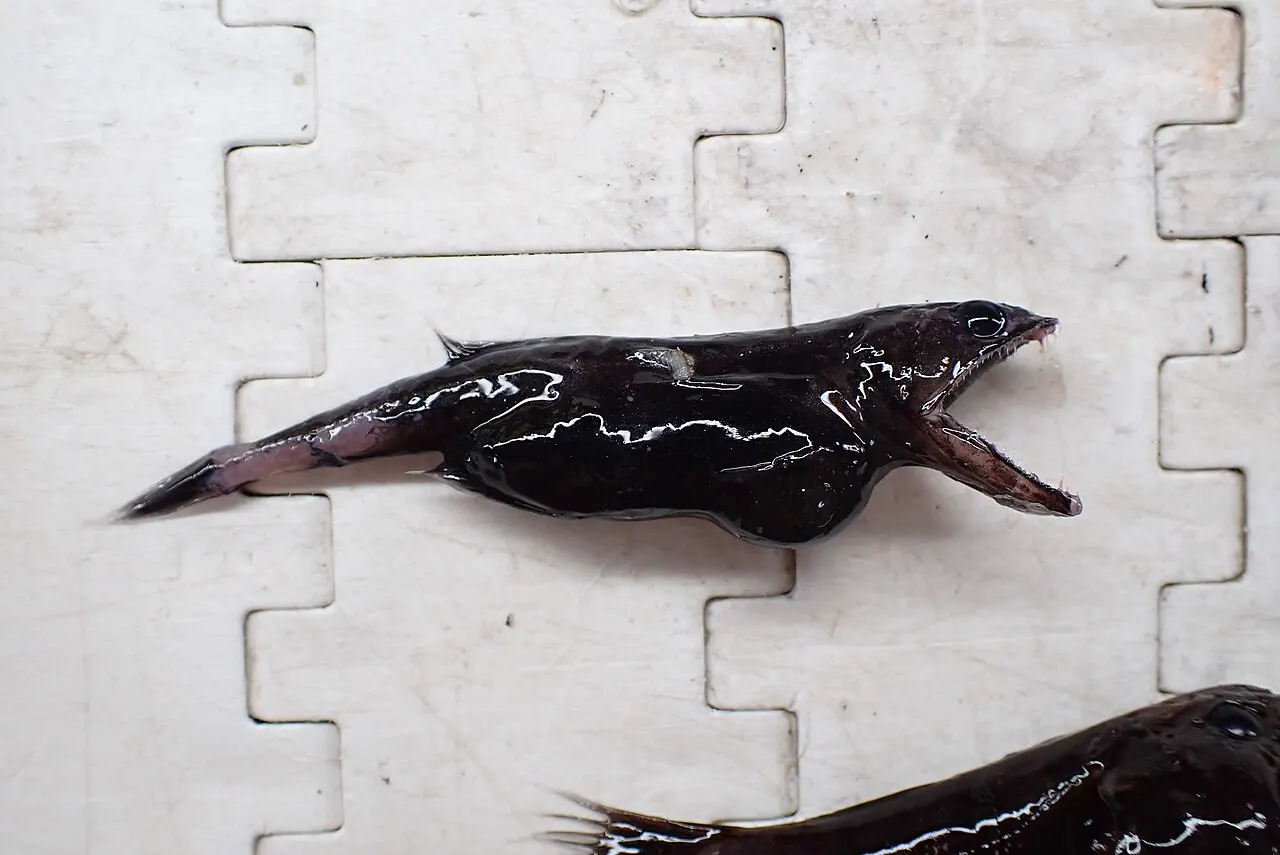
The 16 species came from seven groups of fish that are not closely related, including anglerfish, dragonfish and the fangtooth. Ultra-black skin evolved more than once.
Where the black sits hints at what it is for. In all but three of the 18 species it covered most of the body. In Cyclothone acclinidens, one of the two that fell just short of the cutoff, it surrounds only the gut, where, the authors suggest, it may hide the glow of bioluminescent prey the fish has swallowed. In hunters that dangle glowing lures, such as Oneirodes, it may stop the fish's own light from bouncing off its skin.
Sixteen species reflected less than 0.5% of the light that hit them.
What sets these fish apart from ordinary black ones only shows up under a microscope.
3 strange things from the deep
One short email a week with the strangest true ocean stories we found. Free. Unsubscribe any time.
See our privacy policy.