Some Deep-Sea Fish Are So Black They Absorb 99.5% of Light Page 3

The gumball machine in the skin
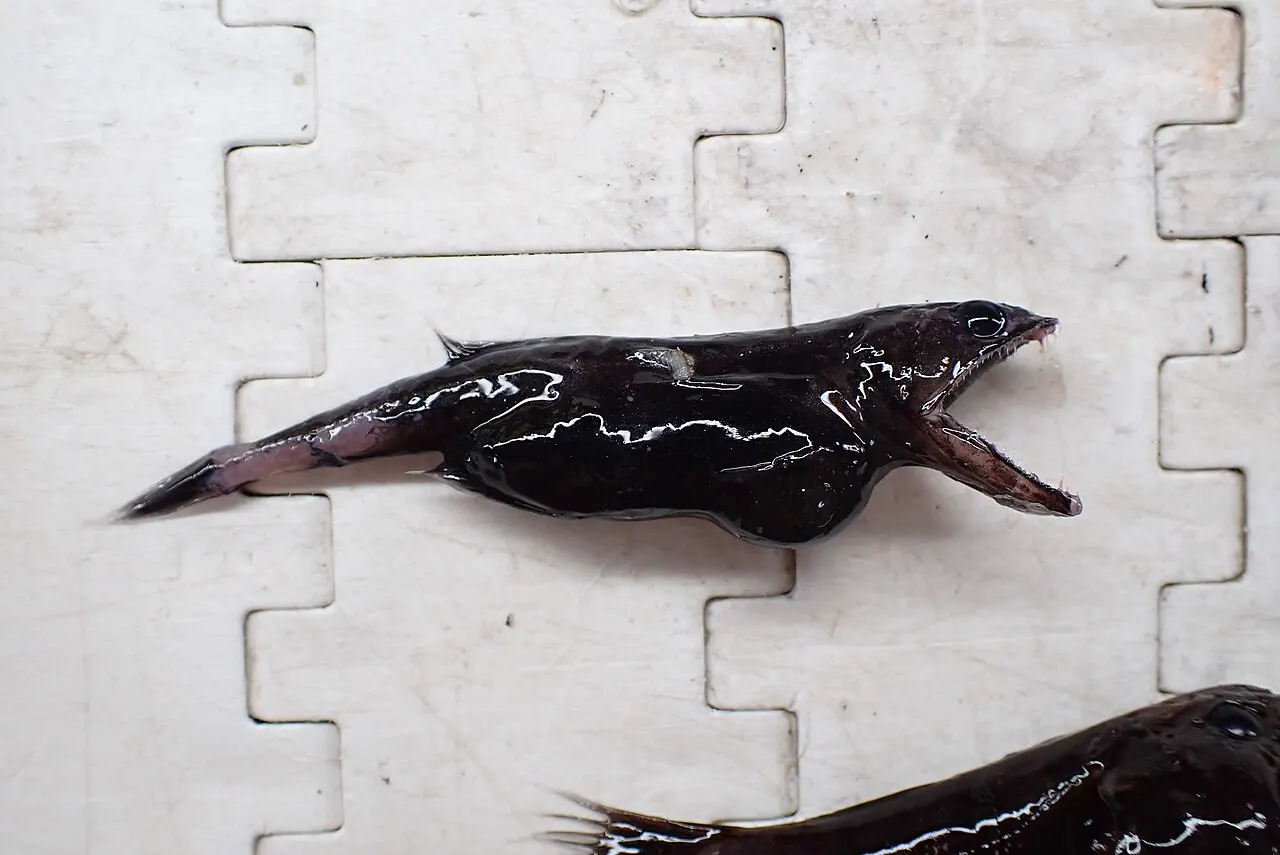
First, the team had to get the fish. They caught 39 black fish with trawl nets and a remotely operated vehicle, from waters up to a mile deep in Monterey Bay and the Gulf of Mexico, working from the research vessels Western Flyer in 2018 and Point Sur in 2019. The nets often scuffed the fragile skin. Any damage, the paper notes, would raise the readings, so the fish are probably even blacker than measured. Bruce Robison of the Monterey Bay Aquarium Research Institute, which runs deep-sea vehicles in the bay, was one of the study's authors.
Fish color comes from melanin, packed into tiny capsules called melanosomes. In ordinary black fish, the capsules are small and round, and the pigment cells have gaps between them. In ultra-black fish, the capsules are larger and shaped more like Tic Tacs, and they form an unbroken sheet near the skin's surface.
Computer models showed that this size and shape scatter light sideways within the layer, so it passes through more melanin and gets absorbed before it can escape. Davis compared the packing to "a tiny gumball machine, where all of the gumballs are of just the right size and shape to trap light within the machine."
Only one other group of animals is known to reach this level of black: birds-of-paradise.
3 strange things from the deep
One short email a week with the strangest true ocean stories we found. Free. Unsubscribe any time.
See our privacy policy.