A Deep-Sea Glass Sponge May Have Lived for About 11,000 Years
The age comes from chemical layers in one sponge's giant glass spine. Lifespans like this are still debated, and no second method has confirmed it.

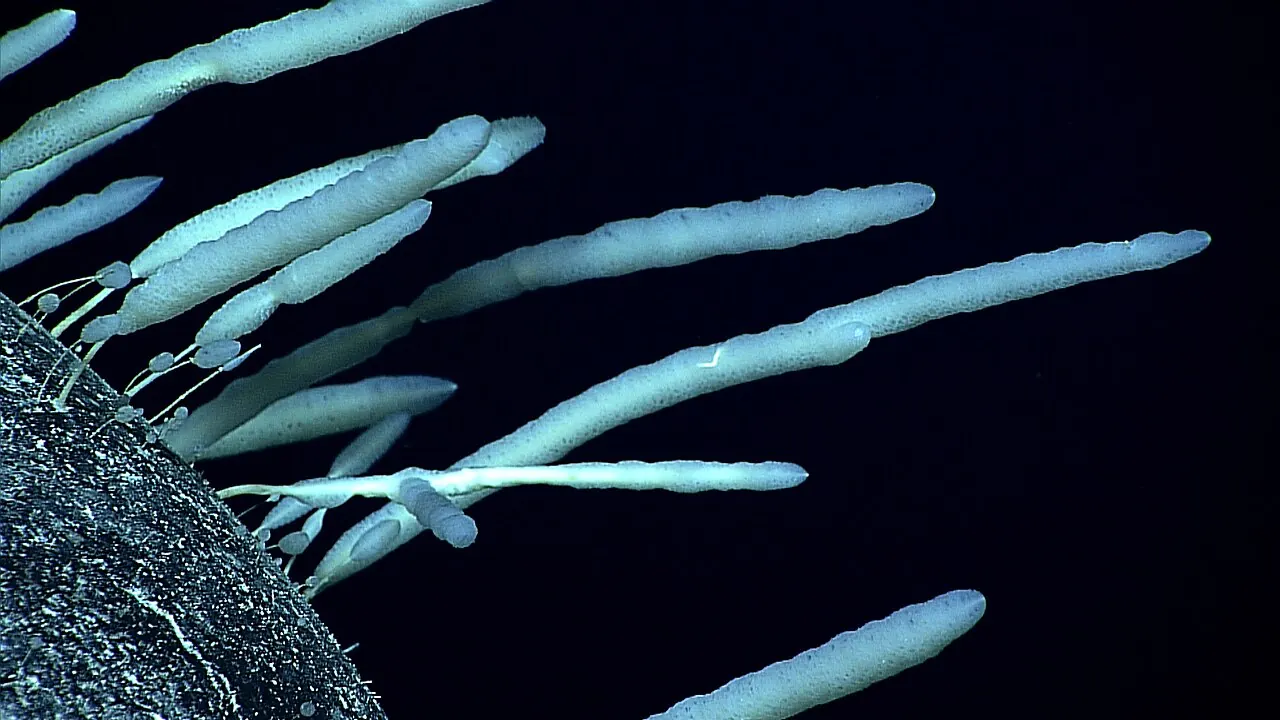
A glass rod more than 2 meters (about 7 feet) long and roughly a centimeter thick came up from about 1,100 meters (3,600 feet) down in the East China Sea in 1986. Stood on end, it would be about as tall as a front door. It was the anchoring spine of a deep-sea glass sponge called Monorhaphis chuni.
Glass sponges build their skeletons from silica, the same basic material as window glass. Monorhaphis goes further than most. It grows a single giant spine, called a spicule, that pins it to the seafloor while the soft body sits higher up.
In 2012, a team led by geochemist Klaus Peter Jochum of the Max Planck Institute for Chemistry in Germany published an age for that 1986 spicule. They estimated it had been growing for about 11,000 years. The Max Planck Society called it one of the longest-lived animals alive today.
If that is right, the sponge started life around the end of the last ice age. But how can anyone date a glass rod, and how sure can they be?
3 strange things from the deep
One short email a week with the strangest true ocean stories we found. Free. Unsubscribe any time.
See our privacy policy.