Some Deep-Sea Fish Are So Black They Absorb 99.5% of Light Page 4

The birds that got there first
The only other animals known to match this level of black are birds-of-paradise. A 2018 study found that feathers from five bird-of-paradise species reflect as little as 0.05% of light, approaching man-made ultra-absorbent materials. Their method is different: instead of packing pigment, the feathers grow tilted arrays of modified barbules that bounce light deeper and deeper into the plumage until it is gone.
The reason is different too, and almost comic. The deep-sea fish want to disappear. The birds want to be seen. The feather study proposed that super black plumage evolved as a kind of stage lighting, making the brilliant color patches next to it look even more dazzling during courtship displays. One black evolved for hiding in the dark, the other for showing off, and both ended up in nearly the same range.
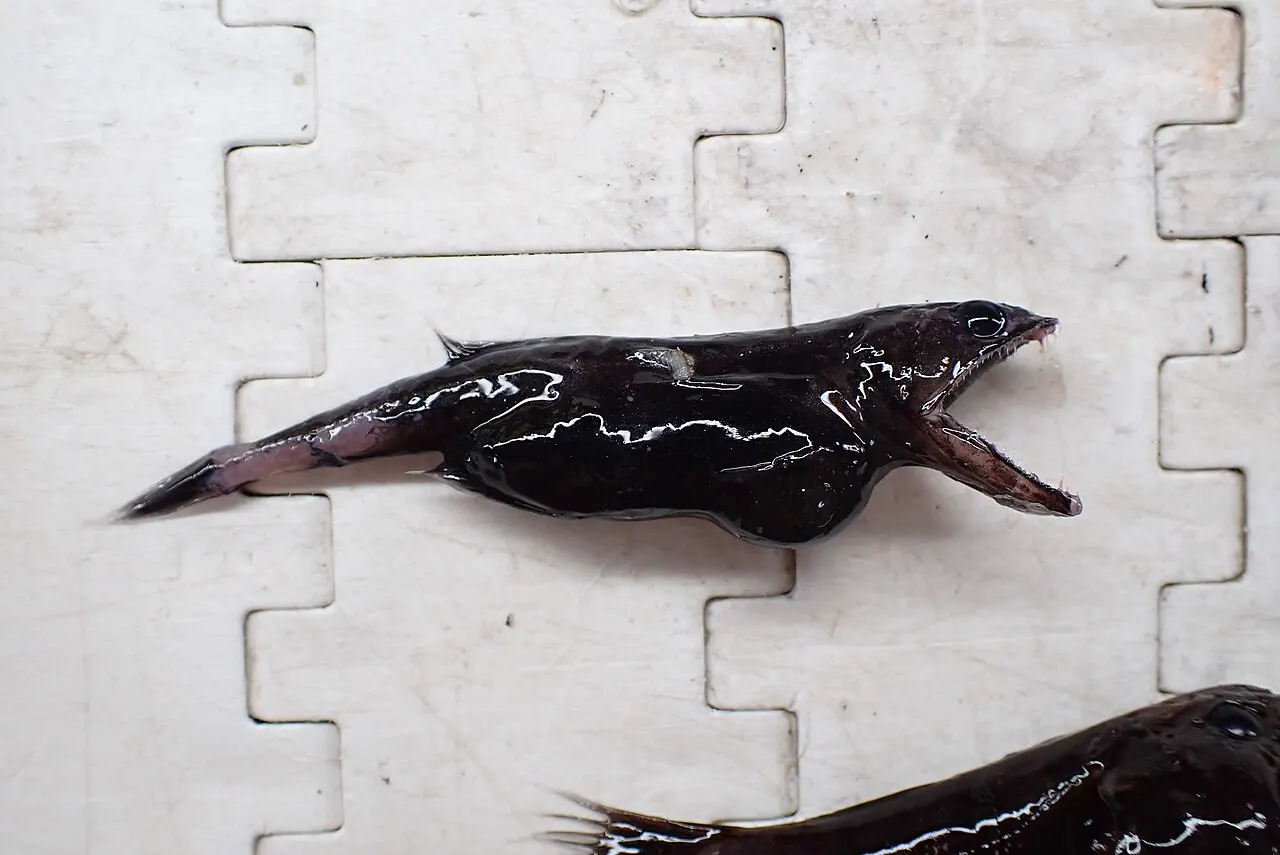
There is an engineering prize buried in the fish version. The birds' trick depends on feather surfaces; the fish get their blackness from the pigment layer itself. The fish researchers say ultra-black skin could inspire new light-absorbing materials for things like solar panels and telescopes. The next generation of light-swallowing coatings may owe a debt to a fish nobody can photograph.
Sources
- Davis et al. (2020), Ultra-black Camouflage in Deep-Sea Fishes, Current Biology
- Duke Today (2020), Ultra-black skin allows some fish to lurk unseen
- McCoy et al. (2018), Structural absorption by barbule microstructures of super black bird of paradise feathers, Nature Communications
Spotted an error? Tell us and we will fix it and note the change.