Three Out of Four Animals in the Open Ocean Make Their Own Light
Below where sunlight reaches, the ocean is still full of light, and the animals make it themselves.

About 76% of the animals that robotic submarines filmed off California, from the surface down to almost 4,000 meters, were capable of making their own light.
That count came from two scientists at the Monterey Bay Aquarium Research Institute in California, Séverine Martini and Steven Haddock. In 2017 they went through hundreds of hours of deep-sea video taken by the institute's robots over 17 years and counted every animal they could see. The robots were Tiburon, Ventana and Doc Ricketts. The water was busiest around 350 meters (1,150 feet), where the cameras logged about 411 animals for every hour of diving. Near 3,650 meters, the count fell to 14 an hour.
This living light is called bioluminescence. Below about 1,000 meters (3,300 feet), no sunlight reaches at all, and what light there is comes from the animals themselves.
More than 97% of the cnidarians, the group that includes jellyfish and their drifting relatives, could glow.
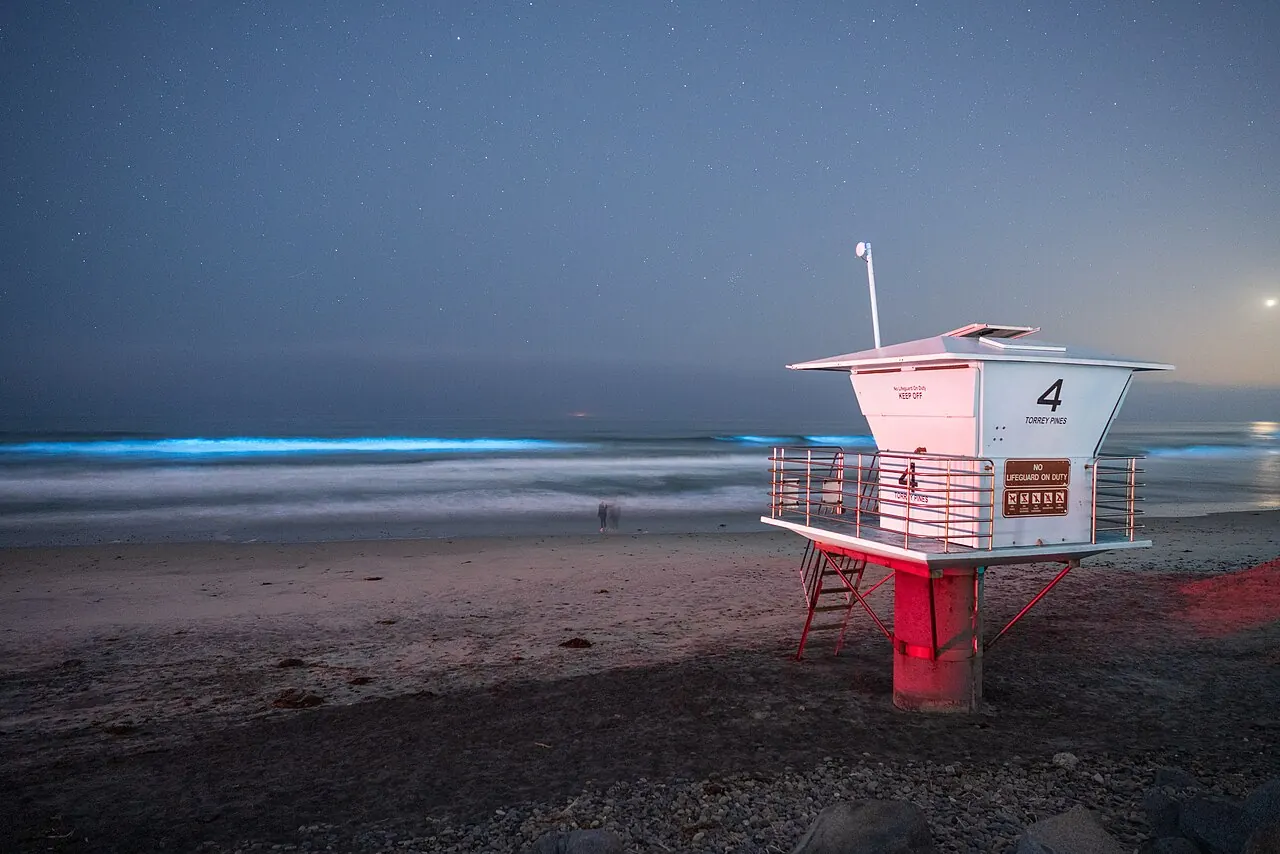
If you have ever seen waves glow blue at night, you've seen a tiny version of this, made by plankton near the surface. On a few rare nights, enough of the ocean lights up at once that satellites can spot the glow from space.
The video alone could not say which of those animals glow.
3 strange things from the deep
One short email a week with the strangest true ocean stories we found. Free. Unsubscribe any time.
See our privacy policy.