A Black Coral Off Hawaii Was Dated at About 4,265 Years Old
Radiocarbon dating of deep corals collected by submersible off Oahu found black coral and gold coral colonies thousands of years old.

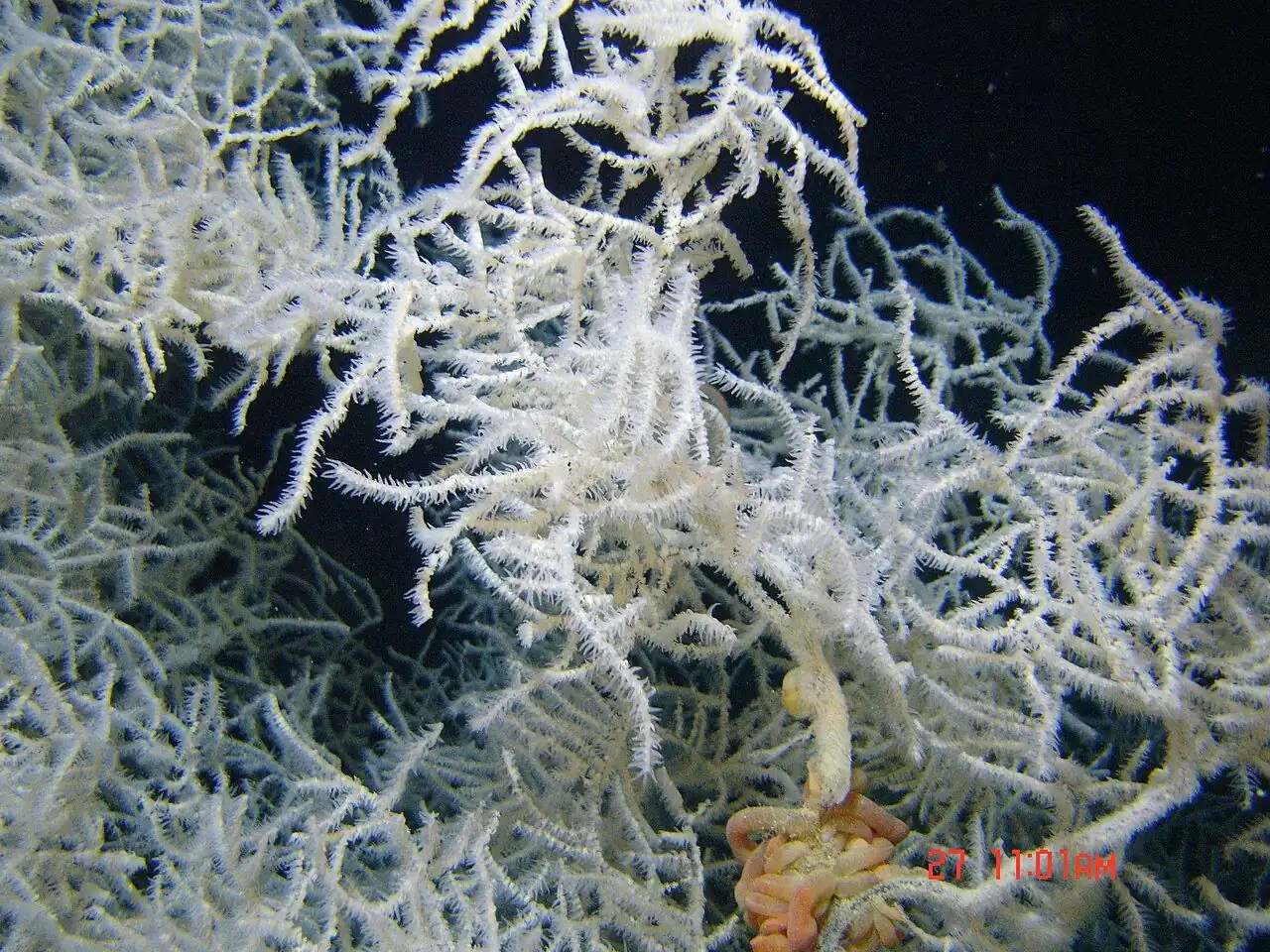
The NOAA-supported submersible Pisces V went looking for deep-sea coral beds off the coast of Oahu in 2004, diving to between 400 and 500 meters (about 1,300 to 1,600 feet). One of its targets lay off Lanikai, on the island's windward side.
Among the colonies collected there was a black coral of the genus Leiopathes, described in 2015 as a new species, Leiopathes annosa. Black corals look nothing like the colorful reef corals of shallow water. This one formed a tree of tough, protein-based skeleton, and it had been growing for a very long time.
When a team led by Brendan Roark, then at Stanford University, radiocarbon-dated the center of its base, the result came back at about 4,265 years, give or take 44.
That means the colony started growing in roughly the 24th century BC, the era of Egypt's Old Kingdom. In their 2009 paper in PNAS, the authors called Leiopathes the oldest known marine organism that builds a skeleton by adding layers over time. That title now has a rival. A deep-sea glass sponge was estimated in 2012 at about 11,000 years old, though that age is still debated.
How can a living coral be that old?
3 strange things from the deep
One short email a week with the strangest true ocean stories we found. Free. Unsubscribe any time.
See our privacy policy.