Three Hearts, Blue Blood and Arms That Think for Themselves
The octopus is built so differently from us that it is the closest thing to an alien we can meet on Earth.

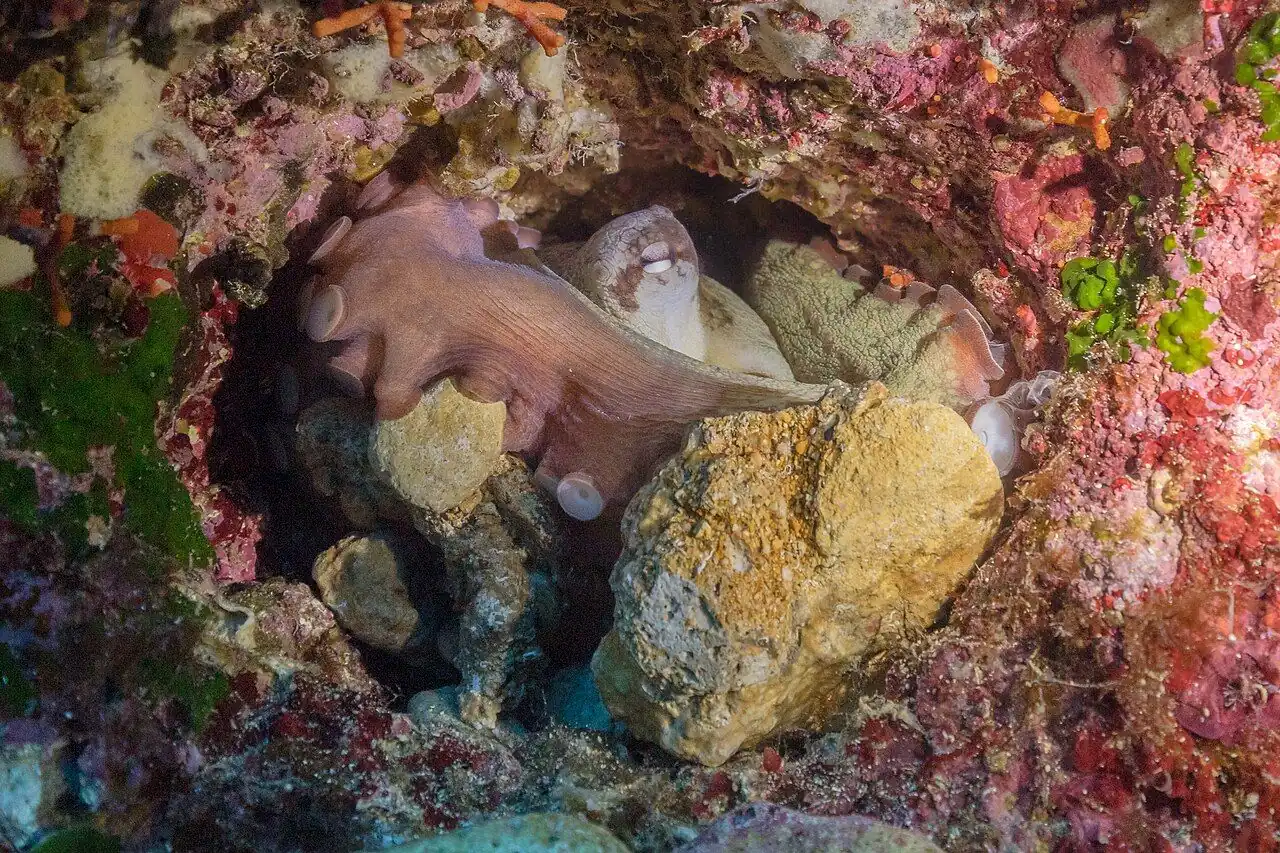
An octopus has three hearts. Two of them sit at the base of the gills and pump blood through them to pick up oxygen. The third, bigger heart pushes that oxygen-rich blood around the rest of the body. The British physiologist Martin Wells recorded the heartbeats of common octopuses in the 1970s, tracking how hard the main heart works as the animal rests, exercises and runs short of oxygen.
Its blood is blue, too. Our blood uses iron, in a protein called hemoglobin, to carry oxygen, which is what makes it red. An octopus uses a copper-based protein called hemocyanin instead, which turns blue when it holds oxygen. In near-freezing water it still carries oxygen, but it lets go of it less easily.
Its eyes are camera-style, like ours, but they were built on a completely separate evolutionary track. They have only one type of light-sensing cell, yet an octopus can change both the color and the texture of its skin in a fraction of a second.
A common octopus has around 500 million nerve cells, a count that goes back to work by the British zoologist J.Z. Young in the 1960s. That is in the same range as a dog.
Only a minority of an octopus's nerve cells are in its head.
3 strange things from the deep
One short email a week with the strangest true ocean stories we found. Free. Unsubscribe any time.
See our privacy policy.


