Three Hearts, Blue Blood and Arms That Think for Themselves Page 4

Why octopuses would rather walk
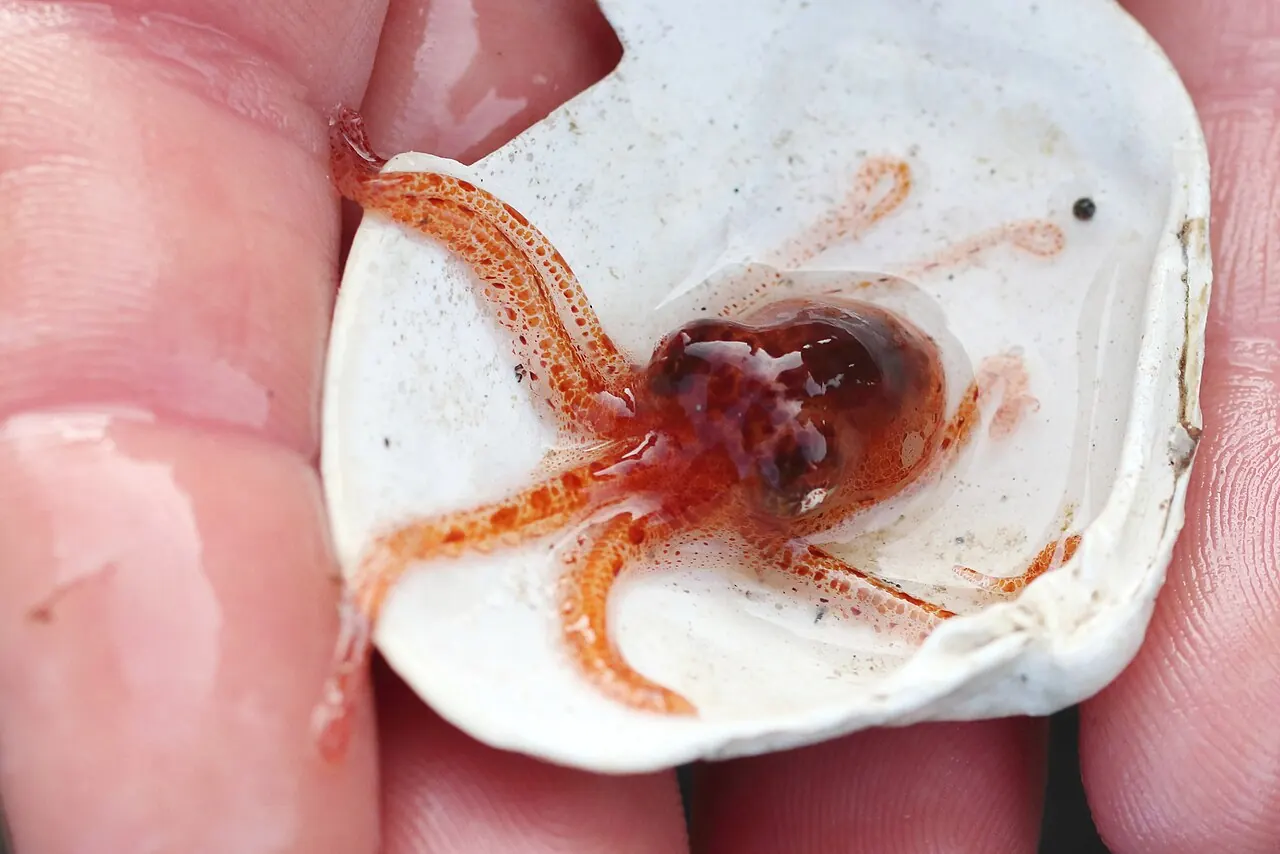
When an octopus swims by shooting water out of its body, the main heart, the one that supplies the body, stops beating. Wells recorded this in the 1970s. It's one reason octopuses usually crawl rather than swim: swimming tires them out quickly.
The rest of the octopus is just as unlikely. It can change both the color and the texture of its skin in a fraction of a second, even though it has only one type of light-sensing cell in its eyes. Large octopuses can squeeze through any gap bigger than their beak, the only hard part of their body.
And most species live short lives: one to two years for many, and a few years at most for the giant Pacific octopus. Mothers spend their final stretch guarding eggs; one deep-sea female off central California kept watch over her clutch for 53 months, four and a half years, longer than any other animal on record.
All that intelligence, and so little time to use it.
Sources
- Hochner (2012), An embodied view of octopus neurobiology, Current Biology
- Wells (1979), The heartbeat of Octopus vulgaris, Journal of Experimental Biology
- Young (1963), The number and sizes of nerve cells in Octopus, Proceedings of the Zoological Society of London
- Sumbre et al. (2001), Control of Octopus Arm Extension by a Peripheral Motor Program, Science
- Albertin et al. (2015), The octopus genome and the evolution of cephalopod neural and morphological novelties, Nature
Spotted an error? Tell us and we will fix it and note the change.