A Diver Filming Coral at Night Found the First Known Glowing Sea Turtle
In 2015 a New York biologist saw a hawksbill turtle shine green and red under blue light, the first sea turtle known to biofluoresce.

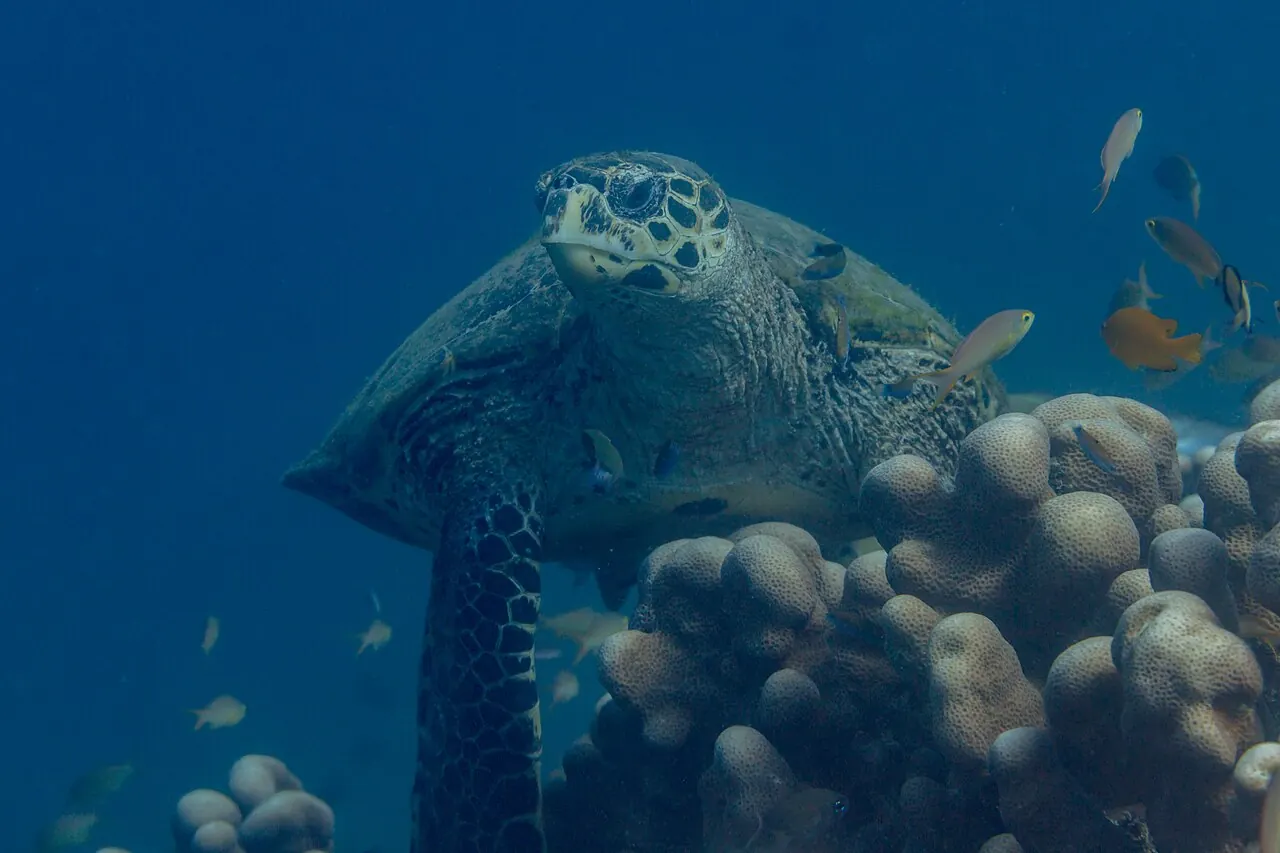
Under the lights David Gruber's team carried, most of a coral reef goes black. Anything that fluoresces jumps out of the dark like a highlighter mark on black paper.
Gruber was filming coral twenty meters (about 65 feet) down off Nugu Island in the Solomon Islands, under a full moon on the night of July 31, 2015. His team was using blue lights and cameras fitted with yellow filters, a setup built to catch corals and fish that glow. The area is also home to crocodiles, and the divers were keeping watch for them.
Then a hawksbill turtle swam right in front of the lights. Its head lit up green. Its shell and flippers glowed green and red, like something out of a spaceship's landing bay.
Gruber, a marine biologist at Baruch College in New York and a research associate at the American Museum of Natural History, kept the camera on it. He had spent years documenting glowing fish, but nobody had ever reported a sea turtle doing this.
The turtle came "out of nowhere," Gruber told National Geographic, and he followed it only briefly: "after a few moments I let it go because I didn't want to harass it." The hawksbill dove away into the black water.
The Solomon Islands also host the largest hawksbill nesting population in the open South Pacific, and hawksbills are critically endangered worldwide.
What Gruber saw that night was not quite the kind of glow most people picture.
3 strange things from the deep
One short email a week with the strangest true ocean stories we found. Free. Unsubscribe any time.
See our privacy policy.