The Blue Blood of Horseshoe Crabs Helps Keep Your Medicines Safe
A clotting reaction discovered at Woods Hole in the 1950s became a standard test for bacterial toxins, with shorebirds and a lab-made rival in the mix.

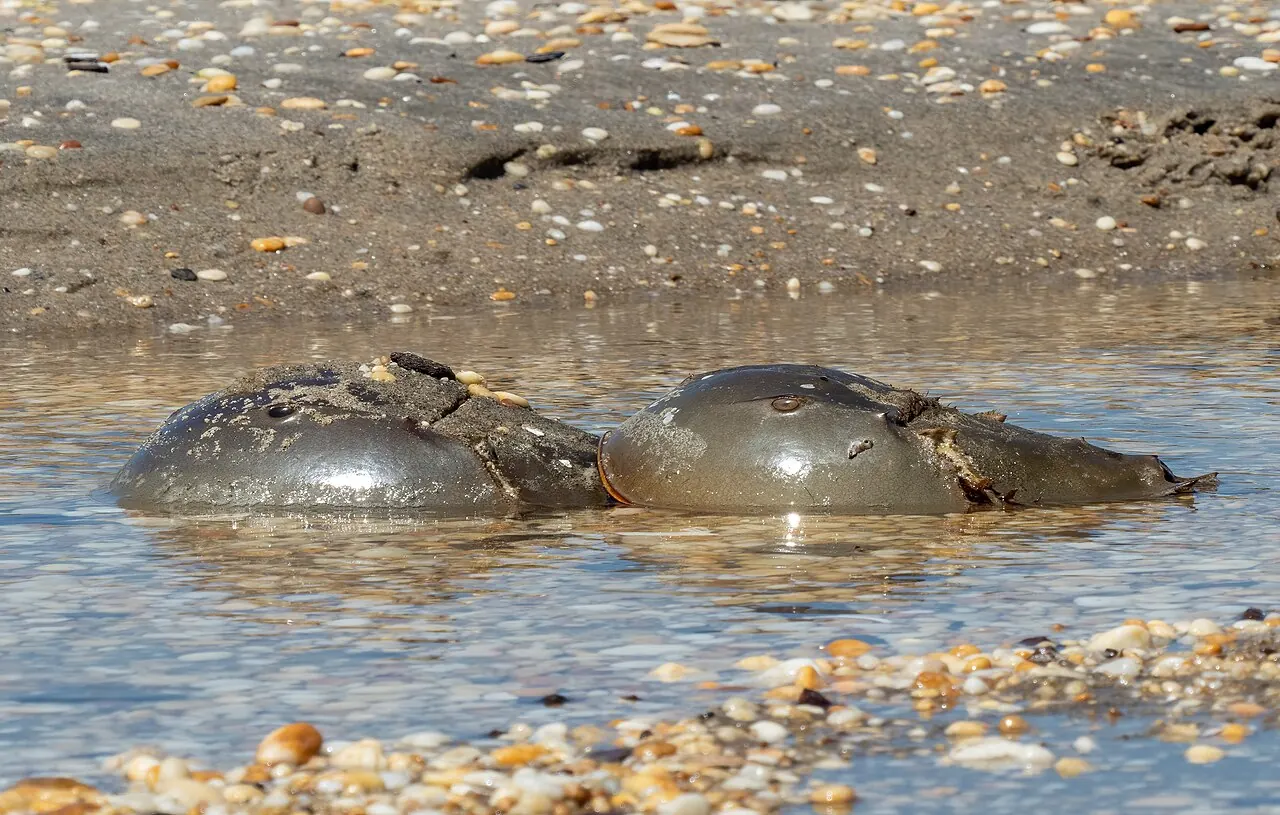
Atlantic horseshoe crabs crawl out of the water by the thousands each spring to spawn on beaches around Delaware Bay. They look like armored helmets with a spike for a tail, and their kind may have changed little in about 200 million years.
Despite the name, they are not true crabs. Their closest relatives are spiders and scorpions, and they may even belong inside the arachnid group.
Their blood is blue. It carries oxygen with hemocyanin, a protein built around copper rather than the iron in our own blood. An octopus runs on the same copper chemistry, which is why its blood is blue too.
That blood also holds a substance that drug and medical-device makers have relied on for decades. Injectable drugs, vaccines and devices such as IV lines are routinely checked for contamination with a test made from it.
Around half a million crabs are bled each year, and one manufacturer estimated that a single day of US production could test five billion doses of COVID-19 vaccine. That is more than 14 doses for every person in the United States.
The discovery started with a sick crab at a summer lab in Massachusetts.
3 strange things from the deep
One short email a week with the strangest true ocean stories we found. Free. Unsubscribe any time.
See our privacy policy.


