A Blue Whale's Heart Can Slow to Two Beats a Minute
Scientists stuck a sensor on the largest animal that has ever lived and listened to its heart for eight and a half hours.

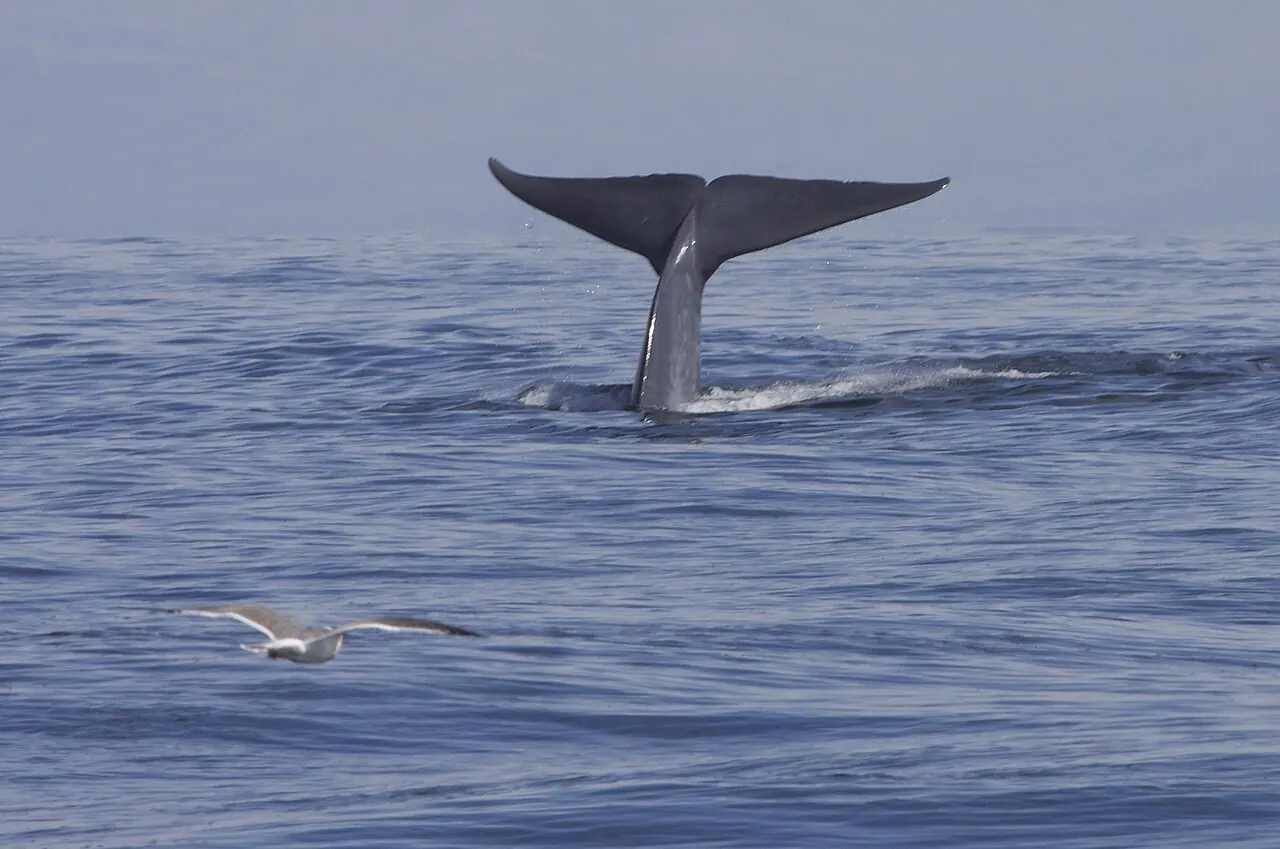
You can't put a blue whale in a lab. You can't ask it to hold still for an EKG. So for a long time, one basic thing about the blue whale, the largest animal known to have ever lived, was a mystery: what its heart actually does when it dives.
Adults can reach around 30 meters (about 98 feet) long, roughly the length of two and a half school buses. Blue whales were hunted almost to extinction in the 20th century, and they are still listed as Endangered.
In 2018, a team led by Jeremy Goldbogen of Stanford University tried something new. They used a long pole to stick a sensor, held on by four suction cups, onto the back of a blue whale feeding in Monterey Bay, California. Electrodes built into two of the suction feet pressed against the skin near the whale's left flipper, close enough to pick up the electrical pulse of the heart through a wall of blubber.
The tag had performed well on smaller, captive whales. A wild one is harder: it isn't trained to roll belly-up, and a blue whale's accordion-like underside expands when it feeds; one gulp could pop a tag right off.
Nobody knew if it would work: whether the cups would hold, or whether a heartbeat would even register through that much whale.
3 strange things from the deep
One short email a week with the strangest true ocean stories we found. Free. Unsubscribe any time.
See our privacy policy.