The 'Extinct' Fish Found in 1938 May Live to Be 100
Known only from fossils until a curator spotted one in a South African catch, the coelacanth lives five times longer than thought, a 2021 study says.

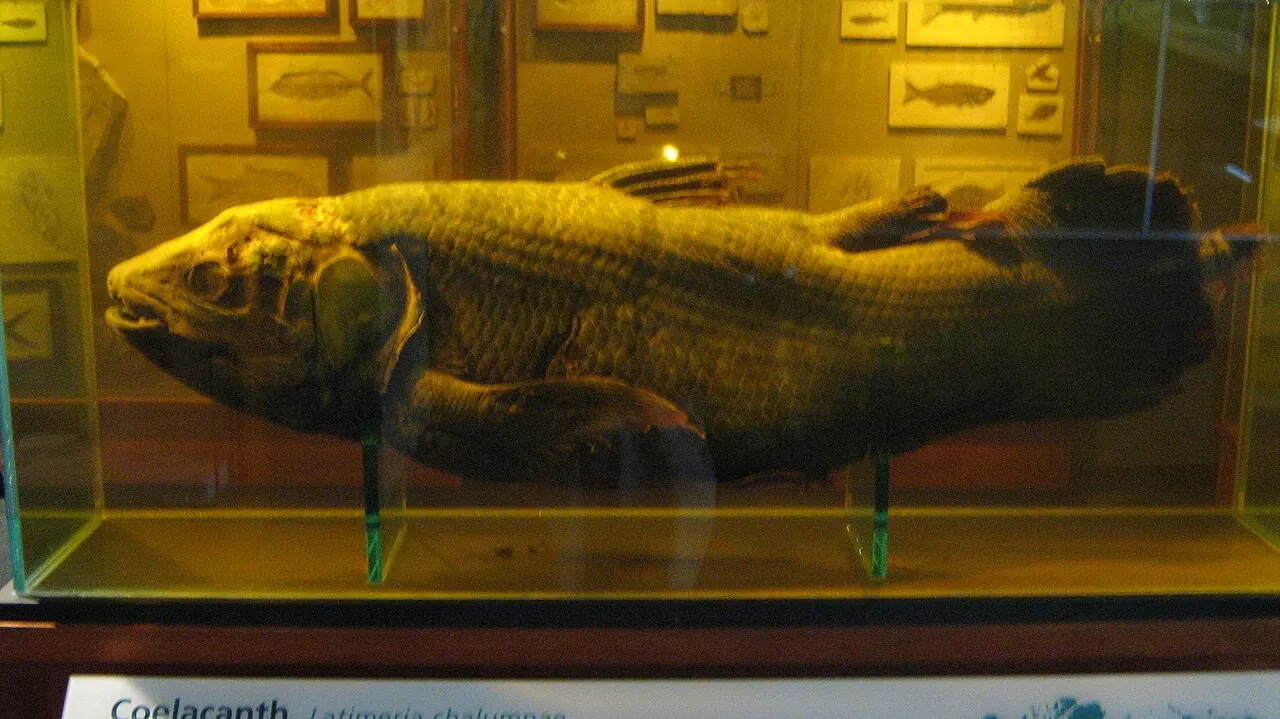
One fish in the catch had heavy scales and thick, fleshy fins, and Marjorie Courtenay-Latimer did not recognize it.
She was curator of the small museum in East London, South Africa, and had gotten a phone call from the docks on December 22, 1938. A trawler called the Nerine, skippered by Hendrik Goosen, had come in with its catch from near the mouth of the Chalumna River. She sketched the strange fish and sent the drawing to J.L.B. Smith, a chemistry lecturer and fish expert at Rhodes University.
Smith realized what it was. It was a coelacanth, a group of fish known only from fossils. Coelacanths show up in rocks almost 400 million years old, then vanish from the record about 80 million years back. Finding one alive was close to finding a live dinosaur in a Texas cattle pasture.
His report in Nature in 1939 was titled "A Living Fish of Mesozoic Type," a reference to the age of the dinosaurs. He named it Latimeria chalumnae, after the curator and the river.
A 14-year hunt for a second specimen followed. It ended in 1952 in the Comoros Islands, northwest of Madagascar, where about 200 coelacanths have been caught since, with a few strays turning up off Madagascar and Mozambique.
The fish had been found. Its biology stayed a mystery for decades longer, and some of it was badly wrong.
3 strange things from the deep
One short email a week with the strangest true ocean stories we found. Free. Unsubscribe any time.
See our privacy policy.