Put Mount Everest in the Mariana Trench and It Would Still Be a Mile Underwater Page 2

How do you measure a hole seven miles deep?
The first answer was a rope. In 1875, the British ship HMS Challenger lowered a weighted line into the trench and recorded 4,475 fathoms, or 8,184 meters. Deep, but more than 2,700 meters short of the modern figure for the trench's deepest point.
Today the tool is sound. A ship pings the bottom and times the echo, but the answer depends on how fast sound travels through water of changing temperature and saltiness, so every survey carries error bars. A 2010 University of New Hampshire sonar survey reported 10,994 meters, give or take 40. A 2019 review by Heather Stewart and Alan Jamieson put it at 10,925 meters. The Five Deeps Expedition then mapped the trench with a full-ocean-depth multibeam sonar, corrected it with sensors dropped through the whole water column, and landed on 10,924 meters, give or take 15. Along the way it confirmed the runner-up: Tonga's Horizon Deep, at 10,816 meters, misses the title by about the height of a 35-story building.
Direct depth measurements still cover only part of the planet. As of April 2026, the Nippon Foundation-GEBCO Seabed 2030 project, set up in 2017, counted 28.7% of the world's ocean floor as mapped, with almost five million square kilometers added in the past year.
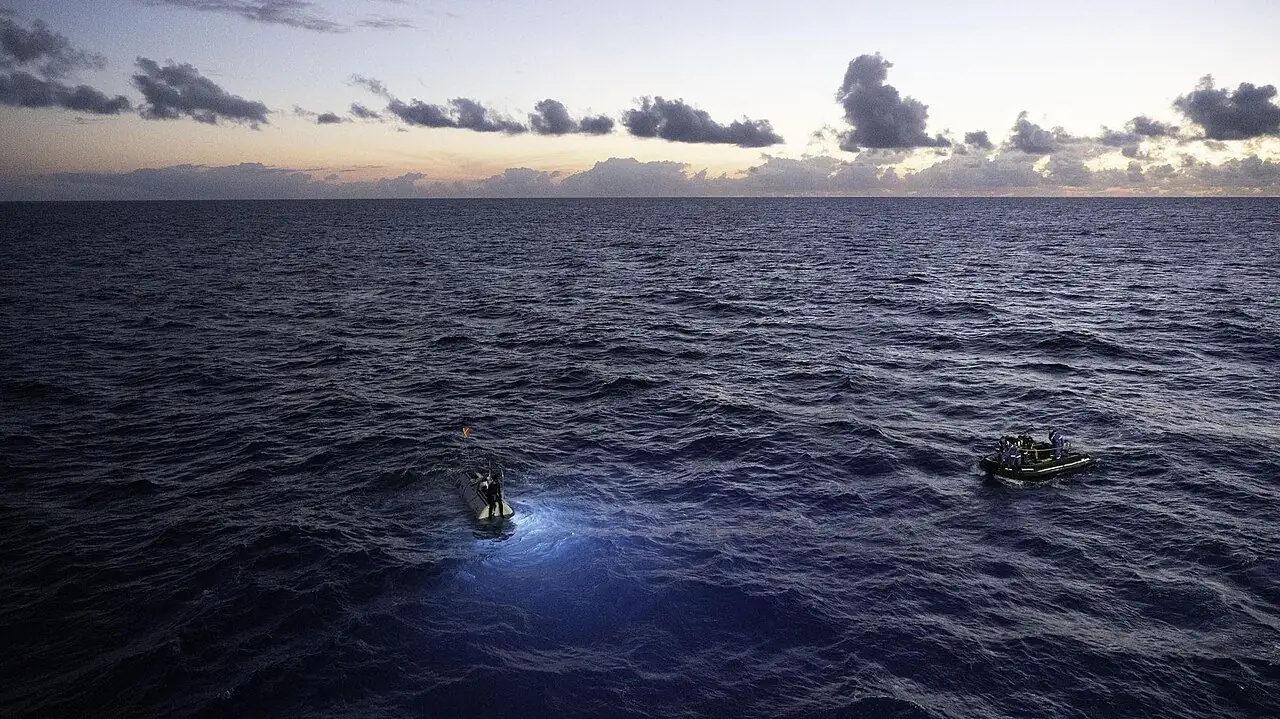
The most precise figure skips sound entirely. Samuel Greenaway of NOAA's Office of Coast Survey and colleagues used pressure sensors on crewed dives in June 2020, and got 10,935 meters (35,876 feet), plus or minus 6 meters.
The modern spread is thinner than a football field.
3 strange things from the deep
One short email a week with the strangest true ocean stories we found. Free. Unsubscribe any time.
See our privacy policy.