The Jellyfish That Can Turn Back Its Own Clock
When life gets hard, Turritopsis dohrnii can turn its adult body back into a baby form and start again.

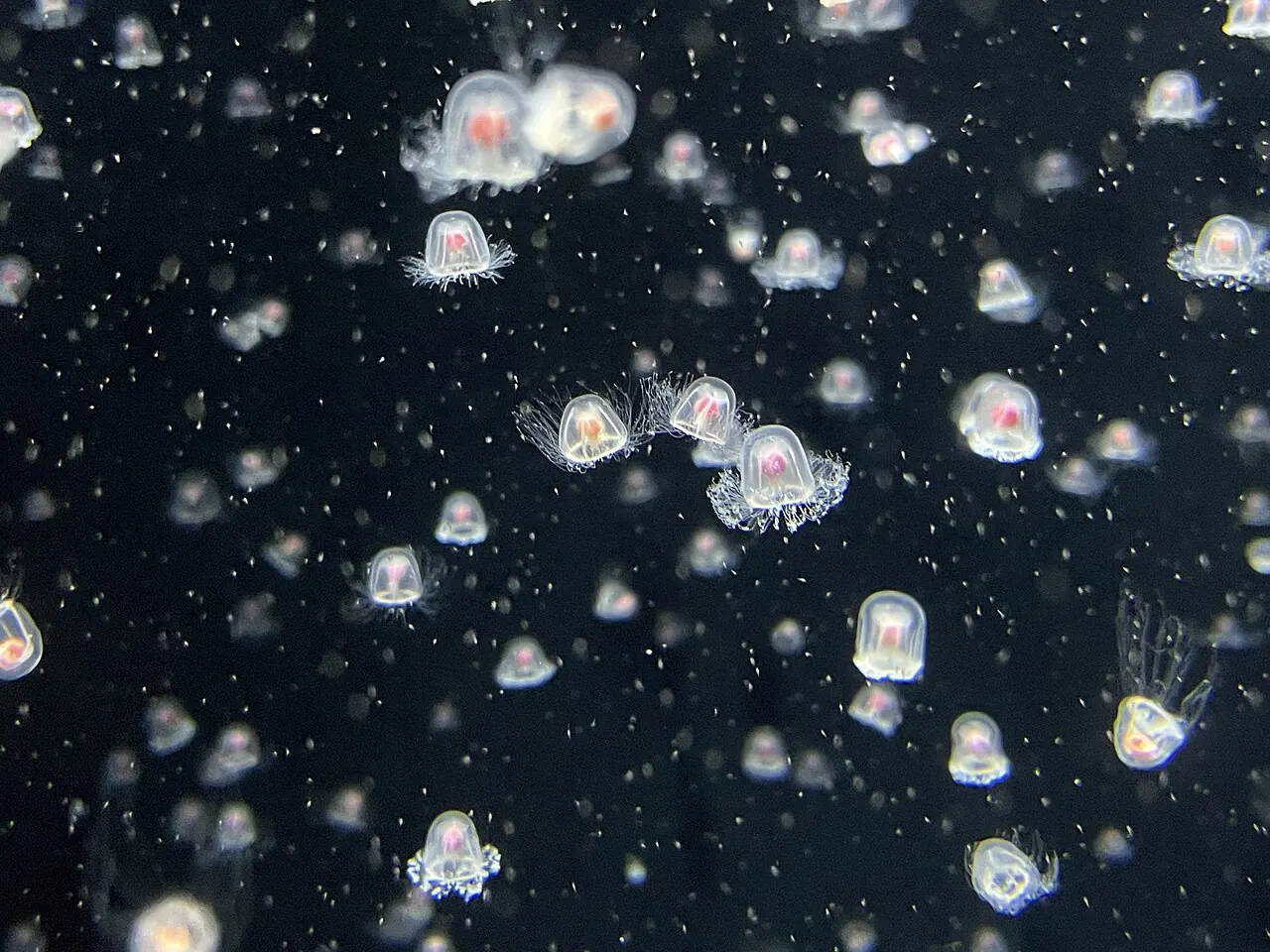
Turritopsis dohrnii, often called the immortal jellyfish, is about 4.5 millimeters across, smaller than your little fingernail. It drifts, almost see-through, in warm seas around the world. And it can do something no other animal is known to do as well: go back to the start of its life.
Like most jellyfish, it begins life as a polyp, a small stalk stuck to a rock, which buds off free-swimming adults called medusae.
Normally that is a one-way trip. The adult jellyfish breeds and then dies. For a person, the equivalent would be a grandparent collapsing back into an infant and growing up all over again.
But when this species is stressed, by starvation, injury or a sudden change in temperature, the adult makes the trip in reverse. It shrinks, absorbs its tentacles, settles on a surface and turns back into a polyp. That polyp can then produce brand-new adult jellyfish. Scientists first described this reversal in the 1990s, in experiments at an Italian lab.
For 30 years, biologists have been staring at glass bowls to see what happens to the adult's cells on the way back.
3 strange things from the deep
One short email a week with the strangest true ocean stories we found. Free. Unsubscribe any time.
See our privacy policy.