The Goblin Shark Fires Its Jaws Out of Its Head Like a Slingshot
Rare video from Japan showed the deep-sea shark's jaws shooting forward at 3.1 meters per second. In 2014, a Gulf of Mexico shrimper caught one.

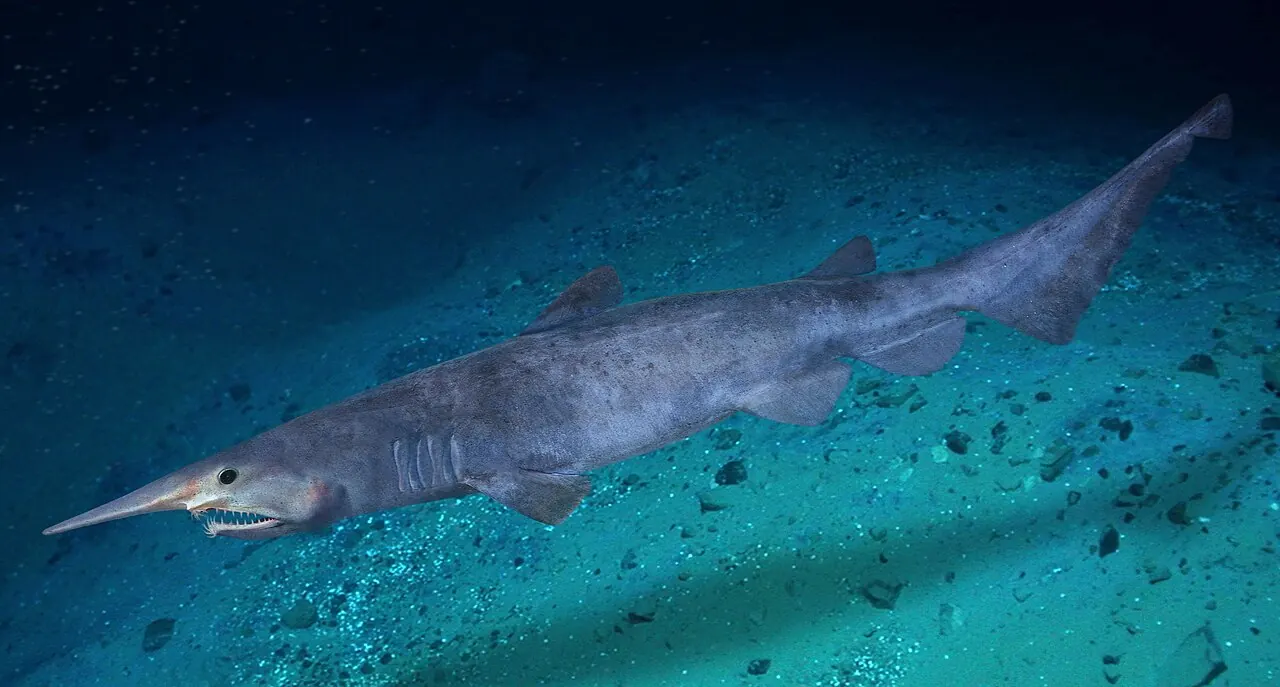
The net came up from about 490 meters (1,600 feet) with a female goblin shark in it, about 5 meters (16 feet) long, pale pinkish, with a long, flat blade of a snout. A commercial shrimp boat trawling the northern Gulf of Mexico had hauled her in on April 19, 2014.
The crew released her alive shortly after. Carl Moore, the fisherman who caught her, became a co-author of the scientific record published later that year, along with NOAA Fisheries shark scientist John Carlson. It was only the second goblin shark documented in the Gulf.
A goblin shark is hard to mistake. Below the snout sit jaws full of thin, pointed teeth, and most of the time those jaws are tucked away. When the goblin shark feeds, they come shooting out of its head.
The shark's name comes from the first scientific drawing of the species, which showed its jaws pushed all the way out. That look, Nakaya's team wrote, inspired the name goblin.
The species was first described in 1898, from a specimen 1,070 millimeters (3.5 feet) long collected in Japan, and has turned up in deep water as far apart as Japan and the Gulf of Mexico. Live ones are seldom seen, and for more than a century nobody had watched the strike closely enough to say how it worked.
That changed with two young sharks and a television crew from NHK, Japan's public broadcaster.
3 strange things from the deep
One short email a week with the strangest true ocean stories we found. Free. Unsubscribe any time.
See our privacy policy.