The New Year's Day Wave That Proved Rogue Waves Are Real
On January 1, 1995, an offshore platform in the North Sea recorded an 84-foot wave in a 39-foot sea. Two decades later, scientists rebuilt it in a tank.

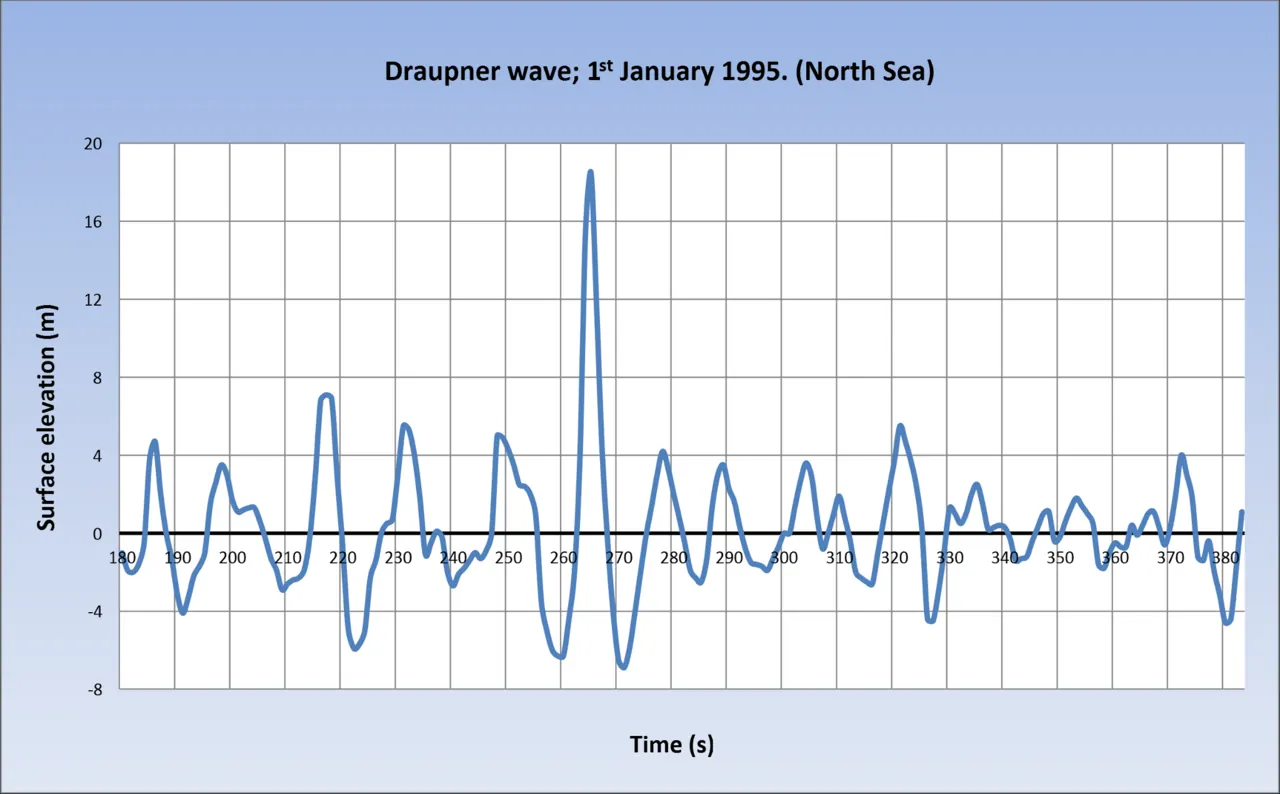
The Draupner platform, an offshore installation in the North Sea, carried instruments that tracked the height of the sea surface beneath it. On January 1, 1995, they recorded the kind of wave sailors had been describing for centuries.
Those stories told of waves that came out of nowhere: walls of water far taller than anything around them, sometimes arriving from an odd direction. Without hard measurements, they were easy to dismiss as folklore.
That day the sea was rough. The waves around the platform had a "significant wave height" of about 12 meters (39 feet), a standard measure of the bigger waves in a sea. A Statoil scientist later described a large winter low meeting a short-lived "Arctic bomb," a smaller, more violent wind field from a different direction, the 2019 tank study recounts.
One wave arrived with a total height of 25.6 meters (84 feet), more than twice the significant height. That is an eight-story building rearing up in a sea of four-story ones.
It was one of the first confirmed instrument measurements of a freak wave. Mark McAllister of the University of Oxford later credited the measurement with shifting freak waves "from mere folklore to a credible real-world phenomenon." More than two decades after the wave, he and Ton van den Bremer led a team that set out to recreate it in a tank.
3 strange things from the deep
One short email a week with the strangest true ocean stories we found. Free. Unsubscribe any time.
See our privacy policy.


