Deepest Known Explosive Eruption Rocks Found Near the Challenger Deep Page 2

A Robot on a 10-Kilometer Cable
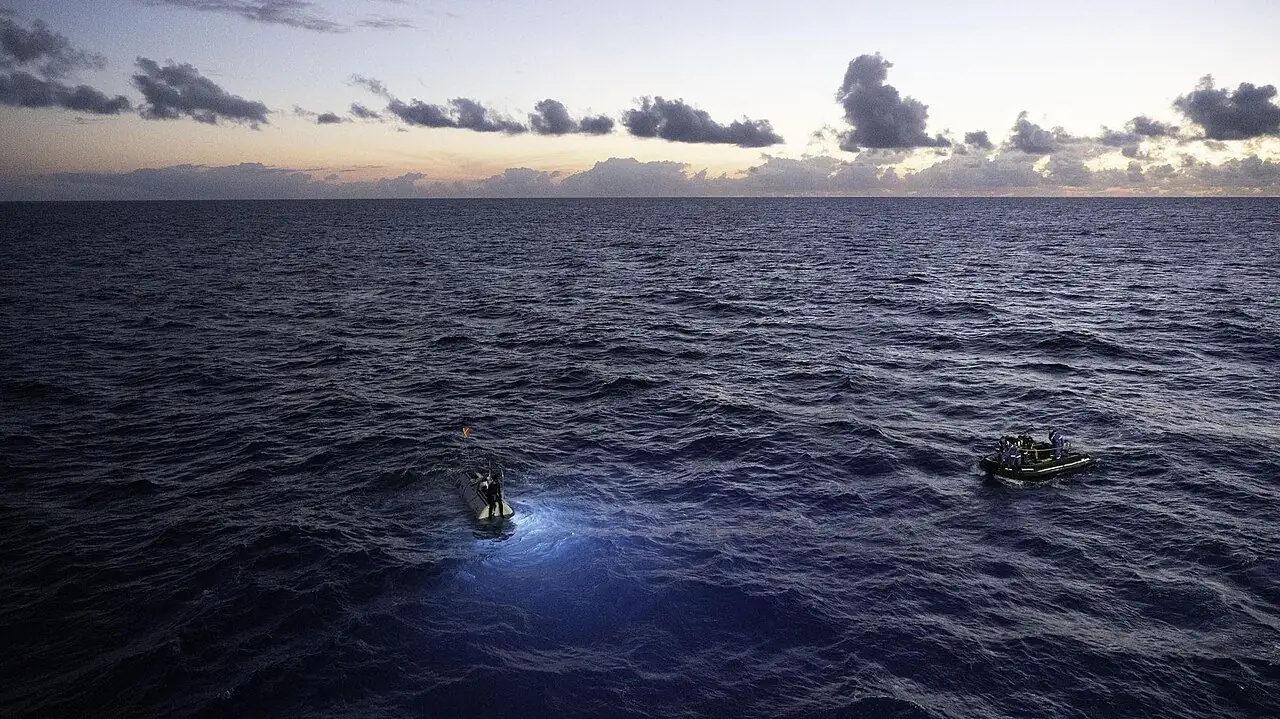
The work was done by Jason, a remotely operated vehicle built by Woods Hole's Deep Submergence Laboratory and funded by the National Science Foundation. A 10-kilometer (6-mile) fiber-optic cable carries power and commands down from the ship, so scientists steer it from the deck. On this cruise it worked at its limit of 6,500 meters (about 21,300 feet).
Jason made seven dives on the trench slope and brought up 155 rock samples. Volcanic rocks made up 59 percent of them. The western dives were the surprise. On one, Jason traveled about 2 kilometers up the slope, from 6,398 to 5,958 meters deep, and collected 23 rocks, mostly volcanic breccia, a rock made of broken fragments cemented together.
The sheets were only a few centimeters thick, and they were hard. On land, ash that falls from the sky stays loose, and only hot flows weld. These fragments had stayed hot enough to fuse back together on the seafloor, and the team reads the rectangular cracks as the flows shrinking as they cooled.
That heat matters because of where it was. The slope above a trench like this, called the forearc, sits over mantle that is normally too cold to melt, so fresh lava there is rare. The samples are full of fresh volcanic glass, a sign of young rock. The team links the volcanism to stretching that began about 5 million years ago, so the rocks are probably younger than that, but it has no radiometric dates yet to confirm it.
At these depths the water presses down with more than 600 bars, roughly 600 times the air pressure at sea level.
3 strange things from the deep
One short email a week with the strangest true ocean stories we found. Free. Unsubscribe any time.
See our privacy policy.