The First Video of a Living Colossal Squid Shows a See-Through Baby Page 2

A giant known mostly from leftovers
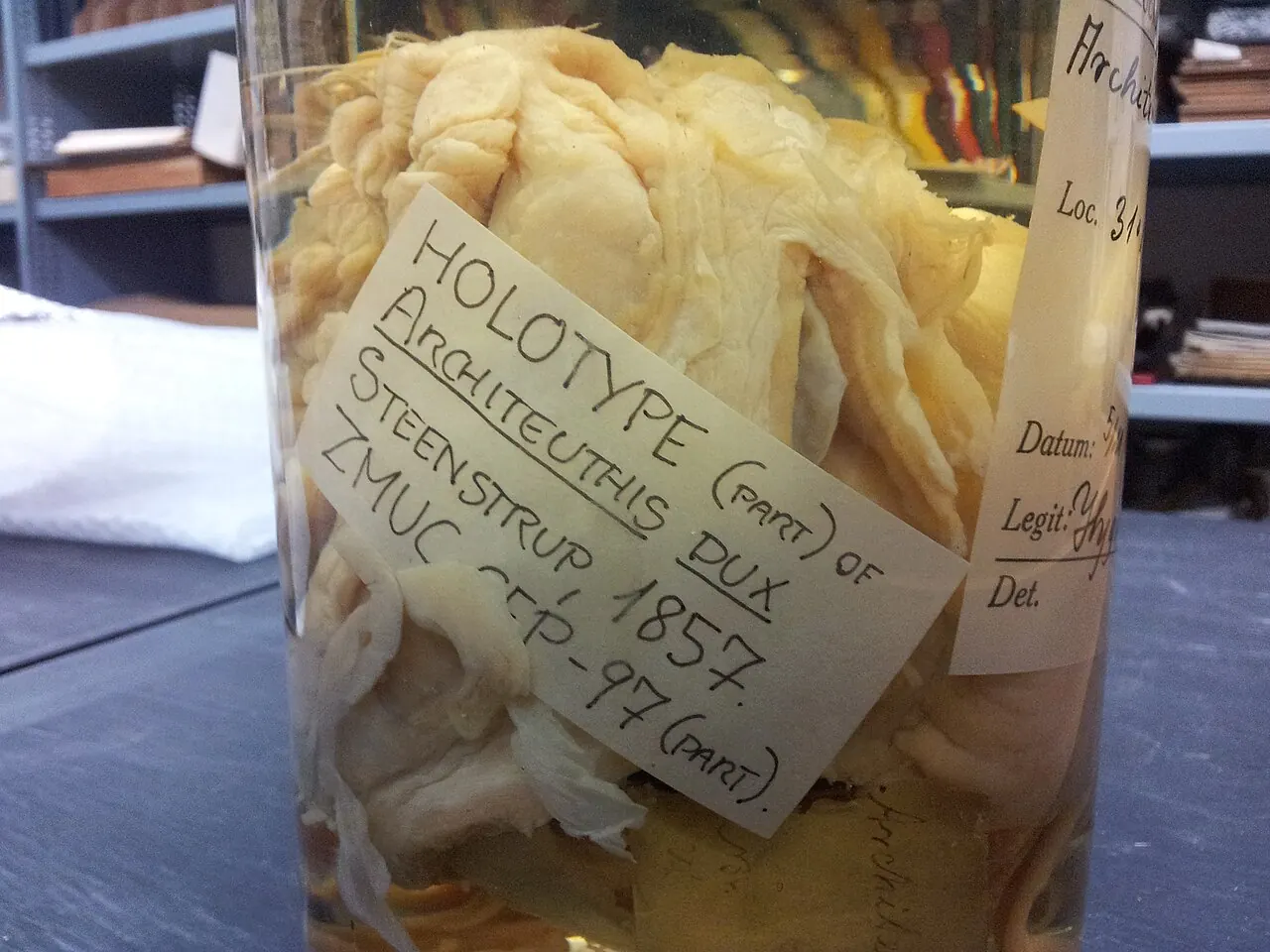
Almost everything known about the colossal squid comes from pieces of it. For 100 years, as squid expert Kat Bolstad of Auckland University of Technology put it in the institute's announcement, "we have mainly encountered them as prey remains in whale and seabird stomachs." Others were found attacking toothfish caught by fishing boats. Fishermen have filmed dying adults at the surface, but no one has seen a healthy adult in the deep.
The most complete animal anyone has studied sits in a tank at New Zealand's Te Papa museum: a 495-kilogram (1,091-pound) specimen, about the weight of a concert grand piano, hauled up from Antarctic waters by a fishing crew in 2007. It is still the heaviest ever recorded. It measures 4.2 meters (about 14 feet) from mantle to tentacle tips, well short of early estimates of 8 to 10 meters, partly because squid shrink after death.
The squid spent 14 months in a freezer before Te Papa's team thawed it and unfolded it in a tank in 2008, and the museum thinks it dried out and shrank during that time. Its mantle, the main body behind the head, came to 2.5 meters. A colossal squid recovered in 2003 had a similar mantle and weighed only 300 kilograms, yet measured 5.4 meters in total. When museum staff tested commercial arrow squid, fresh specimens shrank by up to 22 percent once dehydrated in alcohol. Te Papa's scientists concluded that colossal squid vary a great deal in shape, and that a dead one's measurements also depend on how it was handled.
And it was not full grown.
3 strange things from the deep
One short email a week with the strangest true ocean stories we found. Free. Unsubscribe any time.
See our privacy policy.