It Took Until 2012 to Film a Giant Squid Alive in the Deep Page 4

One monster, or many?
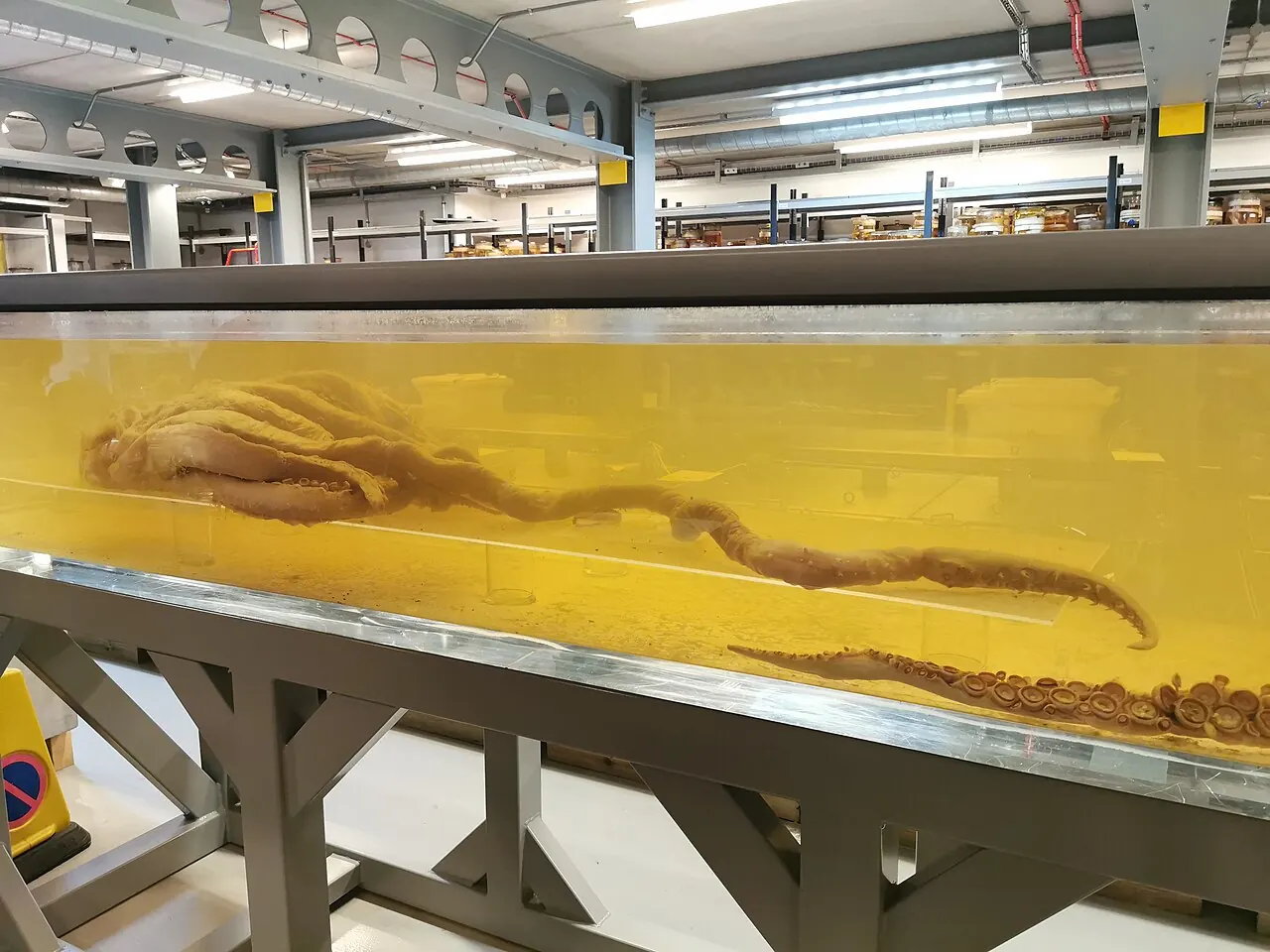
For most of scientific history, nobody could say how many kinds of giant squid exist. Scientists argued for years over the animal's taxonomy: one worldwide species, or several regional ones? The animals could not be observed, so the argument could not be settled.
Genetics went a long way toward settling it. In 2013, a team led from the Natural History Museum of Denmark sequenced the mitochondrial genomes of 43 giant squid samples gathered from across the animal's worldwide range. The samples showed no geographic pattern at all, and their genetic diversity was exceptionally low. The results fit a single global species, Architeuthis dux, which would make the squid filmed off Japan and the one off Louisiana the same kind of animal. It seems to wander the world's deep oceans, possibly drifting far and wide as tiny young.
That answer opened a new puzzle, and this one is specific. The team's analysis pointed to two possible explanations for diversity that low: the population recently boomed from a much smaller one, or natural selection recently swept through it. The paper could not say which. Either way, something happened to the world's giant squid, and we caught them in the afterglow.
Not bad for an animal that, 25 years ago, had never been seen alive in the deep.
Sources
- Kubodera & Mori (2005), First-ever observations of a live giant squid in the wild, Proceedings of the Royal Society B
- NOAA Ocean Exploration (2019), Journey into Midnight: Light and Life Below the Twilight Zone, log of June 20, 2019
- Nilsson et al. (2012), A unique advantage for giant eyes in giant squid, Current Biology
- Scientific American / Nature (2013), Live giant squid filmed in deep ocean
- Winkelmann et al. (2013), Mitochondrial genome diversity and population structure of the giant squid Architeuthis, Proceedings of the Royal Society B
Spotted an error? Tell us and we will fix it and note the change.