Hadal Zone · 6,000–11,000 m
The Deepest Fish Ever Filmed Was Swimming 8,336 Meters Down
In a trench off Japan, a camera caught a small pale snailfish living under pressure that would crush a submarine.
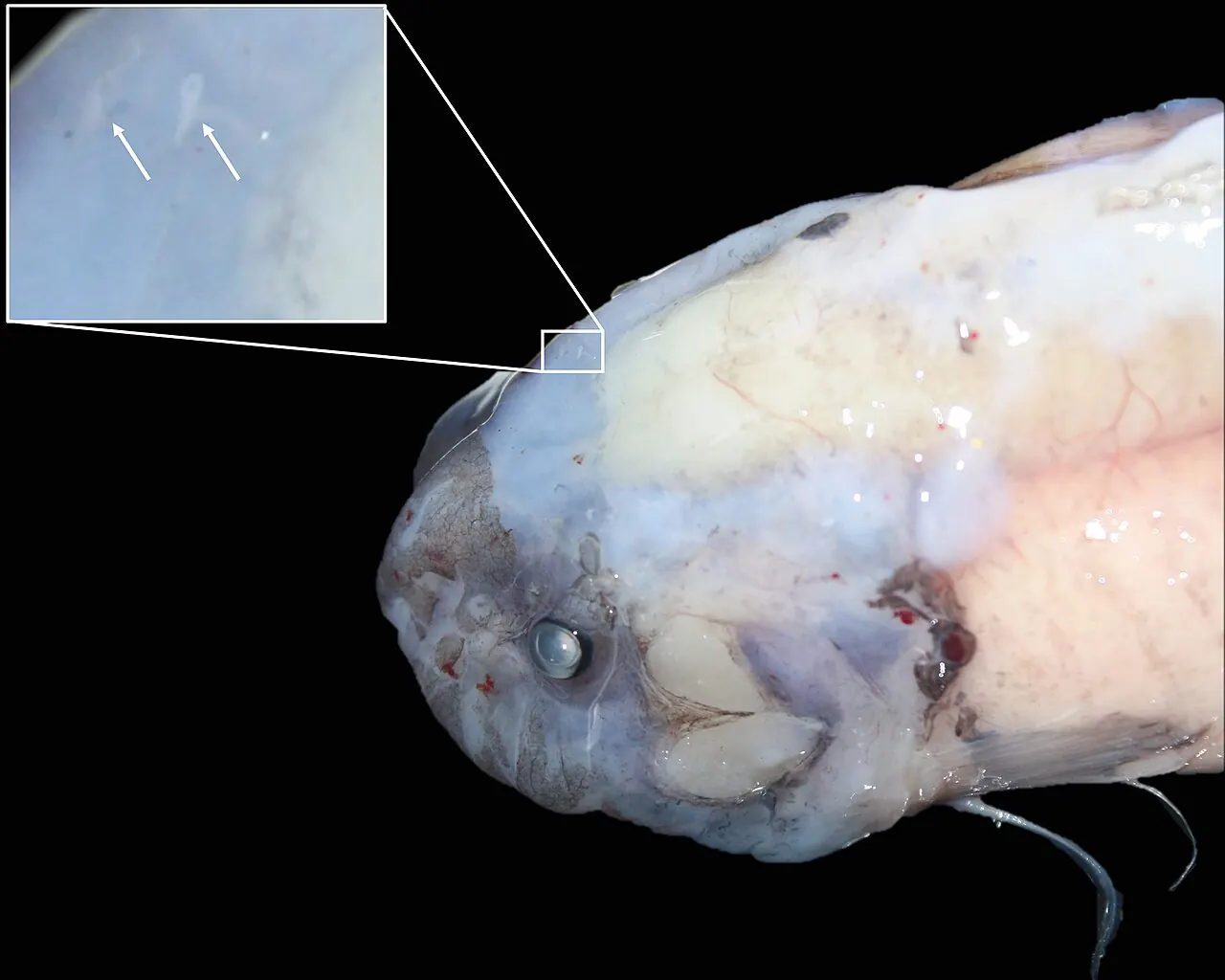
Pseudoliparis spp.
Pale, soft-bodied snailfish of the northwest Pacific trenches, including the deepest fish ever filmed, at 8,336 meters.
Photo: Gerringer, Linley, Jamieson, Goetze & Drazen (2017), Zootaxa 4358(1) / CC BY 3.0
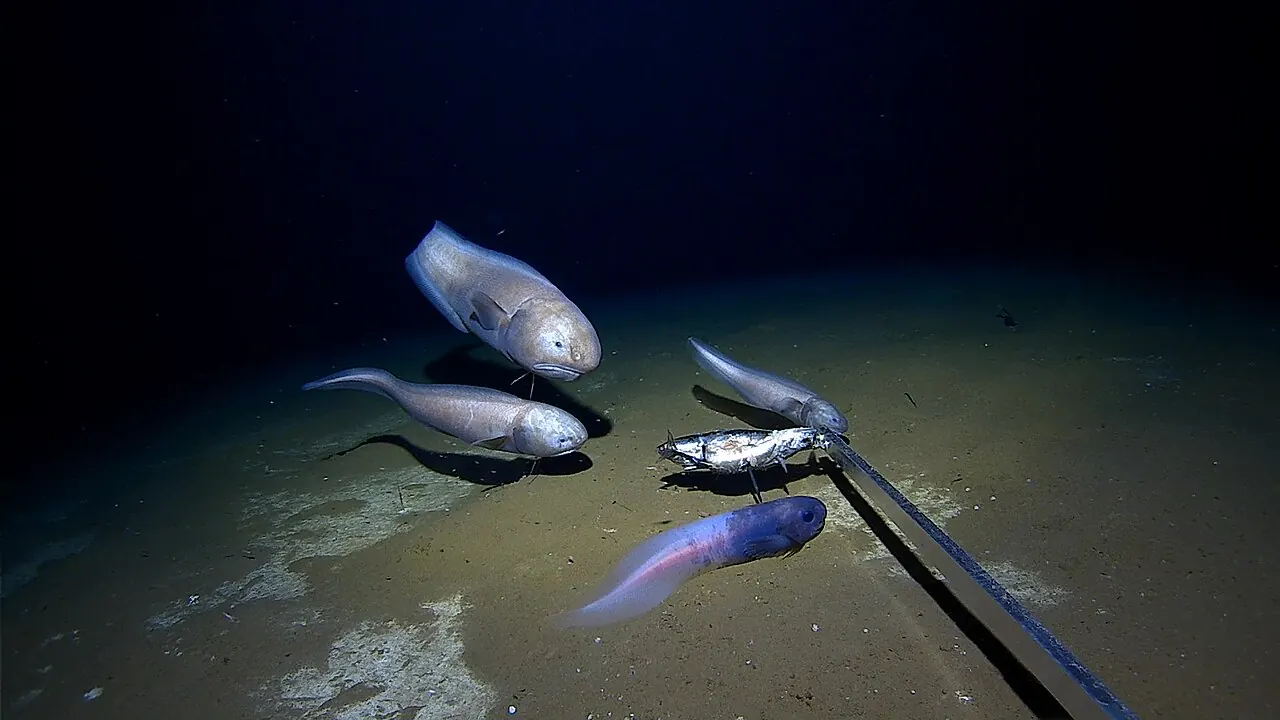
Pseudoliparis snailfish are small, pale, soft-bodied fish of the deep trenches of the northwest Pacific. London's Natural History Museum (NHM) says the deepest-living snailfishes belong to this genus, and in 2022 a camera in the Izu-Ogasawara Trench south of Japan filmed an extremely small juvenile Pseudoliparis at 8,336 meters (27,349 feet), the deepest fish ever caught on camera. Its species has not been identified.
Three species have names. The Mariana snailfish, P. swirei, was described in 2017 from 37 fish caught between 6,898 and 7,966 meters, and it is almost certainly found only in the Mariana Trench. P. belyaevi lives in the Japan Trench, where two were trapped at 8,022 meters in 2022, the first fish ever collected from deeper than 8,000 meters. P. amblystomopsis is known from the Kuril-Kamchatka and Japan trenches. FishBase gives maximum lengths of 10.8 to 23.8 centimeters (about 4 to 9 inches) for the three, and depths from about 6,150 meters down.
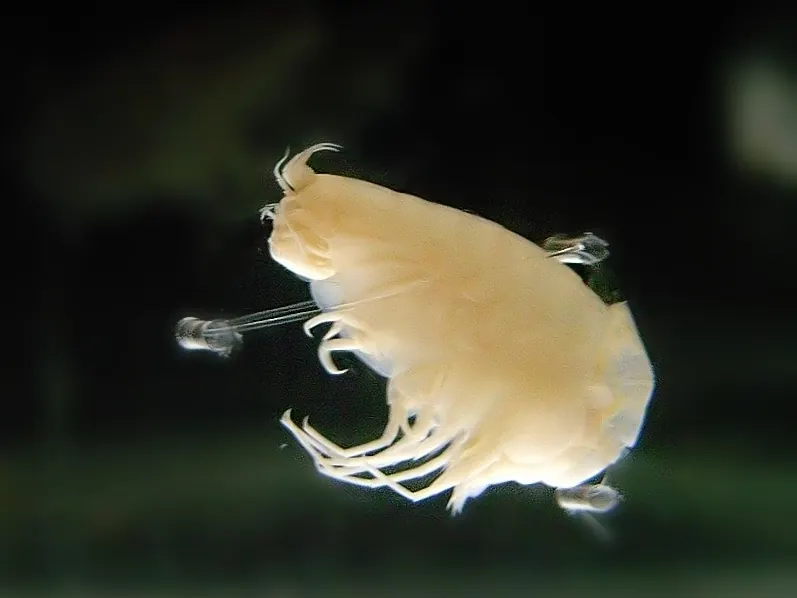
Snailfish handle the pressure by staying soft. They have no gas-filled swim bladder, which could not work that deep, and their skeletons are soft and flexible. According to the NHM, a gelatinous mucus inside and out is thought to help keep them neutrally buoyant. In the Mariana Trench, cameras have filmed groups of P. swirei of many sizes gathering at bait and feeding on swarms of amphipods, which are small crustaceans. Ripe females carry eggs up to 9.4 millimeters across, among the largest recorded for bony fish. Among snailfish, the deepest-living fish tend to be the youngest, the opposite of many other deep-sea fish.
There may be a floor to how deep any fish can go. A 2014 team led by Paul Yancey measured TMAO, a molecule that protects proteins against pressure, in a Kermadec snailfish from a related genus caught at 7,000 meters. It held the highest levels ever recorded, and extending the trend pointed to a limit for fish at about 8,200 meters. The NHM gives the estimated limit as 8,200 to 8,400 meters, which puts the 8,336-meter juvenile right at the edge.
None of the three named species has been assessed for the IUCN Red List, and how long they live is unknown.