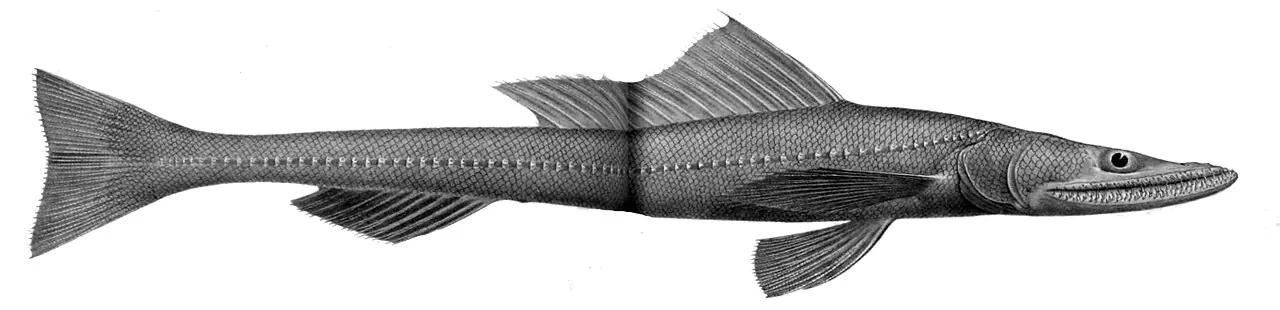
Deep-sea Lizardfish
Bathysaurus ferox
A flat-headed, fish-eating lizardfish that rests motionless on the deep seafloor and is male and female at the same time.
Illustration: Robert Mintern, in Albert Günther, Report on the Deep-Sea Fishes (Challenger Reports, 1887) / Public domain
3 things to know
- Each fish carries both ovaries and testes at the same time.
- Its oil-rich liver can make up 20 percent of its total weight.
- Off Virginia, ripe fish have been found from November through January.
- Scientific name
- Bathysaurus ferox
- Depth
- 1,000 m – 2,500 m
3,281 – 8,202 ft - Size
- Up to about 64 cm (25 in) standard length
- Weight
- Not well known
- Lifespan
- Unknown
- Diet
- Mainly fish; also decapod crustaceans
- Where
- Deep seafloors worldwide except beneath polar waters, including the western Atlantic from Davis Strait to Brazil
- IUCN status
- Least Concern
- Depth zones
- Midnight
The deep-sea lizardfish spends much of its time lying still on the seafloor with its head slightly raised, in the manner of its shallow-water lizardfish cousins. The head is flat and bony, the mouth is large, and the teeth are conical, curved backward and mostly hinged so they can fold down. The body is deepest just in front of the dorsal fin. FishBase gives a maximum standard length, measured without the tail fin, of 64 centimeters (25 inches).
It lives on deep seafloors around the world except beneath polar waters, including the western Atlantic from Davis Strait, between Greenland and Canada, south to Brazil. It is usually found in water colder than 4 degrees Celsius (39 degrees Fahrenheit). In 1985 K. J. Sulak and colleagues reviewed the genus in the Canadian Journal of Zoology. They found this species mostly at 1,000 to 2,500 meters (3,300 to 8,200 feet), and the genus's only other species, Bathysaurus mollis, mostly deeper, at 2,500 to 4,500 meters. FishBase records B. ferox from 600 to 3,500 meters overall.
It eats mainly fish, along with decapod crustaceans. In the Middle Atlantic Bight off the US East Coast, trawl samples held no more than eight of these fish per 25,000 square meters (about six acres) of seafloor, and the team found that a large, fat-rich liver can make up 20 percent of a fish's total weight, probably as an energy store.
Every deep-sea lizardfish is a synchronous hermaphrodite, carrying ovaries and testes at once. Sulak's group found mature gonads in fish caught off Virginia from November through January, with an average of 32,000 eggs per fish. The young start out drifting in midwater, possibly within a few hundred meters of the surface, and probably develop slowly there before changing quickly into juveniles that settle on the bottom. How long the fish live is unknown. The IUCN lists the deep-sea lizardfish as Least Concern, in an assessment from 2014.
Sources
Neighbors in the same water
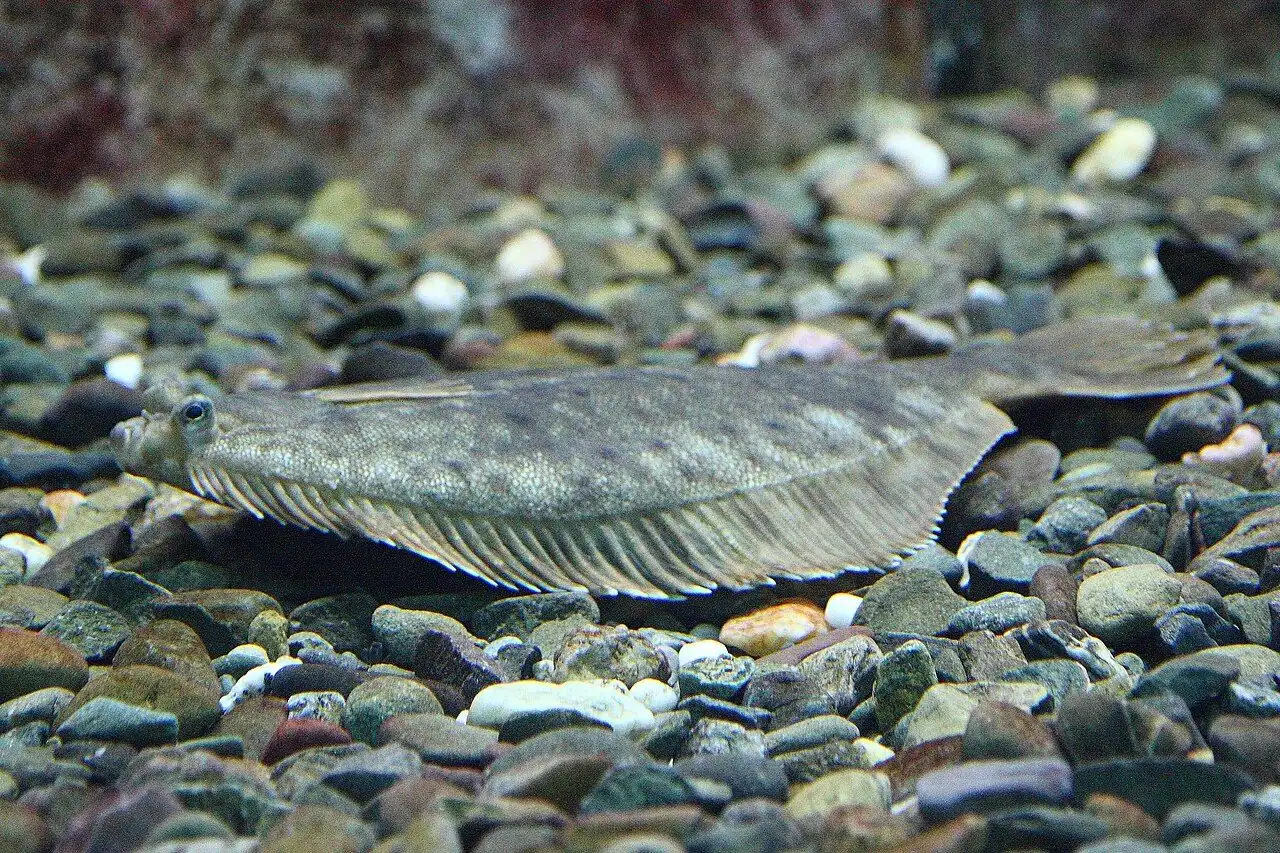
Atlantic Halibut
Hippoglossus hippoglossus
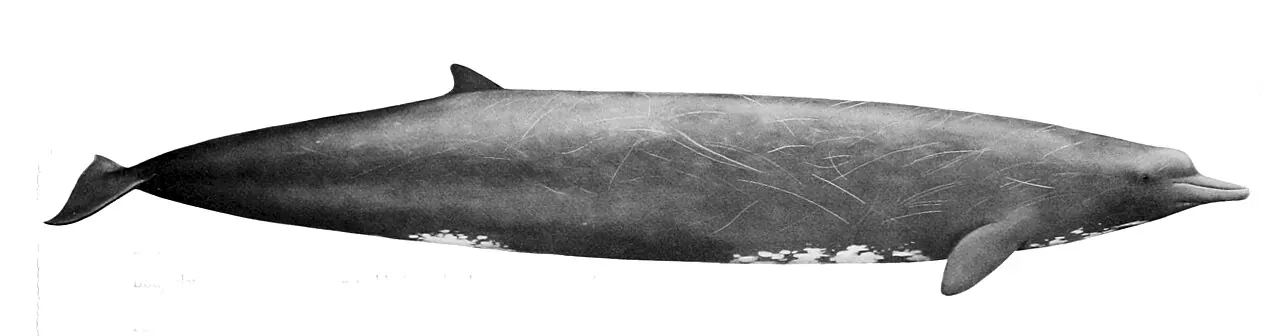
Baird's Beaked Whale
Berardius bairdii
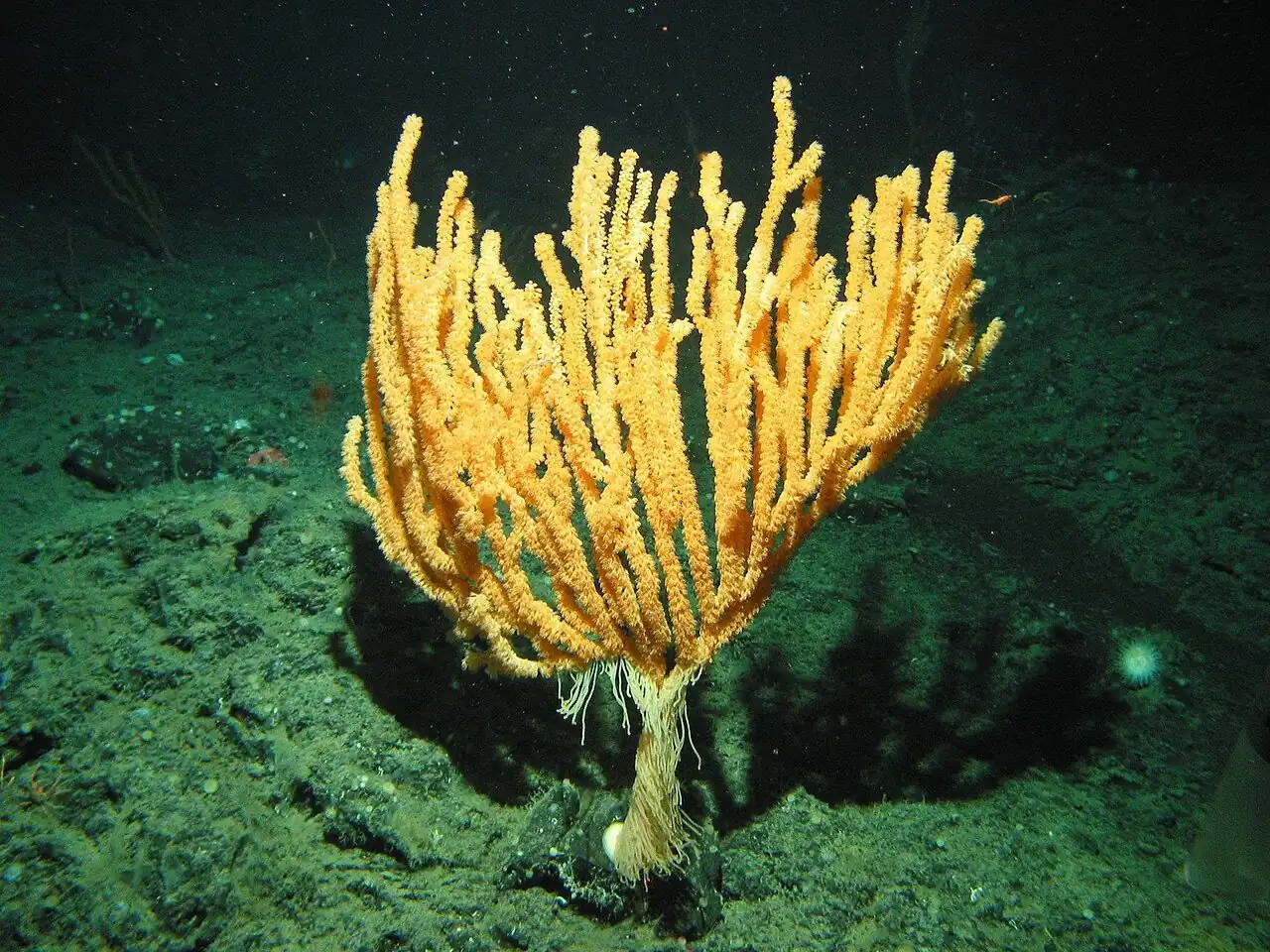
Bamboo Coral
Families Keratoisididae and Isididae (Keratoisis, Isidella and related genera)
Basket Star
Several genera, family Gorgonocephalidae (order Euryalida)