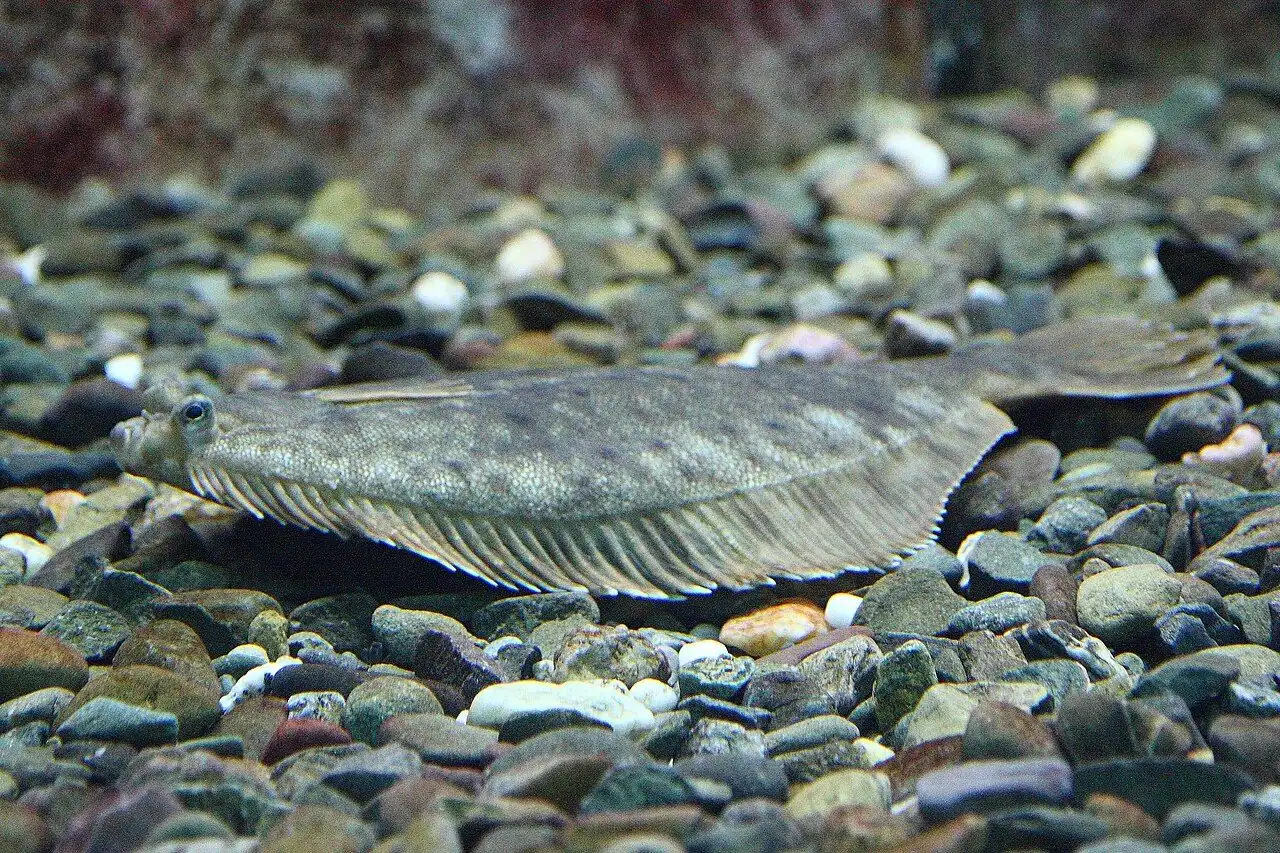
Atlantic Halibut
Hippoglossus hippoglossus
A giant North Atlantic flatfish, slow to grow and late to breed, whose US stock is still rebuilding from overfishing.
Photo: Cephas / CC BY-SA 3.0
3 things to know
- The record Atlantic halibut, caught off Cape Ann, Massachusetts, likely weighed about 318 kg (700 lb) alive.
- Females usually do not spawn until they are about 10 or 11 years old.
- US fishermen in federal waters may land only one Atlantic halibut per boat per trip.
- Scientific name
- Hippoglossus hippoglossus
- Depth
- 50 m – 2,000 m
164 – 6,562 ft - Size
- The largest are over 2.7 m (9 ft) long
- Weight
- Full-grown females average 45 to 68 kg (100 to 150 lb); record 279 kg (615 lb) gutted, about 318 kg (700 lb) alive
- Lifespan
- Up to about 50 years
- Diet
- Young eat invertebrates; adults eat mostly fish such as cod, haddock, herring, capelin and sand eels, plus squid and crustaceans
- Where
- North Atlantic and nearby Arctic waters, from Labrador and Greenland to Iceland, and from the Barents Sea south to the Bay of Biscay and Virginia
- IUCN status
- Near Threatened
- Depth zones
- Sunlight · Twilight · Midnight
The biggest Atlantic halibut on record was caught off Cape Ann, Massachusetts. It weighed 279 kilograms (615 pounds) with its guts removed, and NOAA Fisheries estimates it weighed about 318 kilograms (700 pounds) alive. Atlantic halibut are right-eyed flatfish, lying on the bottom with both eyes on the upper side, and they have a large, gaping mouth, a concave tail and a lateral line that arches above the pectoral fin. Adults are a fairly even dark brown or black on top. Full-grown females average 45 to 68 kilograms (100 to 150 pounds), and males are smaller. The largest fish are over 2.7 meters (9 feet) long.
They live from Labrador and Greenland to Iceland, and from the Barents Sea south to the Bay of Biscay and Virginia. In US waters they are most common in the Gulf of Maine. Adults stay on or near sand, gravel or clay bottoms anywhere from about 50 to 2,000 meters (160 to 6,560 feet) deep. Halibut up to about 30 centimeters (12 inches) eat almost nothing but invertebrates, and by about 79 centimeters (31 inches) they eat almost only fish, including cod, haddock, herring, capelin and sand eels.
Spawning happens mostly in winter, near the bottom. Rachel Marshall, Arnault Le Bris and colleagues fitted large halibut in Canada's Gulf of St. Lawrence with pop-up satellite tags that logged depth, temperature and movement. In the Journal of Fish Biology in 2023, they described a pattern in the winter records: fast climbs off the seafloor, at least 25 meters (82 feet) up and back down within four hours, which they interpreted as spawning events. Females released their eggs in batches, and the number of climbs had nothing to do with a female's size. Halibut that had been in warmer water before the season started spawning earlier, which the authors say could shift spawning times as the gulf warms.
Atlantic halibut grow slowly and breed late. Males mature at 7 to 8 years and females at 10 to 11, and they can live about 50 years, so heavy fishing hits them hard. NOAA's 2024 assessment found the US stock overfished, and a rebuilding plan aims to restore it by 2055. Fishermen in federal waters may land one halibut per vessel per trip, and the 2024 US commercial catch was 76,000 pounds (34,000 kilograms). The IUCN lists the species as Near Threatened, in an assessment from 2021.



