Vampire Squid
Vampyroteuthis infernalis
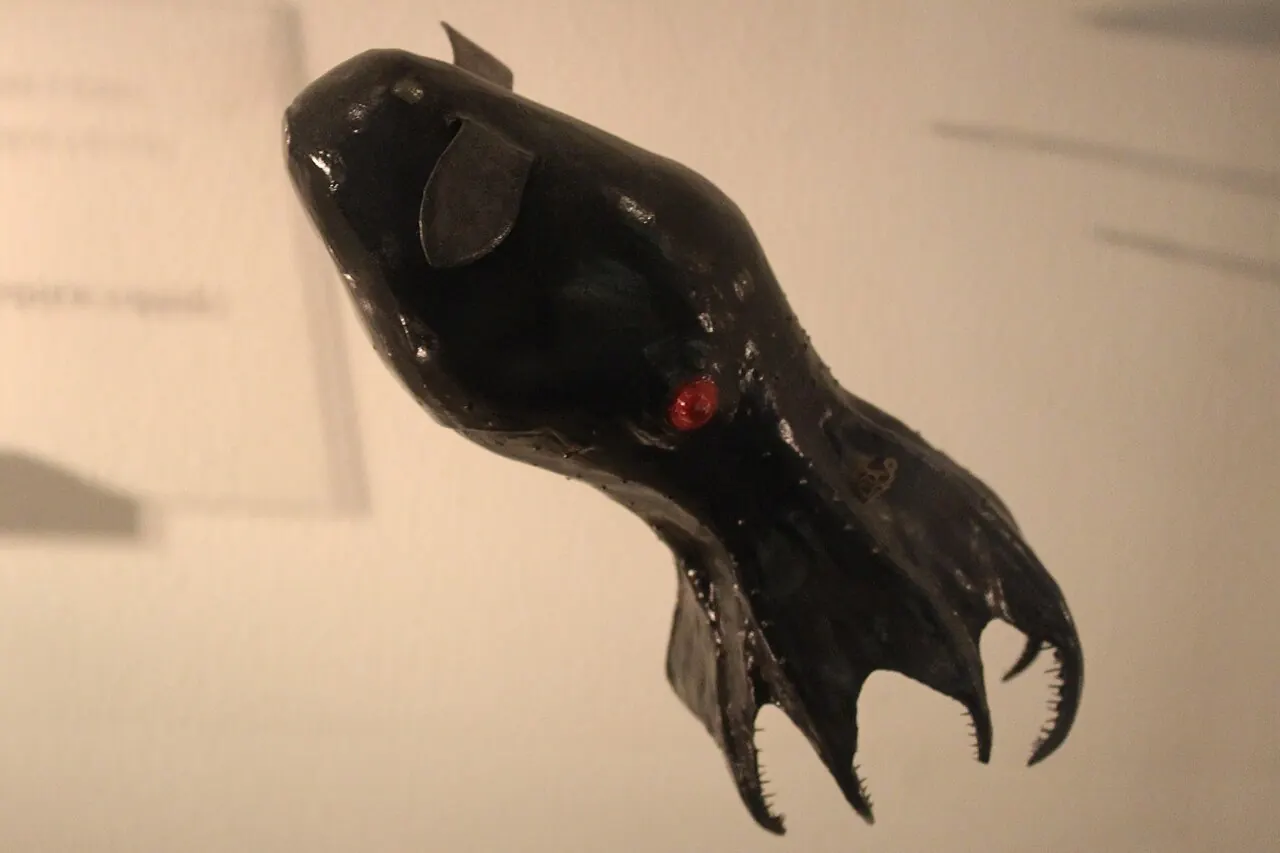
A deep-sea cephalopod, neither vampire nor true squid, that fishes for falling marine snow with two long, sticky filaments.
Photo: Emőke Dénes / CC BY-SA 4.0
3 things to know
- Its two filaments can stretch up to eight times the length of its body.
- It lives in water so low in oxygen that few predators follow it there.
- Unlike most cephalopods, a female spawns again and again, more than 20 times.
- Scientific name
- Vampyroteuthis infernalis
- Depth
- 600 m – 1,200 m
1,969 – 3,937 ft - Size
- Up to about 30 cm (12 in) long
- Weight
- Not well known
- Lifespan
- Unknown; MBARI researchers suggest it may live up to a decade
- Diet
- Marine snow (sinking organic debris) and small zooplankton
- Where
- Tropical and temperate oceans worldwide
- IUCN status
- Not Evaluated
- Depth zones
- Twilight · Midnight
Vampyroteuthis infernalis, the "vampire squid from hell," is about the size, shape and color of a football, according to MBARI. It has a dark red body, huge blue eyes and a cloak of skin webbed between its eight arms. Despite the name, it is not a squid. It has features of both octopuses and squids and is the only living member of its own order. It also lacks the two long feeding tentacles that squids use to grab prey. In their place it has two thin filaments that it can pull in and let out.
The species lives in tropical and temperate waters around the world. SeaLifeBase puts it mostly between 600 and 1,200 meters (about 2,000 to 3,900 feet) down, with records to 3,000 meters. Over the Monterey Submarine Canyon off California, Henk-Jan Hoving and Bruce Robison of the Monterey Bay Aquarium Research Institute (MBARI) found it throughout the band from 600 to 900 meters, in water very low in oxygen. Few predators live there, and little of the usual cephalopod food.
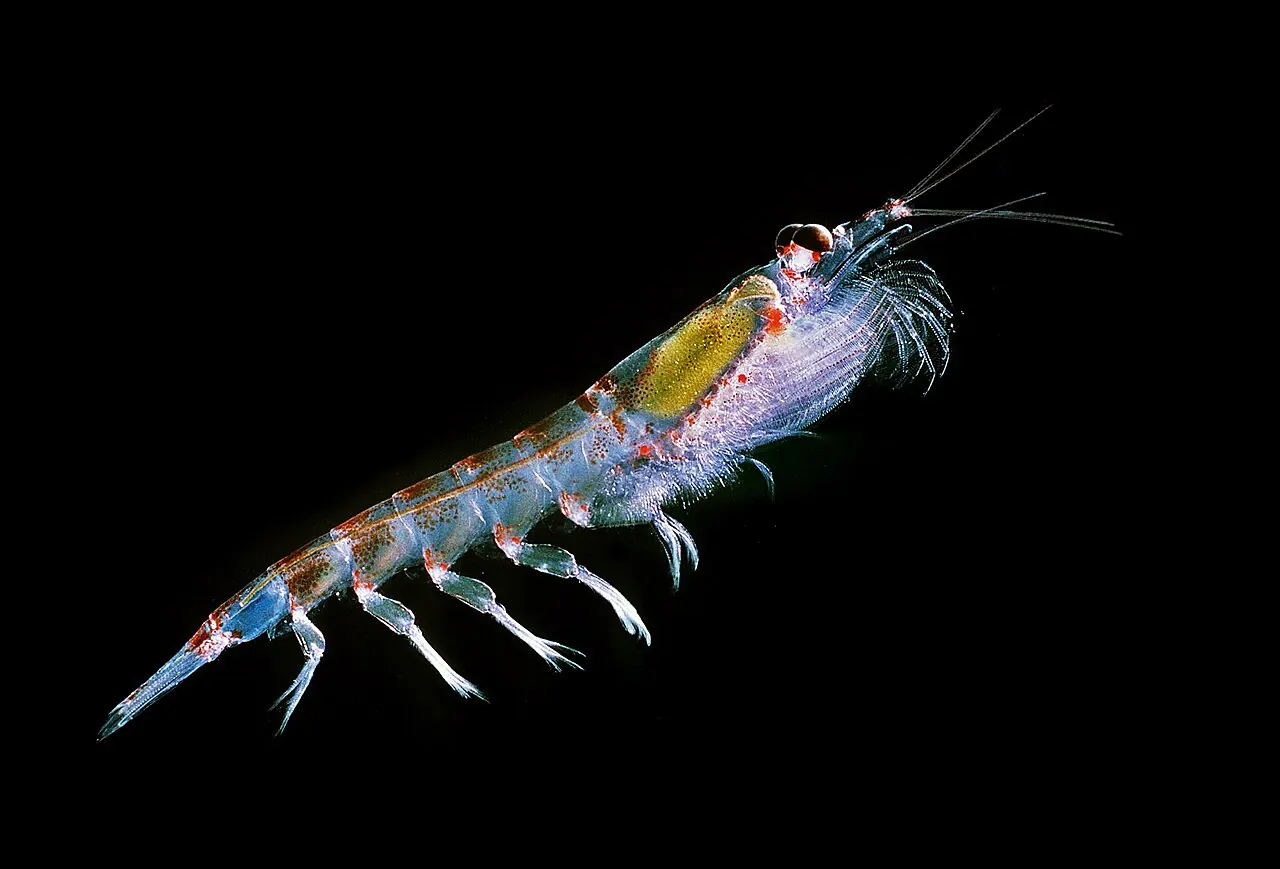
Its diet went unknown for about a century after the first one was hauled up. In 2012, Hoving and Robison showed that it eats marine snow, the debris that sinks from above: remains of jellies, discarded larvacean houses, crustacean bits, diatoms and fecal pellets. The squid drifts with one filament extended, up to eight times its body length, and lets particles stick to it. Its suckers make mucus that binds the scraps into a ball, which it passes to its mouth. No other known cephalopod feeds this way.
It has no ink. Instead it can release a cloud of glowing fluid to distract a predator, and when threatened it turns its cloak inside out, exposing soft, finger-like cirri.
Breeding breaks the usual cephalopod rule too. Most octopuses and squids reproduce once and die. A 2015 study of 43 females found that vampire squid release eggs in batches of roughly 100, rest, and spawn again, more than 20 times in a lifetime. The researchers suggested it may live up to a decade. The species has not been assessed for the IUCN Red List.
Sources
- mbari.org/animal/vampire-squid
- mbari.org/news/mbari-researchers-discover-what-vampire-squids-eat-its-not-what-you-think
- mbari.org/news/vampire-squid-live-long-and-reproduce-often
- Study: doi:10.1098/rspb.2012.1357
- pmc.ncbi.nlm.nih.gov/articles/PMC3479720
- sealifebase.se/summary/speciessummary.php
- en.wikipedia.org/wiki/Vampire_squid