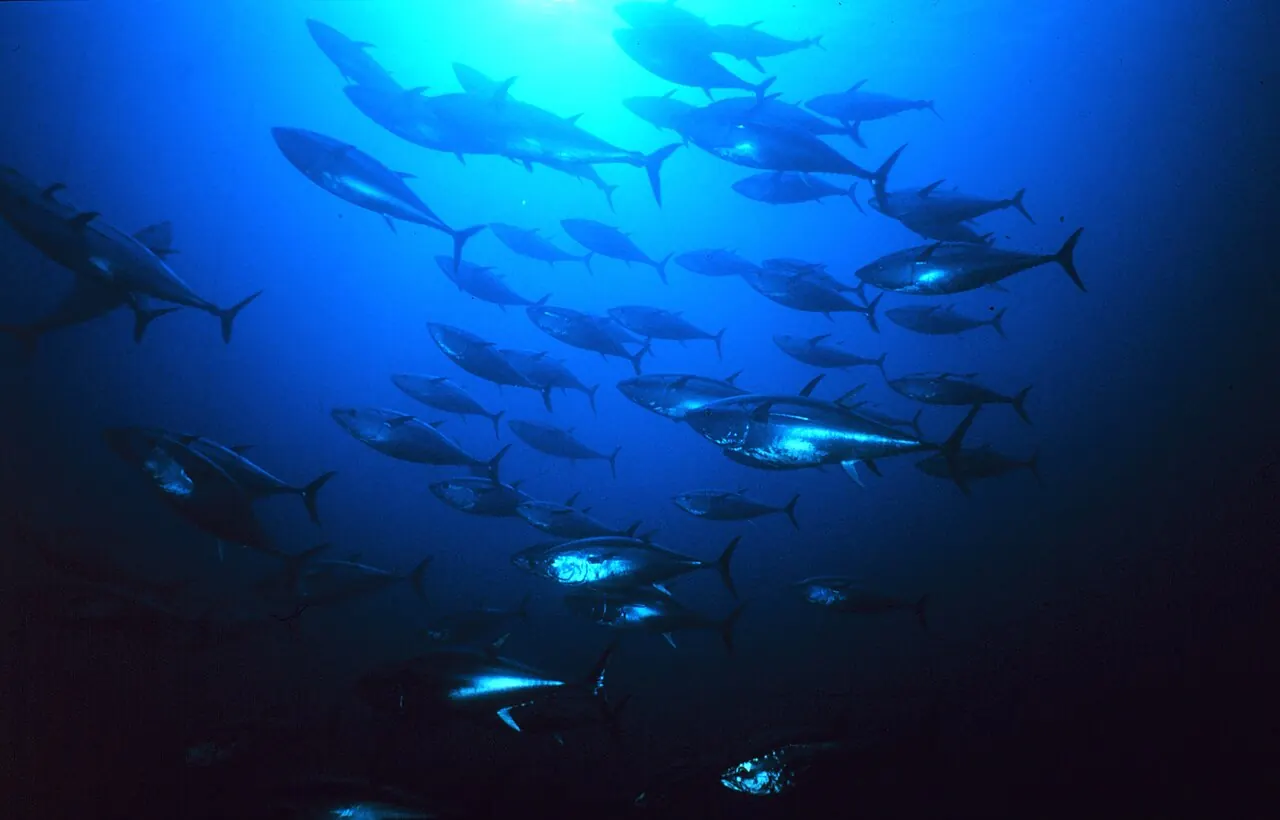
Atlantic Bluefin Tuna
Thunnus thynnus
The largest tuna, a slow-growing ocean crosser whose two populations share feeding grounds but return to separate spawning seas.
Photo: Danilo Cedrone (UN FAO) / NOAA / Public domain
3 things to know
- It is the largest of all the tunas.
- Western Atlantic bluefin generally don't spawn until they are about 8 years old.
- In 2021 the IUCN moved it from Endangered to Least Concern.
- Scientific name
- Thunnus thynnus
- Depth
- 0 m – 1,000 m
0 – 3,281 ft - Size
- Commonly about 2 m (6.6 ft); up to about 4 m (13 ft) long
- Weight
- Largest published weight 684 kg (about 1,500 lb); NOAA says up to 907 kg (2,000 lb)
- Lifespan
- 20 years or more; FishBase gives a maximum reported age of 32 years
- Diet
- Schooling fish such as herring, mackerel and anchovies, plus squid and crustaceans
- Where
- Mainly the North Atlantic, from Newfoundland to the Gulf of Mexico and from Norway to the Canary Islands, including the Mediterranean
- IUCN status
- Least Concern
- Depth zones
- Sunlight · Twilight
Atlantic bluefin are the biggest of the tunas. The body is a torpedo, nearly round in cross section, blue-black on top and silvery white below, with rows of colorless lines and dots along the lower sides. The second dorsal fin is reddish brown and the pectoral fins are short, both handy for telling a bluefin from its relatives. Most adults are around 2 meters (6.6 feet) long. FishBase's largest published weight is 684 kilograms (about 1,500 pounds), though NOAA says bluefin can reach 2,000 pounds. The rod-and-reel record is 679 kilograms (1,496 pounds).
The species ranges mainly across the North Atlantic, from Newfoundland to the Gulf of Mexico in the west and from Norway to the Canary Islands in the east, Mediterranean included. Bluefin live near the surface in temperate water, but NOAA says they frequently dive to 500 to 1,000 meters (1,640 to 3,280 feet). Young fish eat fish, squid and crustaceans. Adults hunt schooling fish such as herring, mackerel and bluefish, and are eaten in turn by sharks, killer whales and pilot whales.
For a tuna, the bluefin is a slow starter. Western fish generally wait until about age 8 to spawn, and they live 20 years or more. FishBase lists a maximum reported age of 32. A female can release up to 10 million eggs a year, and the eggs hatch in about two days.
Electronic tags revealed how the ocean's bluefin are split. Between 1996 and 2004, Barbara Block's team at Stanford University's Hopkins Marine Station and the Monterey Bay Aquarium tagged 772 bluefin in the western Atlantic. Tracks from 330 of them showed two populations that mix on North Atlantic feeding grounds but spawn in different seas, one in the Gulf of Mexico and one in the Mediterranean. Some fish tagged off North America crossed the ocean to spawn in the Mediterranean.
That split matters for the species' recovery. In 2021 the IUCN moved the Atlantic bluefin from Endangered to Least Concern, crediting enforced fishing quotas. The same update noted that the larger eastern population had grown by at least 22% over four decades, while the western population that spawns in the Gulf of Mexico had declined by more than half. US rules do not allow targeted bluefin fishing in the Gulf, and bluefin caught by recreational anglers may not be sold.



