Stoplight Loosejaw
Malacosteus niger
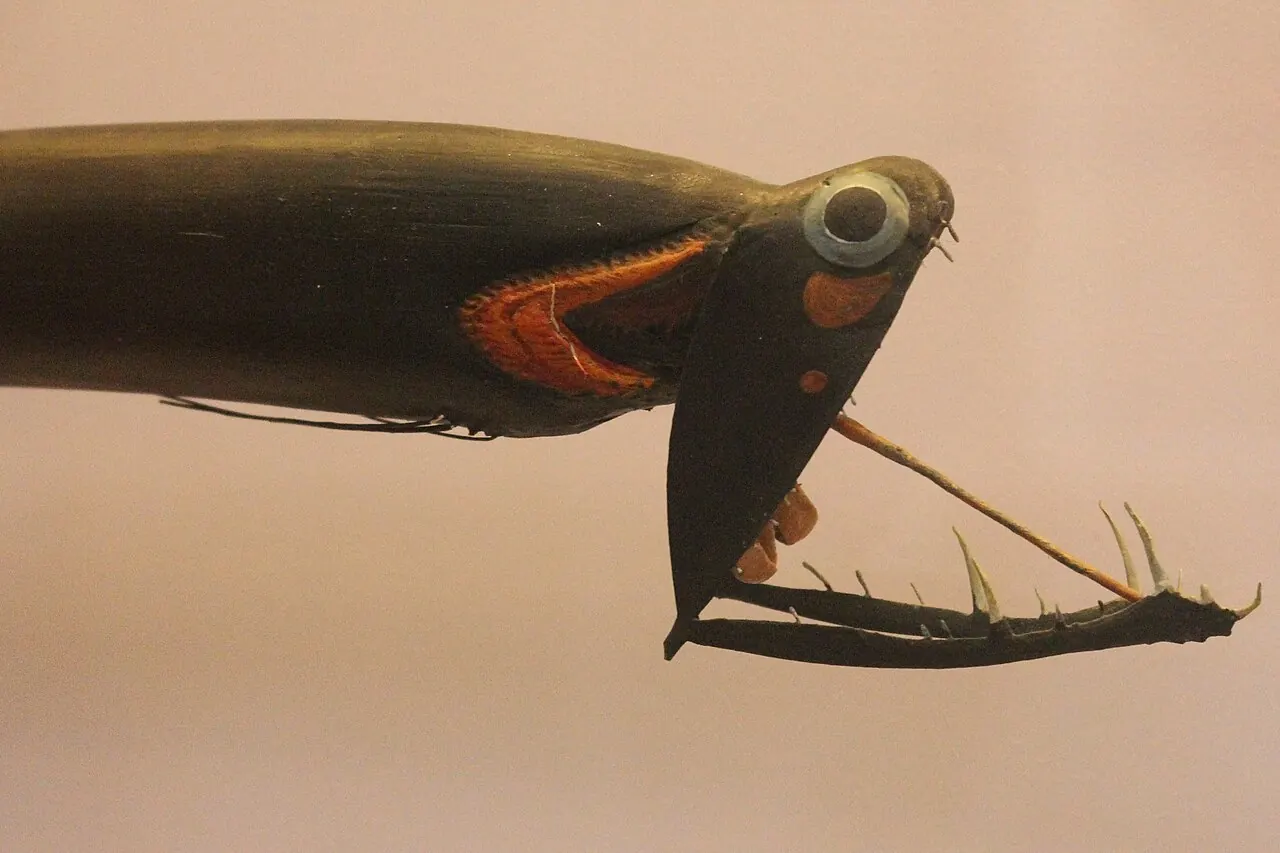
A deep-sea dragonfish that shines red light most deep-sea animals can't see, and sees it with a chlorophyll pigment from its food.
Photo: Emőke Dénes / CC BY-SA 4.0
3 things to know
- A light organ under each eye gives off far-red light.
- A pigment derived from chlorophyll helps its eyes pick up that red light.
- Its lower jaw has no floor of skin, so its mouth can open extremely wide.
- Scientific name
- Malacosteus niger
- Depth
- 500 m – 2,000 m
1,640 – 6,562 ft - Size
- Up to about 26 cm (10 in) long
- Weight
- Not well known
- Lifespan
- Unknown
- Diet
- Copepods and other crustaceans, and fish
- Where
- All oceans from about 66°N to about 30°S; not known from the Mediterranean
- IUCN status
- Least Concern
- Depth zones
- Twilight · Midnight
Most light in the deep sea is blue. Both the last traces of sunlight and most bioluminescence fall around 450 to 500 nanometers, and the eyes of most deep-sea fishes are tuned to match. Three genera of loose-jawed dragonfish break that rule, the stoplight loosejaw among them. Besides blue lights, it has a large red light organ under each eye that gives off far-red light, a waveband to which other deep-sea animals are blind. R. H. Douglas of City University London and colleagues described this as a potentially private waveband for lighting up prey and for signaling, out of view of predators and prey.
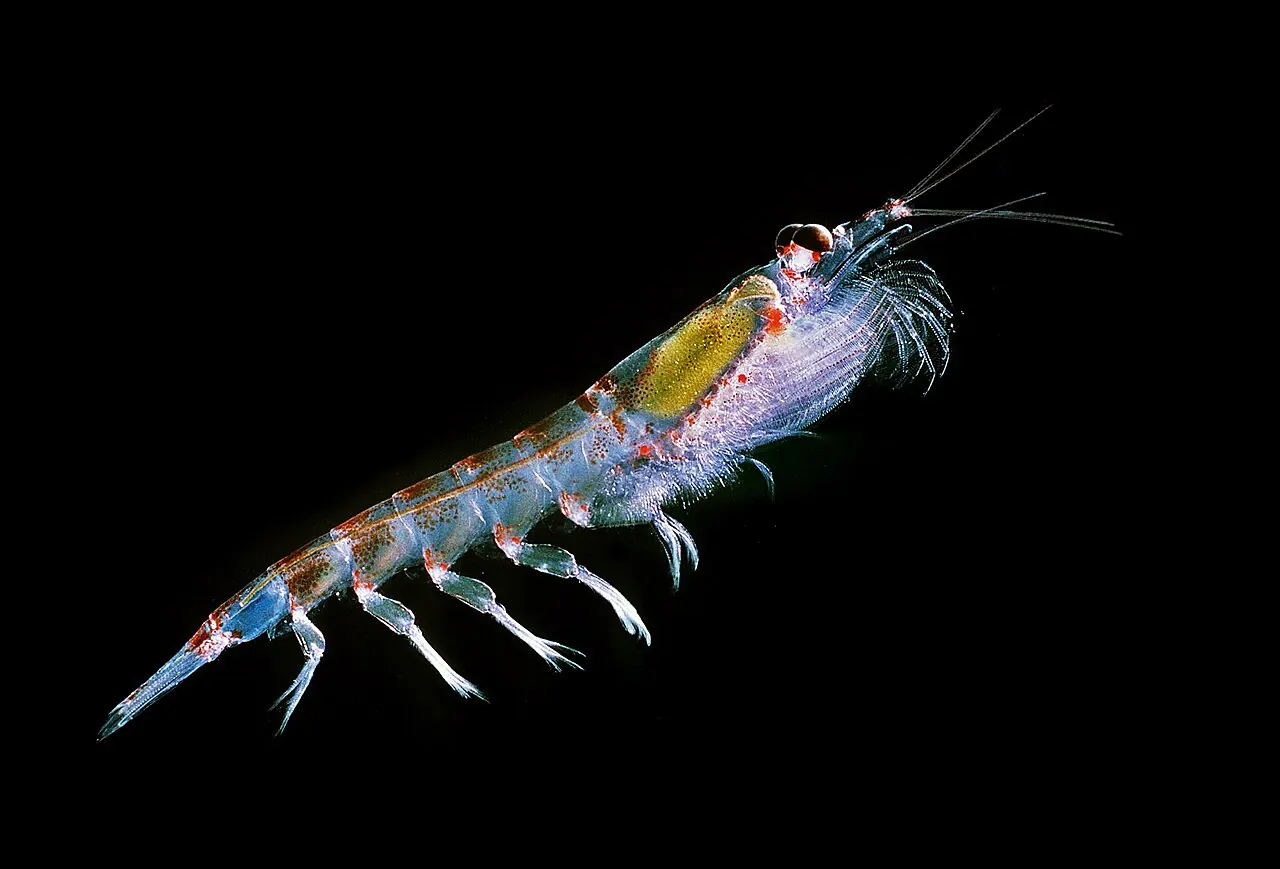
Seeing that light takes something extra. The other two red-lighting genera carry visual pigments tuned far toward red. The stoplight loosejaw lacks the most red-sensitive of them, and in 1998 Douglas's team reported in Nature that it uses a pigment derived from chlorophyll in its eyes instead. In a 2000 follow-up, they found that the pigment's fluorescence closely matched pigments from midwater copepods, small crustaceans that are an important part of its diet, suggesting the fish gets it from its food. The Woods Hole Oceanographic Institution notes that the copepods in turn eat bacteria containing pigments from chlorophyll.
The name comes from the jaw. WHOI describes a lower jaw about a quarter of the fish's length, hinged in several places, armed with curved, needle-like fangs and missing the floor that other fish have between the two sides of the jaw, so the mouth can open extremely wide.
According to FishBase, it lives in every ocean from about 66°N in the Arctic to about 30°S, though it is unknown in the Mediterranean, at 500 to 3,886 meters (1,640 to 12,750 feet). Unlike many dragonfishes, it seems not to migrate toward the surface at night, staying below 500 meters. It reaches about 26 centimeters (10 inches). A 2007 revision of the genus by Christopher Kenaley described a new species from the temperate Southern Hemisphere and the Indian Ocean. How long it lives is unknown, and the IUCN lists it as Least Concern.
Sources
- fishbase.se/summary/Malacosteus-niger.html
- whoi.edu/ocean-learning-hub/ocean-facts/stoplight-loosejaw
- pmc.ncbi.nlm.nih.gov/articles/PMC1692851
- Study: doi:10.1098/rstb.2000.0681
- Study: doi:10.1038/30871
- Study: doi:10.1643/0045-8511(2007)7[886:ROTSLG]2.0.CO
- marinespecies.org/aphia.php
- commons.wikimedia.org/wiki/File:Hal_-_Malacosteus_niger_-_1.jpg