Strawberry Squid
Histioteuthis heteropsis
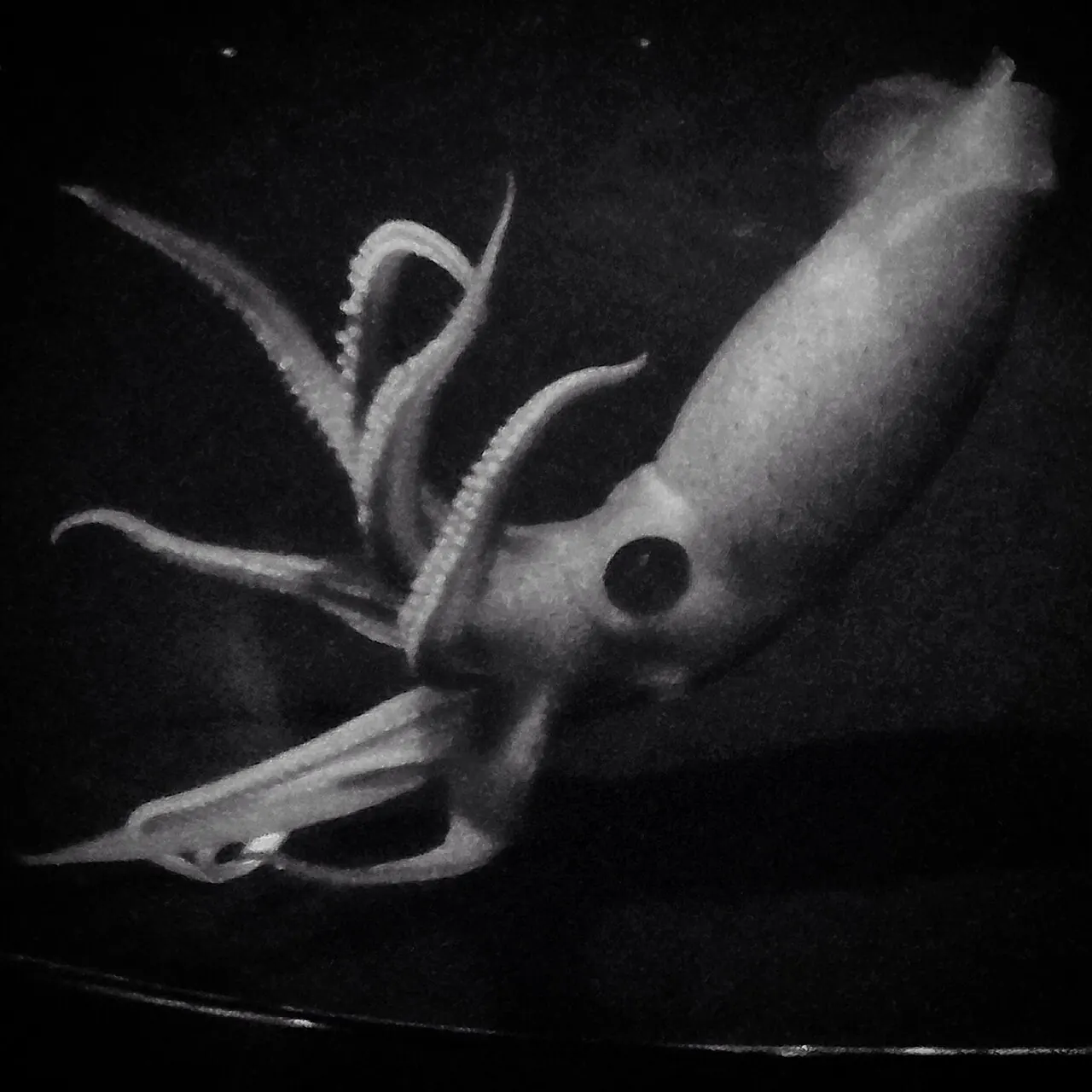
A red twilight-zone squid with one big upward-looking eye and one small downward-looking eye, each tuned to a different kind of light.
Photo: Emily Simpson / CC BY-SA 3.0
3 things to know
- Its big left eye looks up for silhouettes; its small right eye looks down for flashes of living light.
- In one study, 65% of adults had a yellow lens in the big eye.
- Its red skin looks black at depth, where red light does not reach.
- Scientific name
- Histioteuthis heteropsis
- Depth
- 200 m – 1,000 m
656 – 3,281 ft - Size
- Mantle up to about 13 cm (5 in) long
- Weight
- Not well known
- Lifespan
- Unknown
- Diet
- Shrimp, fishes and other squids
- Where
- Eastern Pacific, in separate northern and southern populations; in the north from Canada to Baja California
- IUCN status
- Least Concern
- Depth zones
- Twilight
One eye of Histioteuthis heteropsis is far bigger than the other. The large left eye is tube-shaped and looks up, scanning the dim water above for the shadows that prey cast against the last of the sunlight, and it often has a yellow lens. The small right eye looks down for flashes of light made by animals below. That mismatch is why the species is also called the cockeyed squid, according to MBARI. The body is bright red and dotted with light organs called photophores, which help mask its outline from predators below. Red light does not reach its depths, so the red looks black there.
The mantle grows to about 13 centimeters (5 inches). The species lives in the eastern Pacific in two separate populations, north and south of the tropics, and the Tree of Life Web Project calls it common off Southern California. By day it stays between about 200 and 1,000 meters (660 and 3,300 feet) down, and it rises at night: trawl studies off California, reported by Roper and Young in 1975, found it below 400 meters by day and in the upper 400 meters after dark. It eats shrimp, fishes and other squids, and is eaten by sperm whales, dolphins, tunas, swordfish and sharks. Seen from robots, it moves slowly and deliberately, even when jetting, and rarely inks.
In 2017 Kate Thomas, Bruce Robison and Sönke Johnsen tested the two-eye idea with MBARI video from the Monterey Submarine Canyon. Across 152 squid of this species, the big eye pointed upward and the small eye slightly downward, helped by a tail-up, tilted body. In 65% of 69 adults, the big eye's lens carried yellow pigment, which may help the squid see through the glowing camouflage that its prey use to hide their own silhouettes. Their models showed that enlarging an upward-looking eye improves vision far more than enlarging one that looks down, which may explain why the two eyes grew so different.
Males mature at mantle lengths of 54 to 89 millimeters; little else is known about its breeding or lifespan. The IUCN lists it as Least Concern, from a 2010 assessment, with a range that includes waters off California, Oregon and Washington.