Peanut Worm
Sipuncula (about 150 species)
Plump, unsegmented sea worms that can pull their front end inside the body. They live from the shore to 6,860 m and turn out to be annelids.
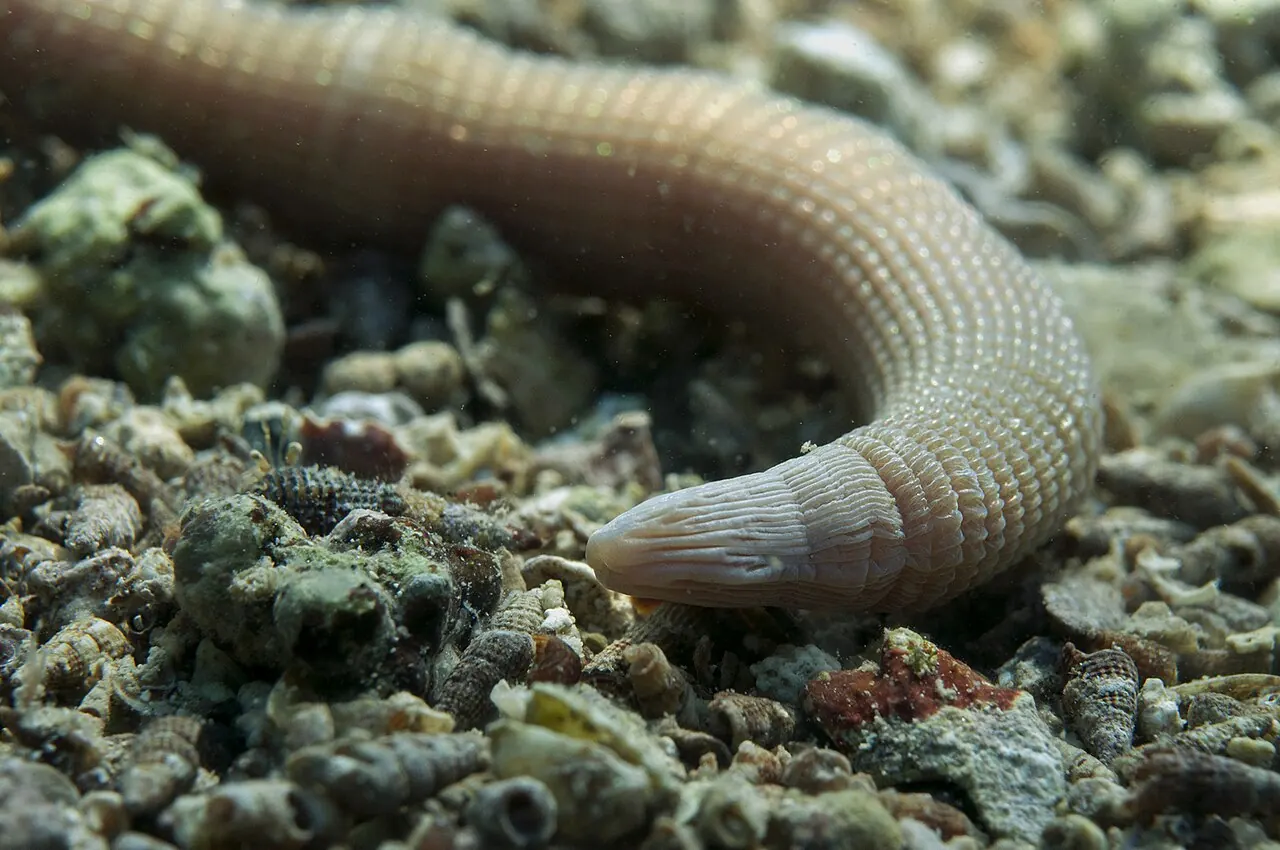
Photo: Marinko Babić / CC BY-SA 4.0
3 things to know
- The gut runs down and back up the body, its two branches twisted around each other in a double helix.
- One peanut worm species has been found boring into a whale skull.
- Some peanut worm larvae drift in the plankton for up to six months before settling.
- Scientific name
- Sipuncula (about 150 species)
- Depth
- 0 m – 6,860 m
0 – 22,508 ft - Size
- Trunk from a few millimeters to about 30 cm (12 in) long in exceptionally large specimens
- Weight
- Not well known
- Lifespan
- Not well known
- Diet
- Mostly sediment and the small organisms in it; a few filter-feed with branched tentacles
- Where
- Cold, temperate and tropical seas worldwide
- IUCN status
- Not Evaluated (for the species we checked)
- Depth zones
- Sunlight · Twilight · Midnight · Abyss · Hadal
Peanut worms are plump, unsegmented sea worms built in two parts: a thicker trunk and a narrower front section, the introvert, which the worm can pull back inside its body. The mouth sits at the tip of the introvert, with tentacles around it or arranged in an arc beside it, and many species carry small hooks there. Most are gray or brown, sometimes with reddish, purple or green pigment, and the trunk ranges from a few millimeters to about 30 centimeters (12 inches) long in exceptionally large specimens. Inside, the gut runs down the body and back up in a U, its two branches twisted around each other in a double helix, and the anus usually opens near the front of the trunk.
They live in cold, temperate and tropical seas, from the intertidal zone to 6,860 meters (22,510 feet) down. Grzimek's Animal Life Encyclopedia counts 147 species. Some dig semi-permanent burrows in sand, some hide in crevices under rocks, and a number bore into dead coral or soft rock. One species has been found boring into a whale skull. Others move into empty mollusk shells, worm tubes or barnacles. To get around, a peanut worm hooks the introvert into the ground and pulls the body forward.
Most species swallow sediment and the food in it, sweeping it up with their tentacles, often at night. Rock-dwellers scrape food off the rock with their hooks, and worms of the genus Themiste filter food from the water with branched tentacles. The sexes are usually separate. Some species develop directly into small worms, while others pass through larval stages, and one larval form, the pelagosphera, can drift in the plankton for up to six months before it settles. Those long-lived larvae may be why many species are so widespread. People in Java, parts of China and the western Caroline Islands eat them, and fishers use the larger kinds as bait.
For a long time zoologists treated peanut worms as a phylum of their own. In 2011 Torsten Struck and colleagues compared 47,953 amino acid positions across 34 kinds of annelids and placed them inside the annelids, the ringed worms, near the base of the family tree. None of the species we checked has been assessed by the IUCN.