Sunlight Zone · 0–200 m
A Diver Filming Coral at Night Found the First Known Glowing Sea Turtle
In 2015 a New York biologist saw a hawksbill turtle shine green and red under blue light, the first sea turtle known to biofluoresce.
Eretmochelys imbricata
A sponge-eating reef turtle with a hawk-like beak and a prized shell, and the first sea turtle known to glow under blue light.
Photo: Diego Delso / CC BY-SA 4.0
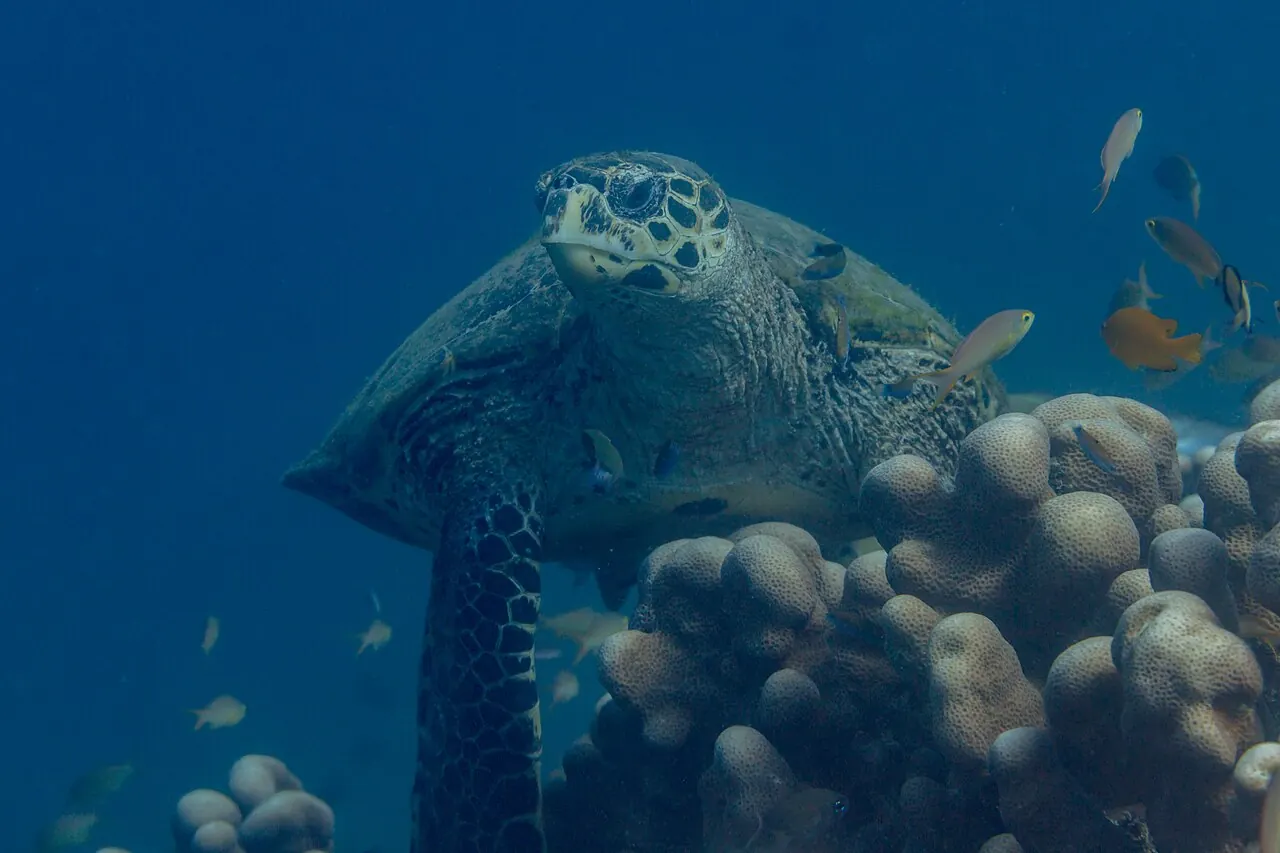
A narrow, pointed head and a sharp, curved beak give the hawksbill its name. NOAA Fisheries describes the mouth as ideal for reaching into cracks and crevices in a reef, which is where much of this turtle's food hides. The shell is a mottled mix of amber, orange, red, yellow, black and brown, with overlapping plates and serrated edges. Adults reach about 60 to 105 centimeters (2 to 3.5 feet) and weigh 45 to 68 kilograms (100 to 150 pounds).
Hawksbills live in tropical and subtropical seas around the world. Hatchlings spend their first one to five years drifting in floating mats of seaweed, then settle on coastal reefs, where adults rest under ledges and in caves. Some feed much deeper. When Graeme Hays and colleagues tracked 22 nesting females from Diego Garcia in the Indian Ocean, all of them traveled to submerged banks to feed, and their most common dive depths were 35 to 40 meters (115 to 130 feet).
Sponges are the staple. Hawksbills are the only sea turtle that can survive on a diet made up mostly of sponges, though they also eat algae, corals, mollusks, sea urchins, small fish and jellyfish. Females mature at about 20 to 35 years and come back every one to five years to nest near where they hatched, laying three to five nests a season with 130 to 160 eggs in each. NOAA estimates a lifespan of 50 years or more.
The shell nearly wiped the species out. Hawksbills were long hunted for tortoiseshell, and illegal hunting goes on even though CITES bans international trade in turtle products. Fishing gear, loss of reefs and nesting beaches, pollution and boat strikes add to the losses, and the IUCN lists the hawksbill as Critically Endangered. In the United States most nesting happens in Puerto Rico and the US Virgin Islands, with rare nests in southeast Florida and the Keys.
In 2015 the biologist David Gruber was filming coral at night in the Solomon Islands when a hawksbill swam into his blue lights and glowed green and red, the first sea turtle reported to biofluoresce. Nobody yet knows whether the glow does anything for the turtle.



