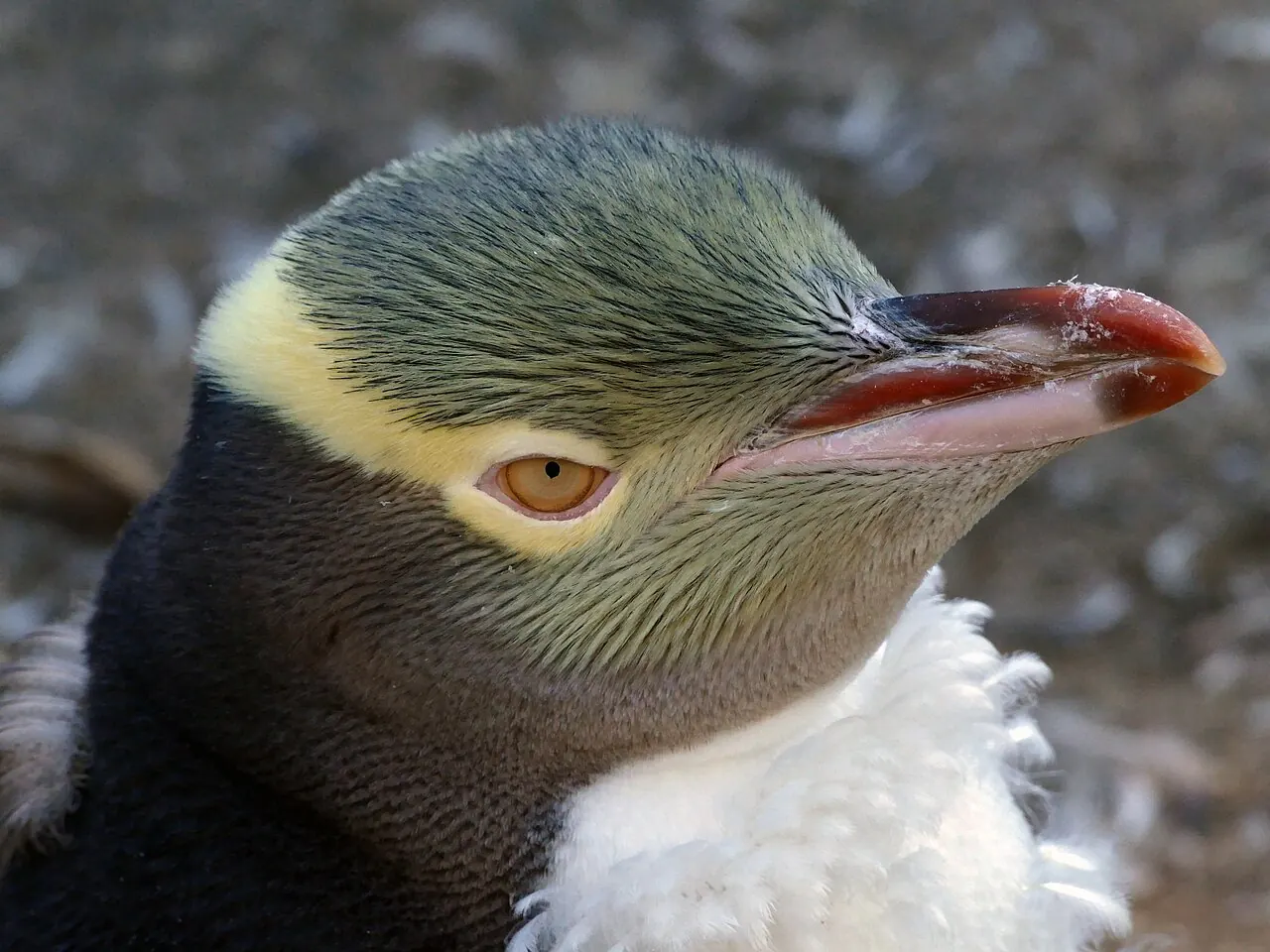
Yellow-eyed Penguin
Megadyptes antipodes
One of the world's rarest penguins, found only in New Zealand, where it reached the mainland just a few centuries ago.
Photo: Bernard Spragg. NZ / CC0
3 things to know
- Its Māori name, hoiho, means 'noise shouter'.
- It dives to the seafloor, 40 to 120 m (130 to 390 ft) down, to hunt bottom-dwelling fish.
- The northern population fell from about 741 breeding pairs in 1999 to 265 in 2019.
- Scientific name
- Megadyptes antipodes
- Depth
- 0 m – 120 m
0 – 394 ft - Size
- About 65 cm (26 in) long
- Weight
- About 5–8 kg (11–18 lb)
- Lifespan
- More than 20 years recorded, according to New Zealand Birds Online
- Diet
- Mostly bottom-dwelling fish such as red cod, opalfish, sprat and blue cod, plus squid and crustaceans
- Where
- South-east coast of New Zealand's South Island, Stewart Island/Rakiura, and the sub-Antarctic Auckland and Campbell islands
- IUCN status
- Endangered
- Depth zones
- Sunlight
New Zealand's yellow-eyed penguin has pale yellow eyes and a band of pale yellow feathers that runs from each eye around the back of the head. It is the largest penguin breeding on the New Zealand mainland, about 65 centimeters (26 inches) long and 5 to 8 kilograms (11 to 18 pounds). The Māori name, hoiho, means "noise shouter," after the shrill calls at its nest sites.
Pairs hide their nests under dense coastal forest or scrub along the south-east coast of the South Island, on Stewart Island/Rakiura, and on the sub-Antarctic Auckland and Campbell islands. They lay two eggs, and incubation lasts anywhere from 39 to 51 days, the most variable of any penguin. At sea they forage 2 to 25 kilometers (1 to 16 miles) offshore and dive 40 to 120 meters (130 to 390 feet) to the bottom for fish such as red cod, opalfish and blue cod. When Thomas Mattern and colleagues put high-definition video cameras on foraging birds, the footage showed which seafloor types different prey favored, how bottom fish tried to escape, and penguins breathing for under a second between dives.
The mainland population is newer than it looks. Ancient DNA studied by Sanne Boessenkool and colleagues showed that yellow-eyed penguins spread to the mainland only in the last few hundred years. Before about 1500, they were confined to the sub-Antarctic islands, and the mainland held a smaller relative, the Waitaha penguin, which disappeared after Polynesian settlement and is thought to have been hunted out. The authors described it as the first penguin species known to have suffered a human-caused extinction.
Today the species is listed as Endangered. The IUCN's 2020 assessment put the population at 2,600 to 3,000 mature birds, while New Zealand's Department of Conservation gives 4,000 to 5,000 for 2019. The department counted about 741 breeding pairs in the northern population in 1999 and 265 in 2019, a 65 percent fall, with poor food years, disease and predators behind it. Stoats, ferrets and cats kill chicks, dogs attack molting birds, and some are caught in set nets. As red cod have declined, likely because of warmer water and fishing pressure, hoiho have turned to blue cod, which the department says is less nutritious.



