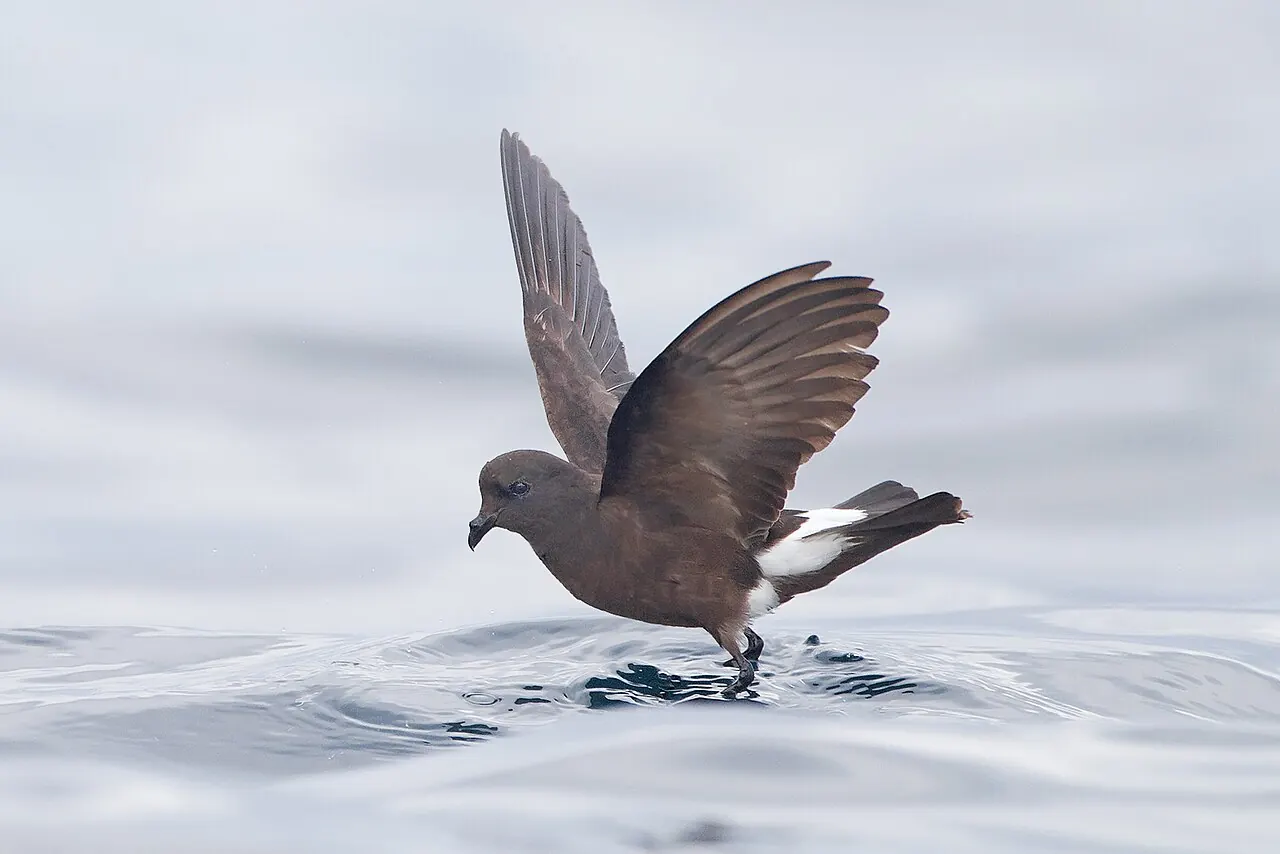
Wilson's Storm Petrel
Oceanites oceanicus
A swallow-sized seabird that nests in Antarctica, crosses the equator each year and is often the commonest seabird off the US Atlantic coast.
Photo: JJ Harrison / CC BY-SA 3.0
3 things to know
- It weighs only about 30 to 45 grams (1.1 to 1.6 ounces).
- In the dark it can find its nest burrow, and even its mate, by smell.
- At two colonies on King George Island, Antarctica, numbers fell by 90 percent between 1978 and 2020.
- Scientific name
- Oceanites oceanicus
- Depth
- At the surface
- Size
- About 17–19 cm (7–7.5 in) long, with a wingspan of 38–41 cm (15–16 in)
- Weight
- About 30–45 g (1.1–1.6 oz)
- Lifespan
- At least 10 years (maximum known)
- Diet
- Mostly krill, amphipods and other small crustaceans, plus small fish, squid, and scraps around whales and ships
- Where
- All oceans except the North Pacific and Arctic; breeds in Antarctica, on subantarctic islands and off southern Chile
- IUCN status
- Least Concern
- Depth zones
- Sunlight
Barely bigger than a swallow, Wilson's storm petrel is a sooty brown seabird with a bright white rump and a short, square tail. It is 17 to 19 centimeters (about 7 inches) long and weighs only 30 to 45 grams (1.1 to 1.6 ounces). The webs between its toes are yellow, though hard to see, and in level flight its long legs can stick out past the tail.
It feeds almost entirely at the surface. A foraging petrel hangs into the wind with its wings half open, pattering its feet on the water while it picks tiny prey off the top with its bill, sometimes putting its head under. Cornell Lab's All About Birds says it finds food by sight and smell and only occasionally swims or makes shallow dives. Krill and amphipods are staples, along with small fish such as lanternfish, squid, marine worms, and whatever whales bring up, including their feces.
The species nests in rock crevices and short burrows in Antarctica, on subantarctic islands and off southern Chile, then migrates north across the equator into every ocean except the North Pacific and the Arctic. Audubon calls it often the most common seabird off the Atlantic coast of the United States, and it is often the most numerous tubenose on offshore birding trips there between May and August.
Pairs probably stay together for several seasons. They visit the colony in darkness and can find their burrows, and even their mates, by smell. Each pair lays a single egg in December or January, and both parents incubate it for 41 to 49 days. New Zealand Birds Online gives a maximum known age of at least 10 years.
Partners in Flight puts the breeding population at about 14 million, and the IUCN lists the species as Least Concern. Some colonies are in trouble, though. On King George Island, off the Antarctic Peninsula, Ausems and colleagues assembled breeding records from 1978 to 2020 and reported in Polar Biology in 2023 that two colonies had lost 90 percent of their birds. Bad years followed shortages of Antarctic krill or snow that blocked burrow entrances, and the Australian Antarctic Division notes that chicks starve when hard snow seals them in. The authors expect a warmer Antarctic Peninsula to get more snowstorms.
Sources
- allaboutbirds.org/guide/Wilsons_Storm-Petrel/overview
- allaboutbirds.org/guide/Wilsons_Storm-Petrel/lifehistory
- audubon.org/field-guide/bird/wilsons-storm-petrel
- nzbirdsonline.org.nz/species/wilsons-storm-petrel
- antarctica.gov.au/about-antarctica/animals/flying-birds/petrels-and-shearwaters/wilsons…
- Study: doi:10.1007/s00300-023-03154-4
- iucnredlist.org/species/22698436/132646007



