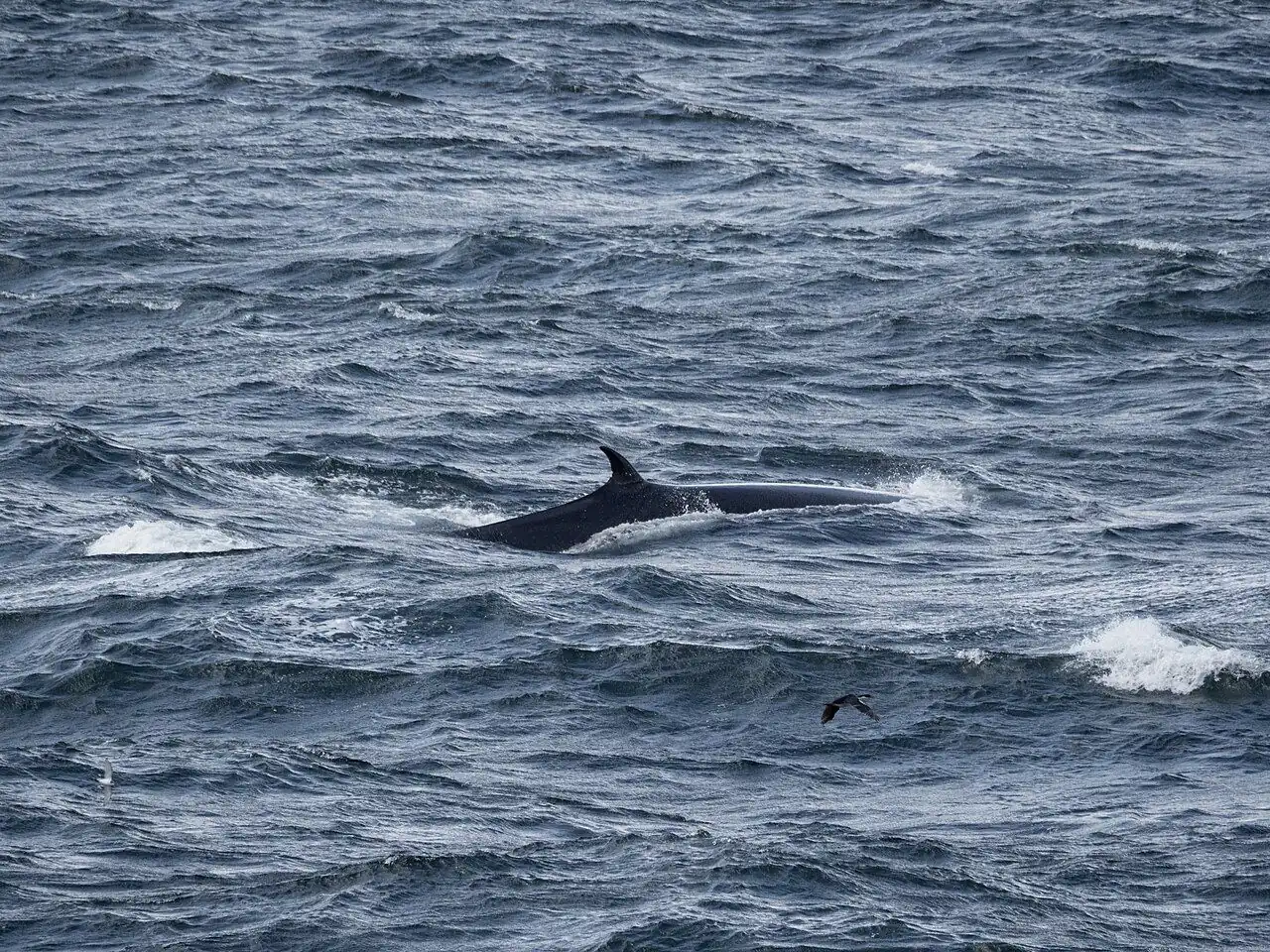
Sei Whale
Balaenoptera borealis
A fast, wandering rorqual named after the pollock, hit hard by whaling and by the largest baleen whale die-off ever recorded.
Photo: Carina Gsottbauer / CC BY-SA 4.0
3 things to know
- It can swim faster than 54 kilometers per hour (34 miles per hour).
- Its name comes from the Norwegian word for pollock.
- In 2015 at least 343 whales, mostly sei whales, died together in a gulf in southern Chile.
- Scientific name
- Balaenoptera borealis
- Depth
- 0 m – 57 m
0 – 187 ft - Size
- About 12–18 m (40–60 ft) long
- Weight
- Up to about 45 metric tons (100,000 lb)
- Lifespan
- About 50–70 years
- Diet
- Copepods, krill, small schooling fish and squid
- Where
- Subtropical, temperate and subpolar waters of the Atlantic, Indian and Pacific oceans, usually far from shore
- IUCN status
- Endangered
- Depth zones
- Sunlight
Off Norway, sei whales often turned up alongside pollock, and the name comes from the Norwegian word for that fish, seje. They are long, sleek rorquals, dark bluish-gray to black above and white or cream below, with a tall, hooked dorsal fin about two-thirds of the way back. Oval scars, probably from cookie-cutter sharks and lampreys, often dot the skin. Adults are 12 to 18 meters (40 to 60 feet) long and weigh up to about 45 metric tons (100,000 pounds).
Sei whales live in subtropical, temperate and subpolar waters of the Atlantic, Indian and Pacific oceans, usually in deep water far offshore. In US waters they are common each summer in the Gulf of Maine and on Georges Bank and Stellwagen Bank. Their movements are hard to predict: many may use one area for a while and then stay away for years or decades, unusual for a large whale. They can swim faster than 54 kilometers per hour (34 miles per hour). They feed by gulping and by skimming, preferably at dawn, on copepods, krill, small schooling fish and squid, about 900 kilograms (2,000 pounds) a day. Two sei whales tagged in the western North Pacific in 2013 never dove below 57 meters (187 feet). Before a dive they do not arch the back or lift the tail. They simply sink, leaving smooth circles called fluke prints on the surface.
Whalers killed an estimated 300,000 sei whales in the 19th and 20th centuries. Catches stopped in the North Pacific in 1975 and in the Antarctic in 1979, though Japan still takes some. The IUCN lists the species as Endangered, and it is endangered under the US Endangered Species Act. Ship strikes and fishing gear are the biggest threats now. Sei whales mature at 6 to 12 years, females breed every two to three years, and calves are about 4.6 meters (15 feet) long at birth.
In March 2015, at least 343 dead whales, most of them sei whales, were found in a gulf in southern Chile, by far the largest baleen whale mass death on record. In a 2017 paper in PeerJ, Verena Häussermann and colleagues concluded that a harmful algal bloom during a building El Niño was the likely cause. The whales died while feeding close to shore in large, previously unknown groups, evidence of new feeding grounds for a species thought of as an open-ocean whale.



