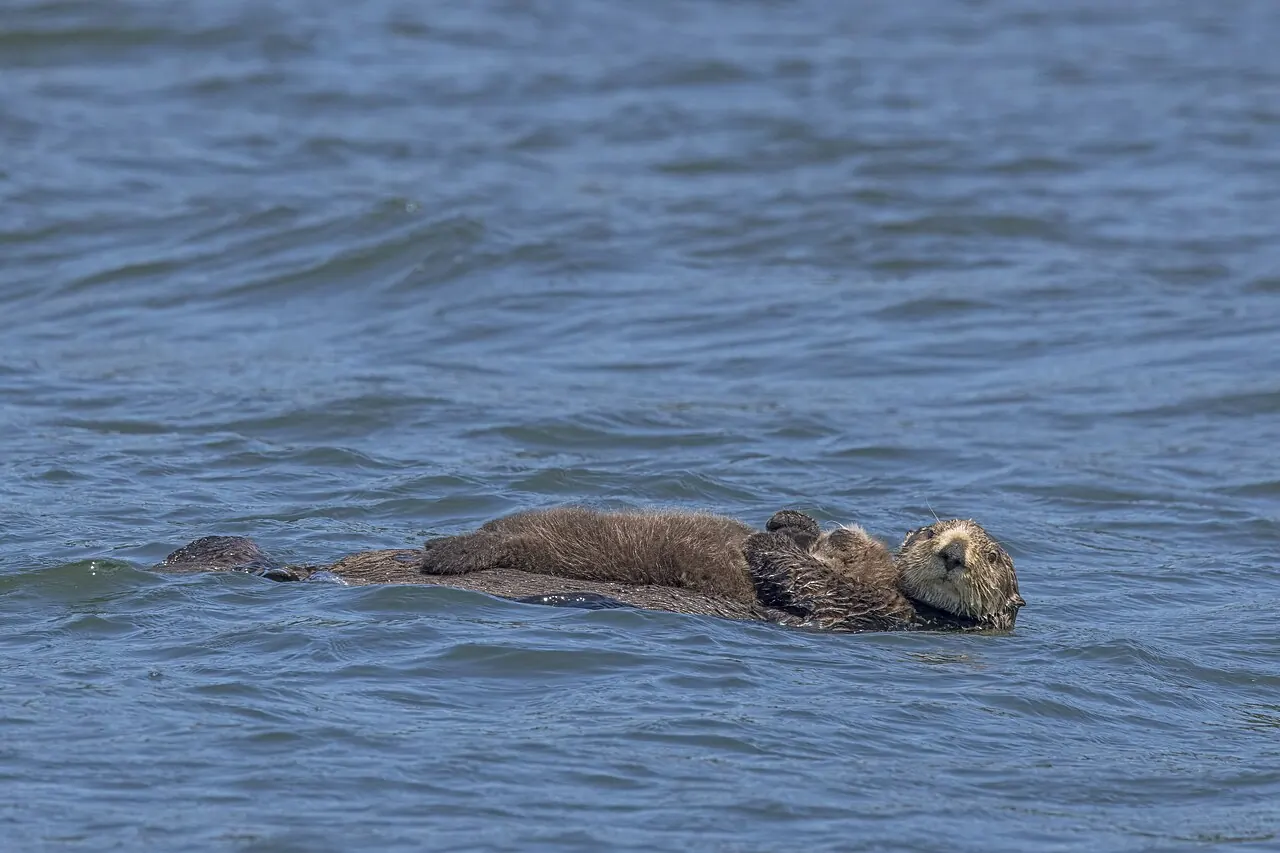
Sea Otter
Enhydra lutris
A North Pacific otter with the densest fur of any animal, a tool-using urchin hunter that helps keep kelp forests standing.
Photo: Charles J. Sharp / CC BY-SA 4.0
3 things to know
- At its thickest, its fur has more than a million hairs per square inch.
- It sometimes uses a rock to crack open crabs and clams.
- A sea otter eats about a quarter of its body weight every day.
- Scientific name
- Enhydra lutris
- Depth
- 0 m – 25 m
0 – 82 ft - Size
- Up to about 1.5 m (4.9 ft) long
- Weight
- Up to about 45 kg (100 lb); males are heavier than females
- Lifespan
- Usually 10–20 years in the wild; females tend to live longer than males
- Diet
- Sea urchins, crabs, clams, snails, abalone and mussels; northern sea otters also eat fish
- Where
- North Pacific coasts: California, Washington, British Columbia, Alaska, Russia and Japan
- IUCN status
- Endangered
- Depth zones
- Sunlight
Sea otters are the only fully aquatic otters, and unlike seals and whales they have no blubber. They stay warm with the densest fur in the world, more than a million hairs per square inch at its thickest, and spend hours a day grooming it to keep it waterproof and fluffed with insulating air. A fast metabolism helps too. An otter eats about a quarter of its body weight every day.
There are three subspecies: southern sea otters in California, northern sea otters from Alaska and British Columbia to Washington, and Russian sea otters off Russia and Japan. Northern males can reach about 45 kilograms (100 pounds). Southern sea otters, the smallest marine mammals in North America, grow to about 1.2 meters (4 feet). Most dives are short and shallow, but an otter can reach 183 meters (600 feet) and stay down for 6 to 7 minutes.
Otters hunt on the seafloor for crabs, snails, urchins, clams, abalone and mussels, tucking extra prey into loose skin under each forearm. They eat at the surface, floating on their backs with their chests as a table, and sometimes crack shells with a rock. That appetite shapes whole coasts. In 1974 James Estes and John Palmisano compared islands in Alaska's western Aleutians with and without sea otters and found that where otters had been removed, grazing invertebrates multiplied and destroyed the kelp and other seaweeds.
Fur hunters in the 1700s and 1800s killed so many that by the 1900s sea otters were close to extinction, and for a while they were thought to be gone. In 1938 about 50 were found off Big Sur, and California's population, now around 3,000, descends from them. Southern sea otters were protected under the Marine Mammal Protection Act in 1972 and listed as threatened under the Endangered Species Act in 1977. Their range, roughly Half Moon Bay to Point Conception, has not expanded in recent years, and their numbers have leveled off; the Monterey Bay Aquarium points to shark bites, a major cause of death, as the most likely reason.
The IUCN lists the species as Endangered, in an assessment from 2020. Between 2001 and 2016, the aquarium released 37 stranded pups raised by surrogate otter mothers into Elkhorn Slough, an estuary on Monterey Bay, and those otters and their offspring accounted for more than half of the slough's otter population growth over that period.



