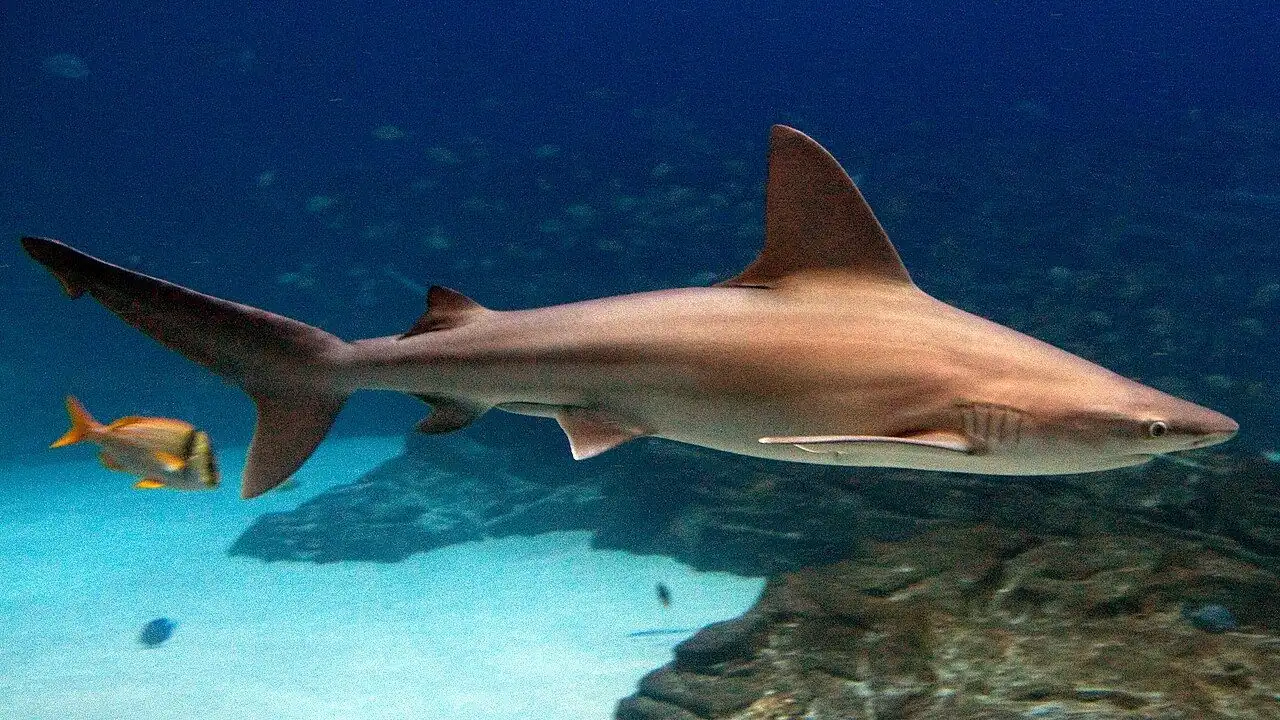
Sandbar Shark
Carcharhinus plumbeus
A bottom-hunting coastal shark with an unusually tall dorsal fin, once the main target of the US Atlantic shark fishery and now Endangered.
Photo: Brian Gratwicke / CC BY 2.0
3 things to know
- Its first dorsal fin is unusually tall and triangular for a shark its size.
- Chesapeake Bay is one of the most important sandbar shark nurseries in the western Atlantic.
- A VIMS survey found that overfishing cut sandbar numbers by 65 percent from the late 1970s to the early 1990s.
- Scientific name
- Carcharhinus plumbeus
- Depth
- 20 m – 65 m
66 – 213 ft - Size
- Commonly about 1.8 m (6 ft) long; up to about 2.4 m (8 ft)
- Weight
- About 45 to 90 kg (100 to 200 lb)
- Lifespan
- About 30 years by NOAA's estimate (oldest reported 34); VIMS says it may exceed 50
- Diet
- Bony fishes, small sharks, skates and rays, octopus, squid, eels, shrimp and crabs
- Where
- Tropical and temperate coasts worldwide; in the US from Cape Cod to Florida, the Gulf of Mexico and Hawaii
- IUCN status
- Endangered
- Depth zones
- Sunlight
Look for the first dorsal fin: on a sandbar shark it is unusually tall and triangular, and it starts above or just ahead of the pectoral fins. The body is brownish-gray above and white below, with no strong markings, a rounded snout shorter than the width of the mouth and a ridge of skin running along the back between the dorsal fins. Adults are commonly about 1.8 meters (6 feet) long and up to about 2.4 meters (8 feet), weighing 45 to 90 kilograms (100 to 200 pounds).
Sandbar sharks live along tropical and temperate coasts worldwide, over sandy or muddy bottoms in bays, harbors, estuaries and river mouths. They spend most of their time 20 to 65 meters (66 to 213 feet) deep and avoid the surf zone and coral reefs. In the western Atlantic they move north as far as Cape Cod in summer and south in winter. They feed near the bottom on fish, small sharks, skates and rays, octopus, squid, eels, shrimp and crabs, becoming more active at night.
Females give birth to live young, about 60 centimeters (2 feet) long, in shallow nurseries, then rest a year before breeding again. In the western North Atlantic the main nurseries are the bays and estuaries from Delaware to North Carolina, and the Virginia Institute of Marine Science calls Chesapeake Bay one of the most important. Sources disagree on how fast sandbars grow up. NOAA Fisheries puts maturity at 13 to 14 years and lifespan at about 30, while VIMS says they do not mature until about 25 and may live past 50.
Either way, VIMS calls the species very slow-growing. With palatable meat and large, valuable fins, the sandbar was the main target of the commercial shark fishery off the eastern United States. VIMS longline survey data show the population fell 65 percent from the late 1970s to the early 1990s. Management followed in Virginia in 1990 and federally in 1993, and NOAA put a rebuilding plan in place in 2005 with a target of 2070. Today keeping sandbar sharks is generally prohibited in US federal waters, except for a small research fishery that must carry NOAA observers, and anglers must release any they catch. NOAA's 2018 assessment found the stock overfished but not subject to overfishing. The IUCN's 2020 assessment lists the species as Endangered worldwide.
Sources
- fisheries.noaa.gov/species/sandbar-shark
- floridamuseum.ufl.edu/discover-fish/species-profiles/carcharhinus-plumbeus
- vims.edu/research/units/programs/multispecies_fisheries_research/sharks/species/sandbar…
- fishbase.se/summary/Carcharhinus-plumbeus.html
- iucnredlist.org/species/3853/2874370
- api.gbif.org/v1/species/2418009/iucnRedListCategory



