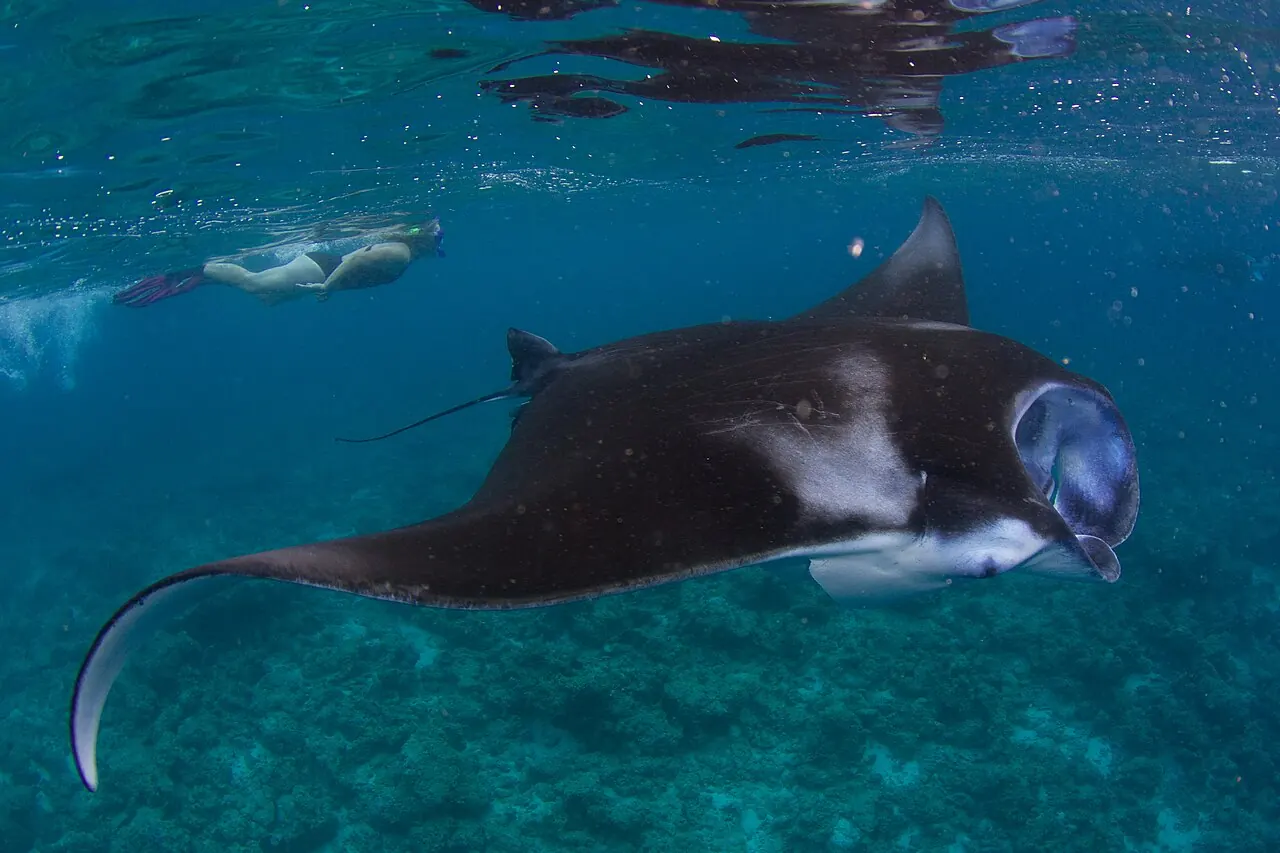
Reef Manta Ray
Mobula alfredi
A plankton-eating manta of Indian and Pacific coral reefs that stays near the coast yet can dive to 672 m at night.
Photo: Tchami / CC BY-SA 2.0
3 things to know
- It was recognized as a species separate from the oceanic manta only in 2009.
- The spot pattern on each manta's belly is unique, so a photo can identify an individual.
- A female usually has a single pup after a pregnancy of about a year.
- Scientific name
- Mobula alfredi
- Depth
- 0 m – 120 m
0 – 394 ft - Size
- Adults average 3–3.5 m (10–11.5 ft) across; FishBase gives a maximum of 4.5 m (15 ft)
- Weight
- Up to about 840 kg (1,850 lb), per the Manta Trust
- Lifespan
- At least 30 years
- Diet
- Zooplankton, mostly small crustaceans such as copepods and krill; possibly small fishes
- Where
- Tropical and subtropical coasts of the Indian and western Pacific oceans, east to Hawaii and French Polynesia
- IUCN status
- Vulnerable
- Depth zones
- Sunlight
Until 2009, science recognized a single species of manta ray. That year a study led by the Marine Megafauna Foundation, based on mantas off southern Mozambique, separated the reef manta from the larger oceanic manta. A reef manta has a pale mouth, shoulder patches that curve inward from the breathing openings behind its eyes, and no spine at the base of its tail. Adults average 3 to 3.5 meters (10 to 11.5 feet) from wingtip to wingtip, and FishBase gives a maximum of 4.5 meters (15 feet). The dark spots on each manta's white belly form a pattern as individual as a fingerprint, which is how researchers count and follow them.
As the name suggests, reef mantas stay close to land, usually within a few kilometers of a reef, along the tropical and subtropical coasts of the Indian and western Pacific oceans. FishBase lists known gatherings in Hawaii, Mozambique, the Maldives, Japan's Ryukyu Islands, Yap, Indonesia and both coasts of Australia. Like all mantas, they are harmless to people and cannot sting.
A reef manta feeds by swimming through clouds of zooplankton, mostly small crustaceans such as copepods and krill, with its mouth wide open. FishBase gives a depth range down to 120 meters (390 feet). Off New Caledonia, Hugo Lassauce of the University of New Caledonia and colleagues fitted satellite tags to nine reef mantas, and every one dove below 300 meters (980 feet). The deepest dive reached 672 meters (2,205 feet), extending the species' known depth range by more than 200 meters, and most of the deepest dives happened at night. Writing in PLOS ONE in 2020, the team suggested the mantas were diving to feed, perhaps because there is not enough plankton near the surface around those reefs to sustain them.
Reef mantas breed slowly. A female usually has one pup after a pregnancy of about a year and often rests a year or more before the next. Individuals have been photographed over more than three decades, so they live at least 30 years. Targeted fisheries hunt them for their gill plates, and the IUCN lists the species as Vulnerable.



