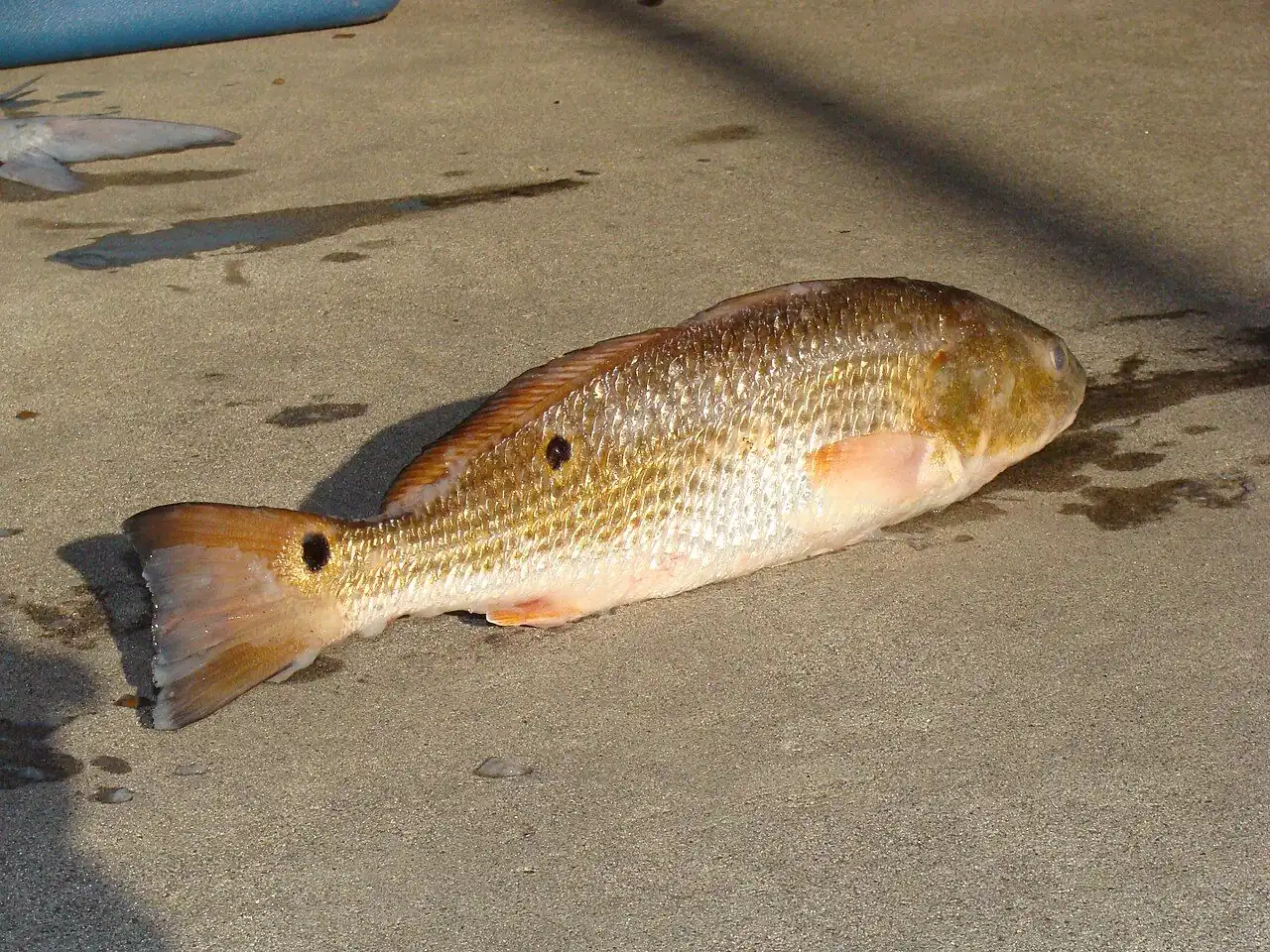
Red Drum
Sciaenops ocellatus
A copper-bronze coastal fish of the US Atlantic and Gulf coasts with a black eyespot by its tail, named for the drumming sound males make to court females.
Photo: Geeklikepi / CC BY-SA 3.0
3 things to know
- Most red drum have one large black spot at the base of the tail, and fish with no spot are extremely rare.
- Males attract females by vibrating muscles against the swim bladder, producing a drumming sound.
- Since 2007, harvest and sale of red drum from US federal waters has been banned.
- Scientific name
- Sciaenops ocellatus
- Depth
- 0 m – 27 m
0 – 89 ft - Size
- Averages about 46 cm (18 in) in South Carolina; FishBase lists up to 155 cm (61 in)
- Weight
- The record fish weighed about 43 kg (94 lb)
- Lifespan
- Up to about 38 years in South Carolina; a few fish around 60 years old have been reported in other states
- Diet
- Crabs, shrimp and fish such as menhaden, spot and anchovies; young fish eat small shrimp, crabs and worms
- Where
- Western Atlantic coast from Massachusetts to Florida, and around the Gulf of Mexico to northern Mexico
- IUCN status
- Least Concern
- Depth zones
- Sunlight
Look at the base of a red drum's tail and you will usually find a large black spot. Texas Parks and Wildlife says more than one spot is common and no spot at all is extremely rare, and suggests the mark may fool predators into striking the tail instead of the head. The body runs from deep coppery black to nearly silver, most often reddish bronze. Anglers call it redfish, and the big adults are bull reds.
The name comes from sound. During spawning, males make a drumming noise by vibrating muscles against the swim bladder to attract females, according to South Carolina's Department of Natural Resources. Texas Parks and Wildlife lists black drum, croakers, weakfish and spotted seatrout among its relatives, most of which make drumming sounds too.
This is a fish of shallow coastal water, found from Massachusetts to Florida and around the Gulf of Mexico. The IUCN gives its depth range as the surface to 27 meters (89 feet). Texas Parks and Wildlife says red drum prefer water 30 centimeters to 1.2 meters (1 to 4 feet) deep along the edges of bays with seagrass, and young fish grow up in salt marshes and tidal creeks. Red drum sometimes feed head down in so little water that their tails stick up into the air, a habit anglers call tailing. They eat crabs, shrimp and small fish such as menhaden.
Adults spawn in late summer and fall near inlets and passes. In Gulf waters, eggs hatch after about 24 hours and currents carry the larvae into the bays. Fish mature at 3 to 5 years. South Carolina's Department of Natural Resources gives a maximum age of about 38 and says a few fish as old as 60 have been reported in other states.
Alabama's state seafood site says New Orleans chef Paul Prudhomme first served blackened redfish in 1980 and that the dish became so popular that redfish were overfished in Louisiana and along the Gulf Coast. Since 2007, harvest and sale of red drum from federal waters has been banned, and states manage the fishery close to shore. The IUCN rates the species Least Concern, but the Atlantic States Marine Fisheries Commission's 2024 assessment found the southern Atlantic stock, from South Carolina to Florida's east coast, overfished.
Sources
- tpwd.texas.gov/huntwild/wild/species/reddrum
- dnr.sc.gov/marine/species/reddrum.html
- asmfc.org/species/red-drum
- fishbase.se/summary/Sciaenops-ocellatus.html
- aqua.alabama.gov/articles/story/history-of-blackened-seafood.html
- wwno.org/podcast/sea-change/2024-05-17/redfish-blues
- iucnredlist.org/species/193270/82667516
- commons.wikimedia.org/wiki/File:Red_Drum_(Sciaenops_ocellatus).jpg



