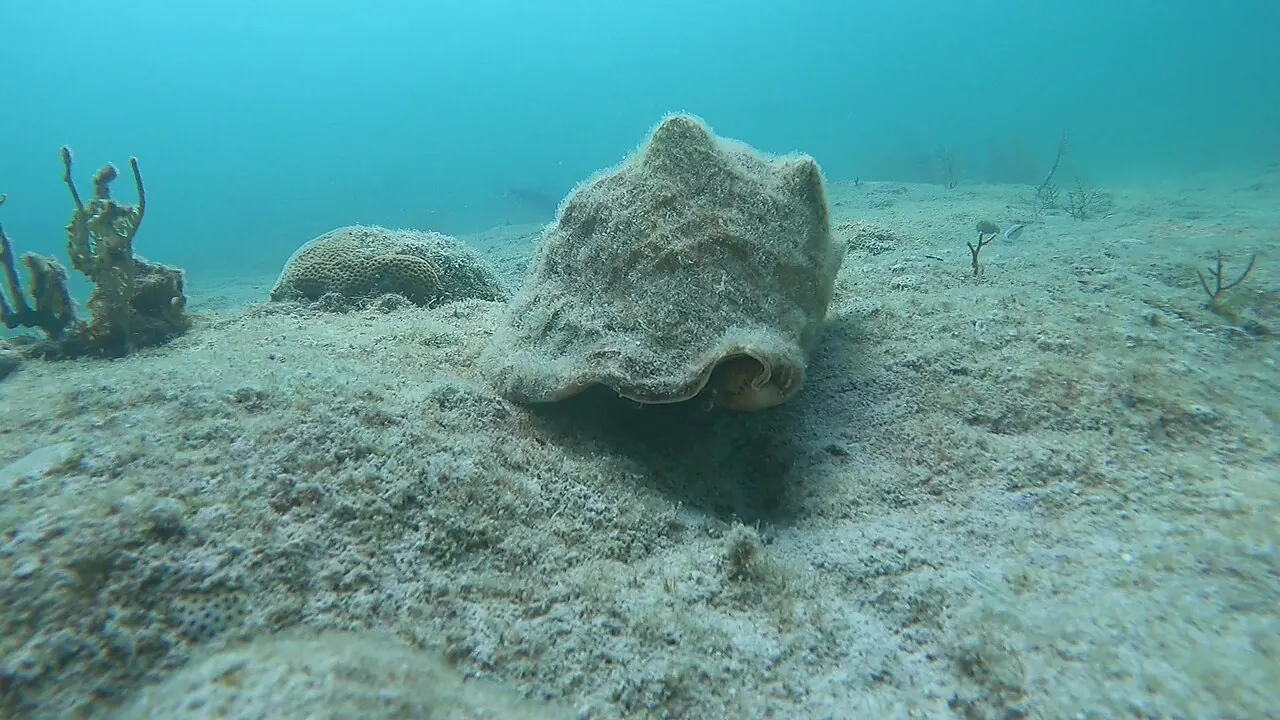
Queen Conch
Aliger gigas
A big Caribbean sea snail with a pink-lipped shell, so heavily fished that NOAA listed it as threatened in 2024.
Photo: Jstuby / CC0
3 things to know
- It stops growing longer at maturity; after that its shell lip only grows thicker.
- Adults need at least 100 conch per hectare (2.2 acres) to find each other for mating.
- Queen conch may not be harvested in Florida waters.
- Scientific name
- Aliger gigas
- Depth
- 2 m – 30 m
7 – 98 ft - Size
- Shell up to about 30 cm (12 in) long
- Weight
- Up to about 2.3 kg (5 lb)
- Lifespan
- Up to about 30 years
- Diet
- Algae, diatoms and plant material grazed from the seafloor
- Where
- Caribbean Sea, the Florida Keys, Bermuda and the Flower Garden Banks in the Gulf
- IUCN status
- Near Threatened
- Depth zones
- Sunlight
The queen conch's shell is heavy and whorled, with short spines at the tip and a glossy pink lip. Inside lives a large sea snail with long eyestalks that move independently and a tube-like snout, a proboscis, that it can pull into the shell when threatened. NOAA Fisheries says the queen conch, Aliger gigas, grows up to 12 inches (30 centimeters) long and 5 pounds (2.3 kilograms). Females grow faster and larger than males.
It lives throughout the Caribbean, in the Florida Keys, around Bermuda and at the Flower Garden Banks in the Gulf. Adults prefer sandy flats covered in algae but also live on gravel, coral rubble and rock, while juveniles stay mostly in seagrass beds. Where they are not fished, they are most common in water less than 100 feet (30 meters) deep. They graze on algae, diatoms and plant material.
A conch matures at about 3.5 to 4 years. After that its shell stops growing longer and the lip only grows thicker. Queen conch generally live 25 to 30 years. Fertilization is internal, so two animals have to meet to mate. A female lays egg masses holding 500,000 to 750,000 eggs on average, and the larvae drift for 21 to 30 days before settling.
Because they must meet to breed, numbers matter. NOAA says queen conch need a density of at least 100 animals per hectare (2.2 acres) to find each other for mating, and the thin populations left by fishing now limit mate finding and reproduction. NOAA's connectivity modeling indicates that some historically important corridors carrying larvae between populations have collapsed.
Queen conch is one of the most valuable species in the Caribbean, and illegal fishing continues across the region. It has been on Appendix II of the CITES trade treaty since November 1992, and in February 2024 NOAA Fisheries listed it as threatened under the Endangered Species Act. Harvest is banned in Florida waters by state law, while limited harvest continues in parts of Puerto Rico and the US Virgin Islands. In Naguabo, Puerto Rico, local fishermen collect wild egg masses for a hatchery that raises young conch for about a year before releasing them. The IUCN assessed the species as Near Threatened in 2025.



