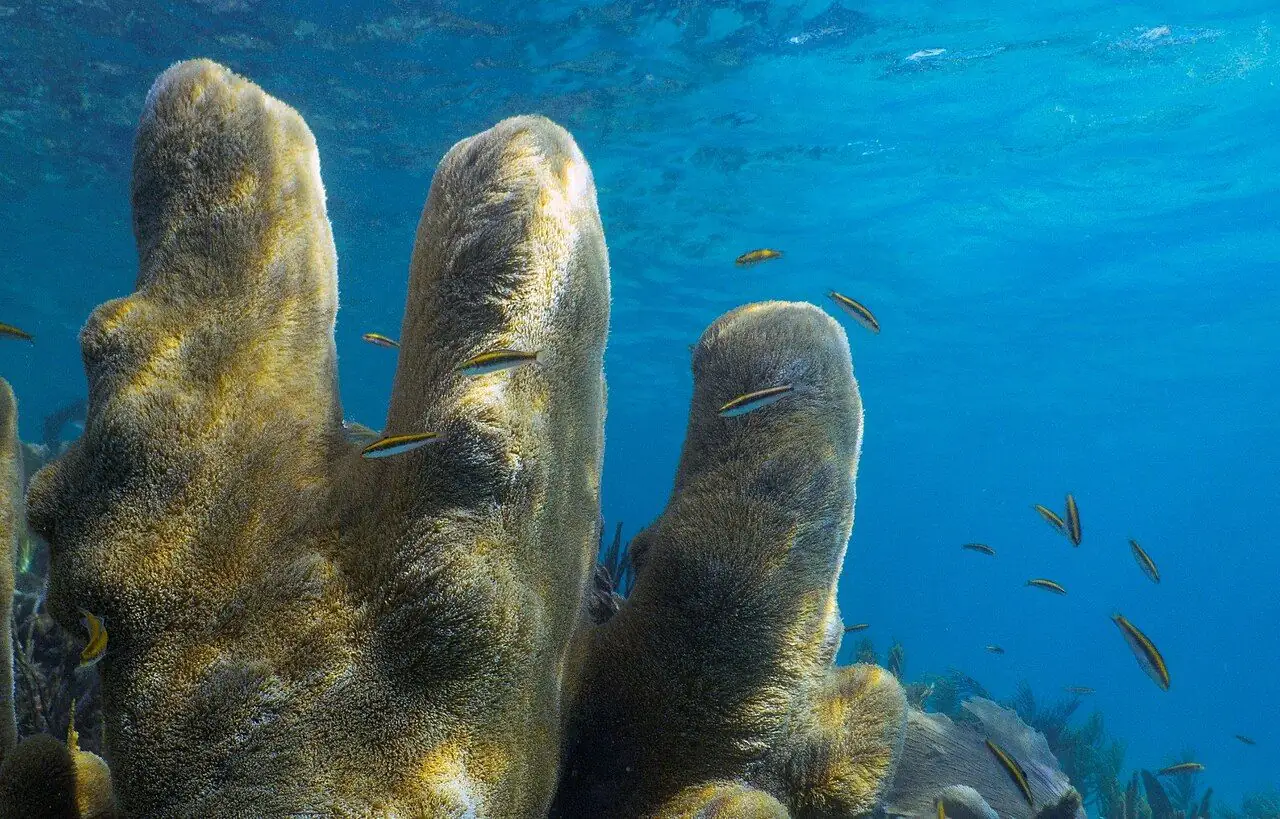
Pillar Coral
Dendrogyra cylindrus
A Caribbean reef coral that grows in upright columns and keeps its tentacles out by day. Florida's population is now functionally extinct.
Photo: Thomas Shahan / CC BY 2.0
3 things to know
- Its columns grow only about 0.8 cm (0.3 in) a year, according to NOAA.
- Florida lost 93 percent of its pillar coral colonies between 2014 and 2020.
- NOAA moved it from threatened to endangered under the Endangered Species Act in a rule published in December 2024.
- Scientific name
- Dendrogyra cylindrus
- Depth
- 1 m – 25 m
3 – 82 ft - Size
- Columns up to about 3 m (10 ft) tall by NOAA's figure; SeaLifeBase gives 2 m (6.6 ft)
- Weight
- Unknown
- Lifespan
- Colonies can live for hundreds of years, according to NOAA
- Diet
- Food made by algae living in its tissues, plus plankton caught with its tentacles
- Where
- Caribbean Sea, the Gulf of Mexico and southern Florida
- IUCN status
- Critically Endangered
- Depth zones
- Sunlight
Pillar coral grows the way its name says: cylindrical columns rising from an encrusting base, often looking like a bunch of fingers or a cluster of cigars standing on the reef. Colonies are usually gray-brown and, by NOAA's figure, can reach 3 meters (10 feet) tall. The polyps keep their tentacles out during the day, which gives the columns a fuzzy look.
It lives on reefs in the Caribbean, the Gulf of Mexico and southern Florida, from about 1 to 25 meters (3 to 82 feet) deep, and is most common between 5 and 15 meters. It was never abundant. Colonies tend to stand alone, scattered across a reef, though sometimes a group turns out to be one genetic individual. Much of its food comes from algae living inside its cells, and the polyps also catch plankton. Growth is slow, about 0.8 centimeters (a third of an inch) a year, and NOAA says colonies can live for hundreds of years.
Colonies are male or female, though a few produce both eggs and sperm. Once a year, several nights after a late-summer full moon, they release their eggs and sperm into the water. New colonies also start when broken pieces reattach to the reef. In 2019, scientists at the Florida Aquarium got rescued pillar corals to spawn in a lab for the first time, hoping to raise enough young corals to replant on the reef.
That effort matters because the wild population in Florida has all but vanished. Karen Neely of Nova Southeastern University and colleagues followed every known colony on the Florida Reef Tract from 2013 to 2020. They found no juveniles and concluded the population had not been reproducing successfully for decades. Then back-to-back bleaching years and stony coral tissue loss disease, first seen in Florida in 2014, killed 93 percent of the colonies. The team called pillar coral functionally extinct in Florida. In Mexico, more than 80 percent of colonies surveyed between 2018 and 2020 died or were diseased.
The IUCN lists the species as Critically Endangered. NOAA, which had listed it as threatened under the Endangered Species Act in 2014, published a rule reclassifying it as endangered in December 2024; after a delay, the change took effect in March 2025.
Sources
- fisheries.noaa.gov/species/pillar-coral
- sealifebase.se/summary/Dendrogyra-cylindrus.html
- iucnredlist.org/species/133124/129721366
- Study: doi:10.3389/fmars.2021.656515
- wlrn.org/news/2019-08-22/scientists-coax-imperiled-florida-coral-to-spawn-in-a-lab-for-…
- federalregister.gov/documents/2024/12/17/2024-29082/endangered-and-threatened-wildlife-…
- federalregister.gov/documents/2025/02/18/2025-02728/endangered-and-threatened-wildlife-…



