Pearlfish
Carapus spp.
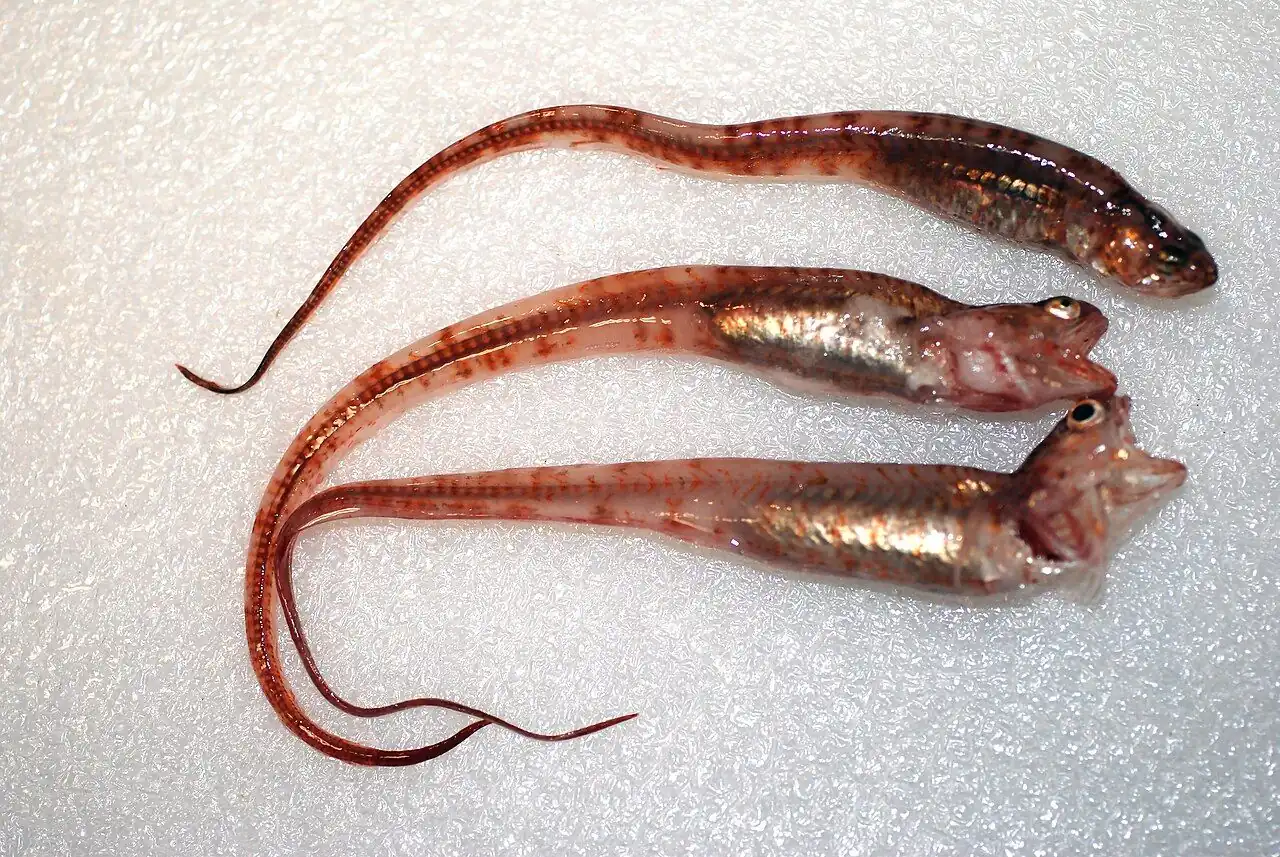
Slender, eel-like fish that live inside sea cucumbers, finding the back-end opening by its outflow and usually backing in tail first.
Photo: Isabelle Cheret, IFREMER / CC BY 4.0
3 things to know
- Adult pearlfish usually back into their sea cucumber host tail first.
- In one French Polynesian lagoon, 84 percent of sea cucumbers of one species had pearlfish inside.
- Close relatives in the genus Encheliophis live as parasites and eat the host's sex organs.
- Scientific name
- Carapus spp.
- Depth
- 0 m – 150 m
0 – 492 ft - Size
- Up to about 19–30 cm (7.5–12 in) long, depending on species
- Weight
- Not well known
- Lifespan
- Unknown
- Diet
- Small fish, shrimps and other small invertebrates, caught at night outside the host
- Where
- Warm seas worldwide, including the Mediterranean, the western Atlantic from Bermuda and Florida to Brazil, and Indo-Pacific reefs
- IUCN status
- Least Concern (the four species covered here)
- Depth zones
- Sunlight
Pearlfishes of the genus Carapus are small, eel-like fishes with long, tapering bodies and no pelvic fins. The larger species reach about 20 to 30 centimeters (8 to 12 inches). They are found in warm seas around the world: C. acus in the Mediterranean and eastern Atlantic, C. bermudensis from Bermuda and southern Florida through the West Indies to Brazil, and C. boraborensis and C. homei on Indo-Pacific reefs. Most live within about 150 meters (490 feet) of the surface, though C. bermudensis has been recorded at 235 meters (770 feet).
By day a pearlfish hides inside another animal, most often a sea cucumber. It finds the host's rear opening by following the current of water the sea cucumber breathes out, then goes in. Adults enter tail first about 80 percent of the time, bending the thin tail forward along the body to steer it into the opening; young fish, with smaller heads, mostly go in head first. Inside, they settle in the respiratory trees or the body cavity. In a lagoon on Moorea, French Polynesia, Eric Parmentier and Pierre Vandewalle of the University of Liège found pearlfish in 84 percent of 257 Bohadschia argus sea cucumbers they collected.
Carapus species use the host only as shelter. At night they partly or fully leave it to feed on small fish, shrimps and other bottom-dwelling invertebrates. Their relatives in the genus Encheliophis are parasites that eat the host's gonads. Pearlfish also resist the toxins in the sticky defensive threads some sea cucumbers fire better than other reef fish do, and their first reaction to the threads looks like a sneeze.
Breeding has never been described in detail. The eggs float in the plankton, and male and female pairs often share a host, which Parmentier and Vandewalle suggest may let them mate inside it, sheltered from predators. Lifespans are unknown. The four species covered here are all listed as Least Concern, and none is of interest to fisheries.



