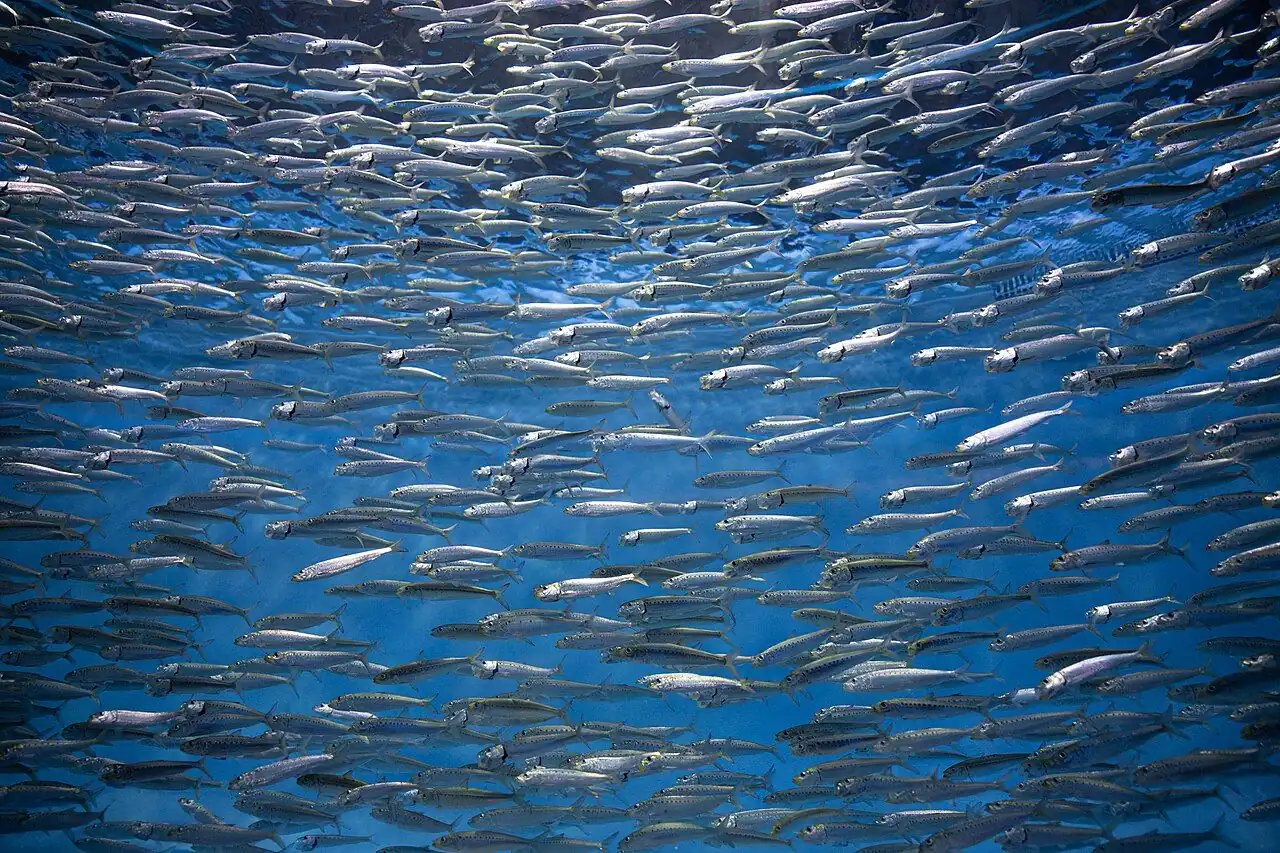
Pacific Sardine
Sardinops sagax
A small schooling fish whose numbers soar and crash; mud off Santa Barbara records nine booms and collapses in 1,700 years.
Photo: Dana L. Brown from Lucas Valley, USA / CC BY-SA 2.0
3 things to know
- Fish scales in Santa Barbara Basin mud record nine major sardine booms and collapses over about 1,700 years.
- Directed commercial fishing for Pacific sardine off the US West Coast has been closed since 2015.
- Pacific sardine eggs hatch in about 3 days.
- Scientific name
- Sardinops sagax
- Depth
- 0 m – 200 m
0 – 656 ft - Size
- Commonly about 20 cm (8 in); can grow to more than 30 cm (12 in), with a maximum of 39.5 cm (15.6 in) listed by FishBase
- Weight
- Up to about 486 g (17 oz)
- Lifespan
- Up to 13 years off the US West Coast, but usually not past 5
- Diet
- Plankton: young fish eat zooplankton such as copepods; adults also eat phytoplankton
- Where
- Eastern Pacific from southeastern Alaska to Baja California, Mexico; the same species also lives off Japan, Chile, southern Africa and Australia
- IUCN status
- Least Concern
- Depth zones
- Sunlight
Layers of mud on the floor of the Santa Barbara Basin, off Southern California, hold a 1,700-year record of the Pacific sardine. The sediment there is starved of oxygen and builds up in yearly layers, and it keeps the fish scales that sink into it. In 1992, Tim Baumgartner, Andy Soutar and Vicente Ferreira-Bartrina used scale counts from those layers to trace sardine and anchovy numbers from A.D. 270 to 1970. They found nine major recoveries and collapses of the sardine in that time, and the swings started long before industrial fishing. On average a recovery, from under 1 million to over 4 million metric tons, took about 30 years.
The fish itself is small and fast-growing. NOAA Fisheries describes a blue-green back and white sides with one to three rows of dark spots along the middle. FishBase adds that bony ridges radiating down the gill cover separate it from every other sardine and herring in the region. Most reach about 20 centimeters (8 inches), and some pass 30 centimeters (12 inches). They can live up to 13 years but usually not past 5.
Sardines gather in large, dense schools near the surface along the coast and sometimes enter estuaries. Older adults may move from spawning grounds off Southern California and northern Baja California to feed off the Pacific Northwest and Canada, while younger ones head mainly to central and northern California. They spawn several times a season, starting at age 1 or 2, and their eggs hatch in about 3 days. Young sardines eat zooplankton such as copepods, and adults also eat phytoplankton. Fish, seabirds and marine mammals all eat sardines.
People have felt the swings. The West Coast sardine fishery collapsed in the 1940s and 1950s, and canneries turned to anchovies. Today, US rules stop directed fishing whenever the estimated population falls below 150,000 metric tons. It fell below that line, and the fishery has been closed since 2015. The 2025 stock assessment rated the stock overfished but not subject to overfishing, with a rebuilding target of 2035.
The same species also lives off Japan, Chile, southern Africa and Australia, and the IUCN lists it as Least Concern worldwide.
Sources
- fisheries.noaa.gov/species/pacific-sardine
- fishbase.se/summary/Sardinops-sagax.html
- calcofi.org/downloads/publications/calcofireports/v33/Vol_33_Baumgartner_etal.pdf
- upwell.pfeg.noaa.gov/research/climatemarine/cmffish/cmffishery8.html
- fisheries.noaa.gov/species/northern-anchovy
- api.gbif.org/v1/species/2412583/iucnRedListCategory
- iucnredlist.org/species/183347/143831586



