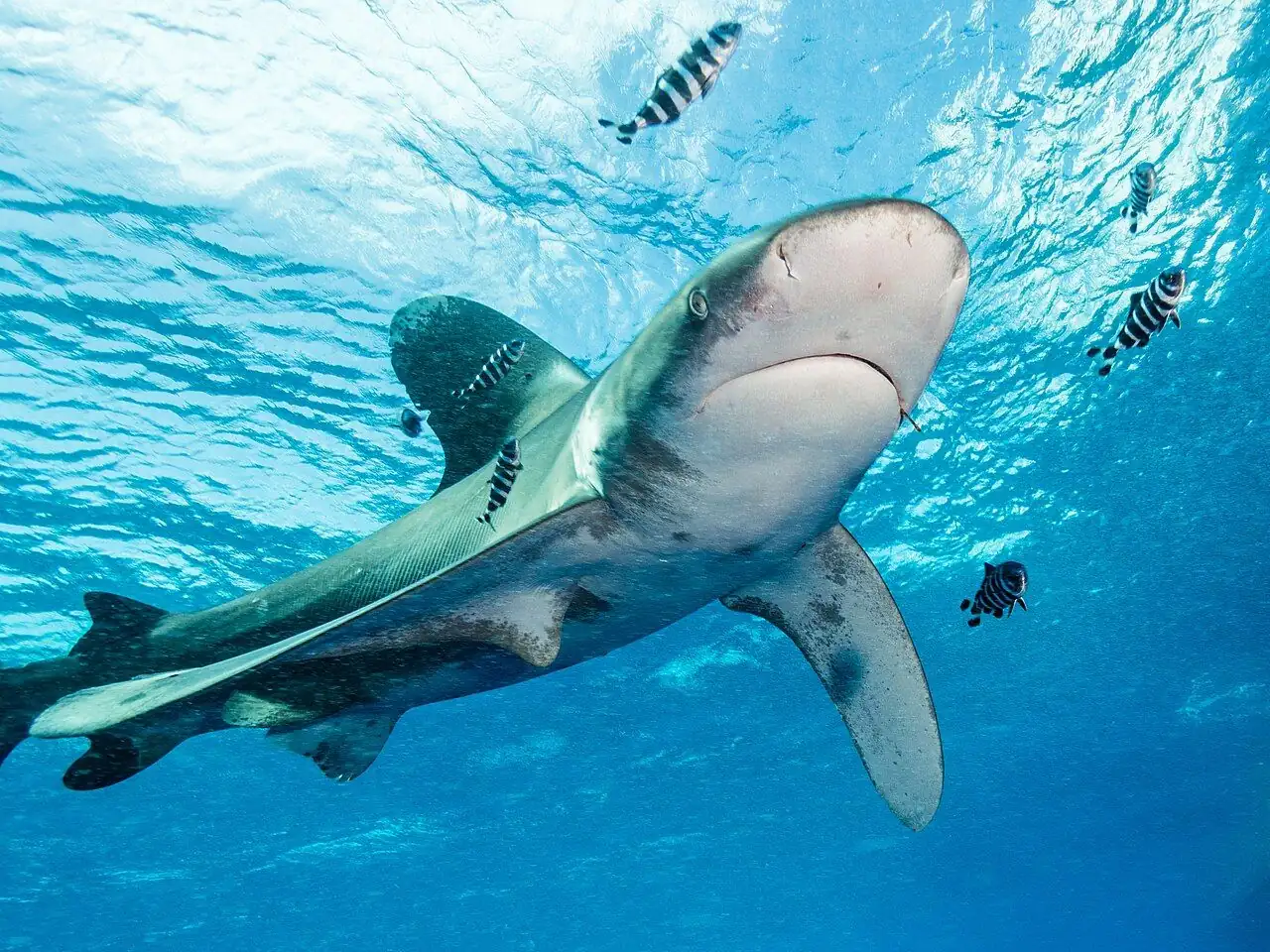
Oceanic Whitetip Shark
Carcharhinus longimanus
A bronze-gray open-ocean shark with long white-tipped fins, once among the most common sharks at sea and now Critically Endangered.
Photo: Alexander Vasenin / CC BY-SA 4.0
3 things to know
- Its long, paddle-shaped pectoral fins and rounded dorsal fin have mottled white tips.
- It keeps mostly to warm surface water but has been recorded as deep as 1,082 m (3,549 ft).
- NOAA listed it as threatened under the Endangered Species Act in 2018.
- Scientific name
- Carcharhinus longimanus
- Depth
- 0 m – 200 m
0 – 656 ft - Size
- Most under 3 m (10 ft) long; some reach 3.5–4 m (11–13 ft)
- Weight
- Record about 167 kg (370 lb)
- Lifespan
- Maximum age estimated at 25–36 years
- Diet
- Mainly bony fishes and squid; also tuna, marlin, sea turtles, seabirds, stingrays, carrion and garbage
- Where
- Tropical and subtropical open oceans worldwide; in the western Atlantic from Maine to Argentina, and in the Pacific including Hawaii and southern California
- IUCN status
- Critically Endangered
- Depth zones
- Sunlight
Long, paddle-shaped pectoral fins and a big, rounded first dorsal fin, all with mottled white tips, make the oceanic whitetip one of the easiest sharks to identify at sea. The body is stocky, grayish bronze to brown above and white below. Most are under 3 meters (10 feet) long, though some reach 3.5 to 4 meters (11 to 13 feet).
It lives far from land in tropical and subtropical oceans around the world, in the western Atlantic from Maine to Argentina and in the Pacific from Hawaii and southern California to Peru. NOAA Fisheries calls it a surface-dwelling shark that prefers water warmer than 20°C (68°F) and spends most of its time in the top 200 meters (656 feet), though it has been recorded as deep as 1,082 meters (3,549 feet). It cruises slowly with its pectoral fins spread wide, often with pilot fish and remoras alongside, and has been seen traveling with shortfin pilot whales in Hawaiian waters.
Oceanic whitetips eat whatever turns up. Bony fish and squid make up most of the diet, but they also take tuna, marlin, sea turtles, seabirds, stingrays, dead whales and garbage thrown overboard, and tuna fishermen dislike them for raiding their catch. The Florida Museum names the oceanic whitetip as the main species involved in the shark bites that followed the sinking of the USS Indianapolis in 1945.
Females give birth to live young after a 10- to 12-month pregnancy, usually every other year, with 1 to 14 pups in a litter and an average of 6. Females mature at 6 to 9 years.
The species was once counted with the blue shark and the silky shark among the most abundant oceanic sharks, and it is now only occasionally reported. Longlines, purse seines and gillnets catch it as bycatch, and its large fins are valuable in the international fin trade. NOAA estimates declines of about 80 to 95 percent across the Pacific since the mid-1990s and an 88 percent decline in the Gulf of Mexico. It listed the oceanic whitetip as threatened under the Endangered Species Act in 2018, and since February 2024 keeping one has been banned in US federal waters of the Atlantic, the Gulf of Mexico and the Caribbean. The IUCN lists the species as Critically Endangered.



