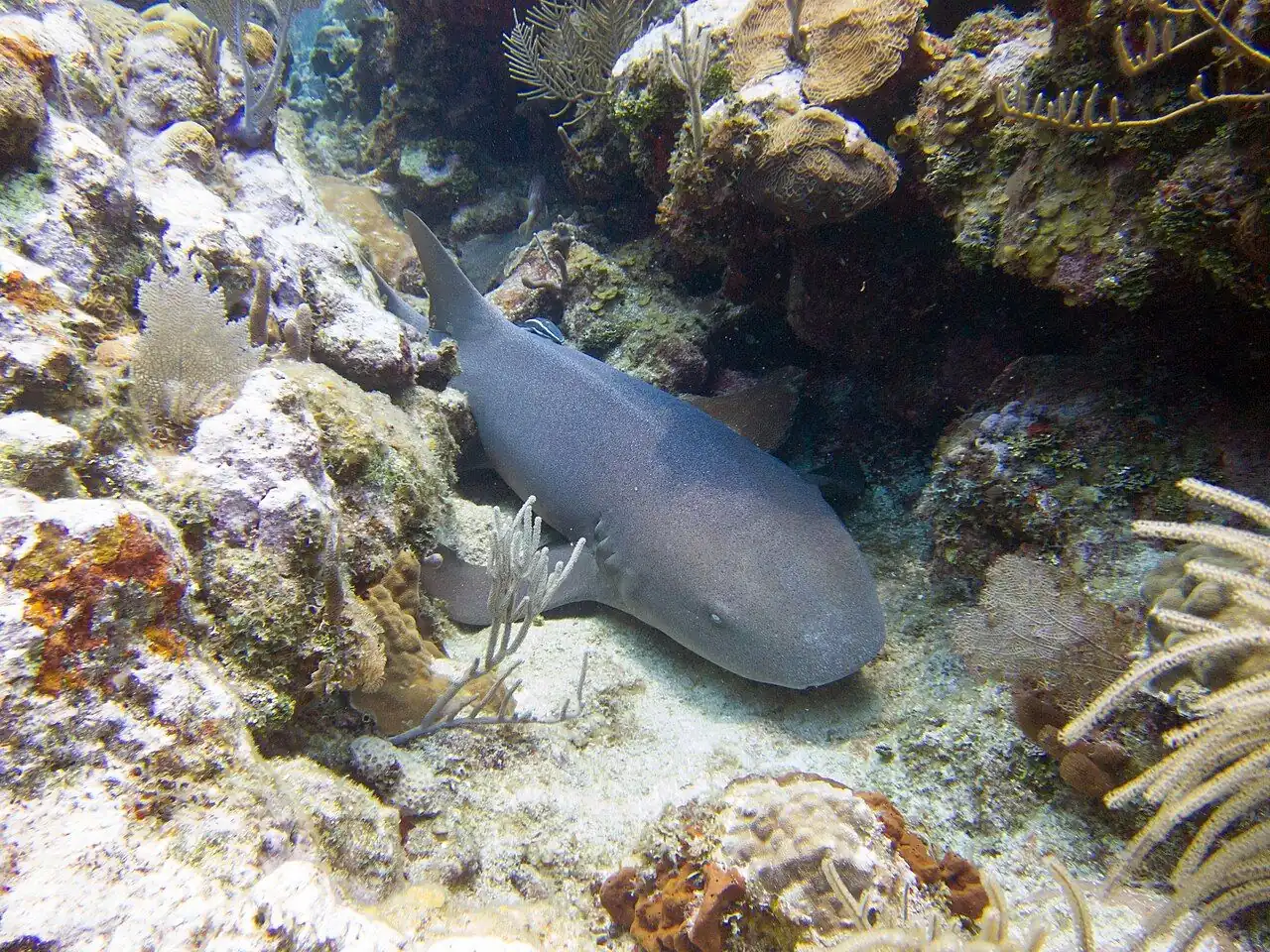
Nurse Shark
Ginglymostoma cirratum
A sluggish, bottom-resting shark of warm Atlantic reefs whose mating ground in Florida's Dry Tortugas has been watched for three decades.
Photo: Ross Garner / CC BY 2.0
3 things to know
- It sucks prey into its small mouth using a large, expanding throat.
- Groups of up to 40 nurse sharks may rest side by side or piled on one another by day.
- Only about 7 percent of courtship attempts watched at the Dry Tortugas ended in mating.
- Scientific name
- Ginglymostoma cirratum
- Depth
- 0 m – 75 m
0 – 246 ft - Size
- Adults usually 2.3–2.4 m (7.5–8 ft) long; reported maximums range from 3.1 m (10 ft) to 4.3 m (14 ft)
- Weight
- Adults average over 90 kg (200 lb)
- Lifespan
- Probably into the forties: tagged sharks have returned to one Florida mating ground over spans of up to 28 years (FishBase's maximum reported age is 25)
- Diet
- Spiny lobsters, crabs, shrimp, conchs and other snails, octopus, squid, sea urchins, clams and fishes, including stingrays
- Where
- Warm Atlantic coasts, from Rhode Island to southern Brazil and from Cape Verde to Gabon; common in south Florida and the Florida Keys
- IUCN status
- Vulnerable
- Depth zones
- Sunlight
The nurse shark spends much of the day lying still on the bottom. It is yellowish tan to dark brown, with two rounded dorsal fins and a pair of barbels hanging near the mouth. Groups of up to 40 sometimes rest side by side, or piled on top of one another, in caves and rock crevices, and individuals return to the same resting spots again and again. Adults usually measure 2.3 to 2.4 meters (7.5 to 8 feet).
The species lives along warm Atlantic coasts, from Rhode Island to southern Brazil in the west and from Cape Verde to Gabon in the east, and it is common in shallow water around the West Indies, south Florida and the Florida Keys. By day, large juveniles and adults stay around deeper reefs and rocky areas at 3 to 75 meters (10 to 246 feet), moving into shallower water after dark. Juveniles keep to shallow reefs, grass flats and mangroves. Nurse sharks in the eastern Pacific are now treated as a separate species.
Nurse sharks hunt at night. A small mouth backed by a large throat lets them suck in prey: lobsters, crabs, shrimp, octopus, squid, clams and fish, including stingrays. They flip heavy conchs over and pull the snail out with suction and teeth. They are not aggressive, but a disturbed nurse shark can bite and hold on with a vise-like grip.
Their mating has been studied in Florida's Dry Tortugas since the early 1990s. A male courts by gripping a female's pectoral fin in his mouth, and the National Park Service reports that only about 7 percent of courtship events end in mating. In a 2022 PLOS ONE paper covering 1992 to 2021, Harold Pratt Jr. of the New England Aquarium, Jeffrey Carrier of Albion College and colleagues reported that at least 80 of 118 sharks tagged there came back in later years, some over spans of up to 28 years. That suggests nurse sharks live well into their forties. Females usually breed every two years, sometimes every three, and have 20 to 30 pups. A small area there has been closed since 1996 to protect mating sharks and newborns.
Numbers in Florida's shallow coastal waters have fallen over past decades, and the IUCN lists the nurse shark as Vulnerable.



