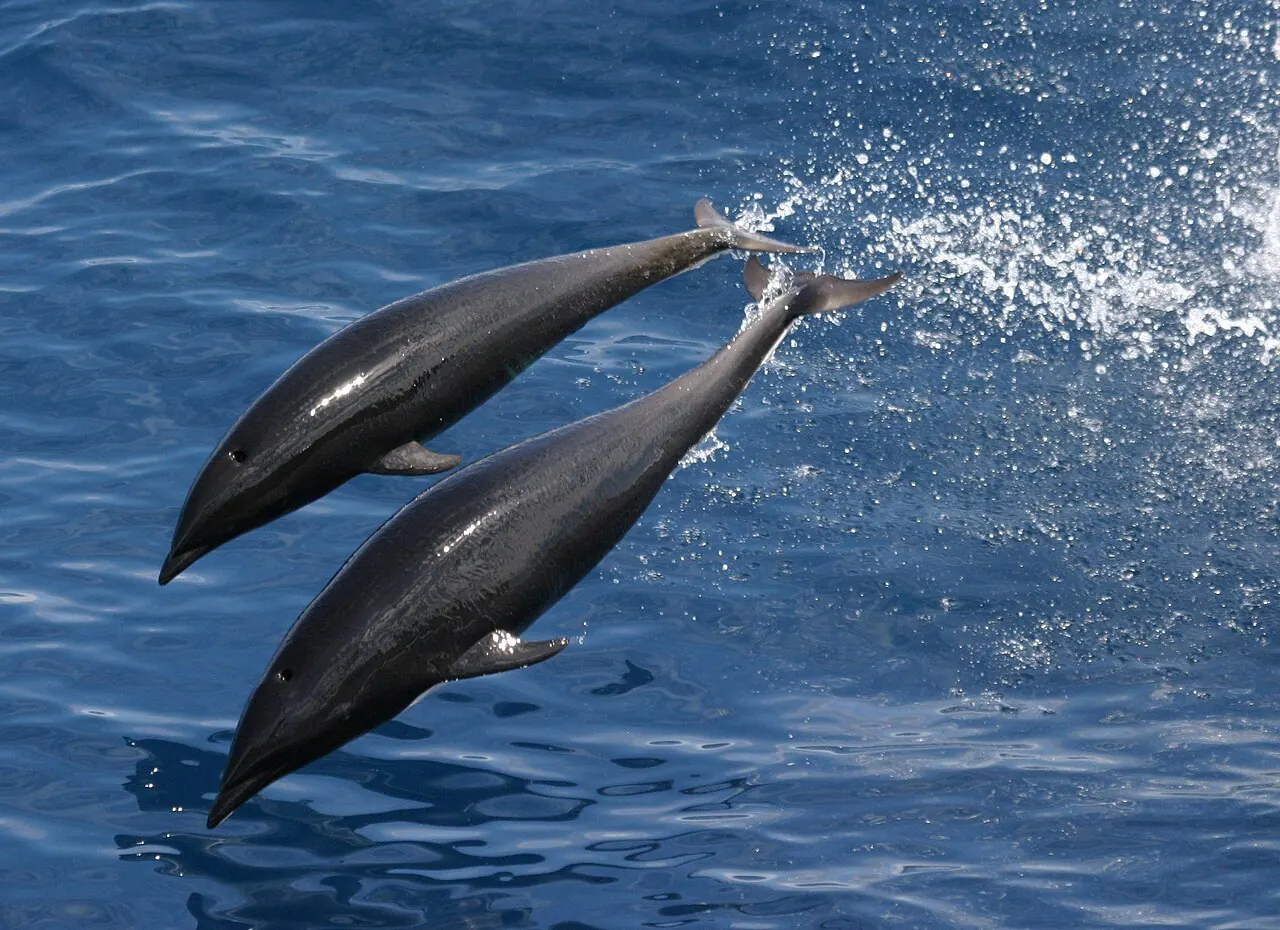
Northern Right Whale Dolphin
Lissodelphis borealis
A sleek black-and-white dolphin of the North Pacific with no dorsal fin at all, often mistaken at sea for porpoising sea lions.
Photo: NOAA NMFS (NOAA Photo Library) / Public domain
3 things to know
- It is the only dolphin in the North Pacific with no dorsal fin.
- Schools usually number 100 to 200 animals but can reach 3,000.
- It can swim at about 26 km/h (16 mph), with bursts near 35 km/h (22 mph).
- Scientific name
- Lissodelphis borealis
- Depth
- 0 m – 200 m
0 – 656 ft - Size
- About 2–3 m (6.5–10 ft) long; males larger
- Weight
- About 60–115 kg (130–254 lb)
- Lifespan
- 42 years or more
- Diet
- Lanternfish, hake and other small fish, plus squid
- Where
- Cool offshore waters of the North Pacific, about 30°N to 50°N, from northern Baja California to the Gulf of Alaska, Russia and Japan
- IUCN status
- Least Concern
- Depth zones
- Sunlight
Look for the fin and you will not find one. The northern right whale dolphin has a smooth back with no fin or ridge, and NOAA Fisheries calls it the only dolphin in the North Pacific without a dorsal fin. Its name borrows from the right whales, which also lack one. The body is long and slender, shiny black above with a white band below, with a short beak and small tail flukes. Adults measure about 2 to 3 meters (6.5 to 10 feet) and weigh 60 to 115 kilograms (130 to 254 pounds), males the larger.
Running schools leave the water in low, closely spaced leaps, and marine mammal biologist Thomas Jefferson, writing for the Encyclopedia of Puget Sound, notes that they are easily mistaken for porpoising California sea lions; NOAA adds that observers sometimes take them for herds of fur seals. They average about 26 km/h (16 mph) with bursts near 35 km/h (22 mph), and schools usually hold 100 to 200 animals, sometimes 3,000.
They live offshore in cool water between about 30°N and 50°N, from northern Baja California to the Gulf of Alaska and across to Russia and Japan, mostly over the outer continental shelf and slope and in the open ocean. They shift south in autumn and winter and north in spring and summer. Dives last up to about six minutes, and Animal Diversity Web reports feeding dives to at least 200 meters (660 feet). In two stomachs examined in a 1995 study, lanternfish made up 89 percent of the fish eaten; hake and squid are also prey.
Both sexes mature at about 10 years. A female carries a single calf for about a year, with at least two years between births, and individuals live 42 years or longer.
In the 1970s and 1980s, high-seas driftnets set for squid killed many of them, and those fisheries have since been closed under international law. A few still die in US West Coast drift gillnets and trawls, and some are taken in Japan's harpoon hunt for Dall's porpoises. NOAA estimates about 68,000 across the North Pacific, including about 26,000 off California, Oregon and Washington, and the IUCN Red List rates the species Least Concern.



