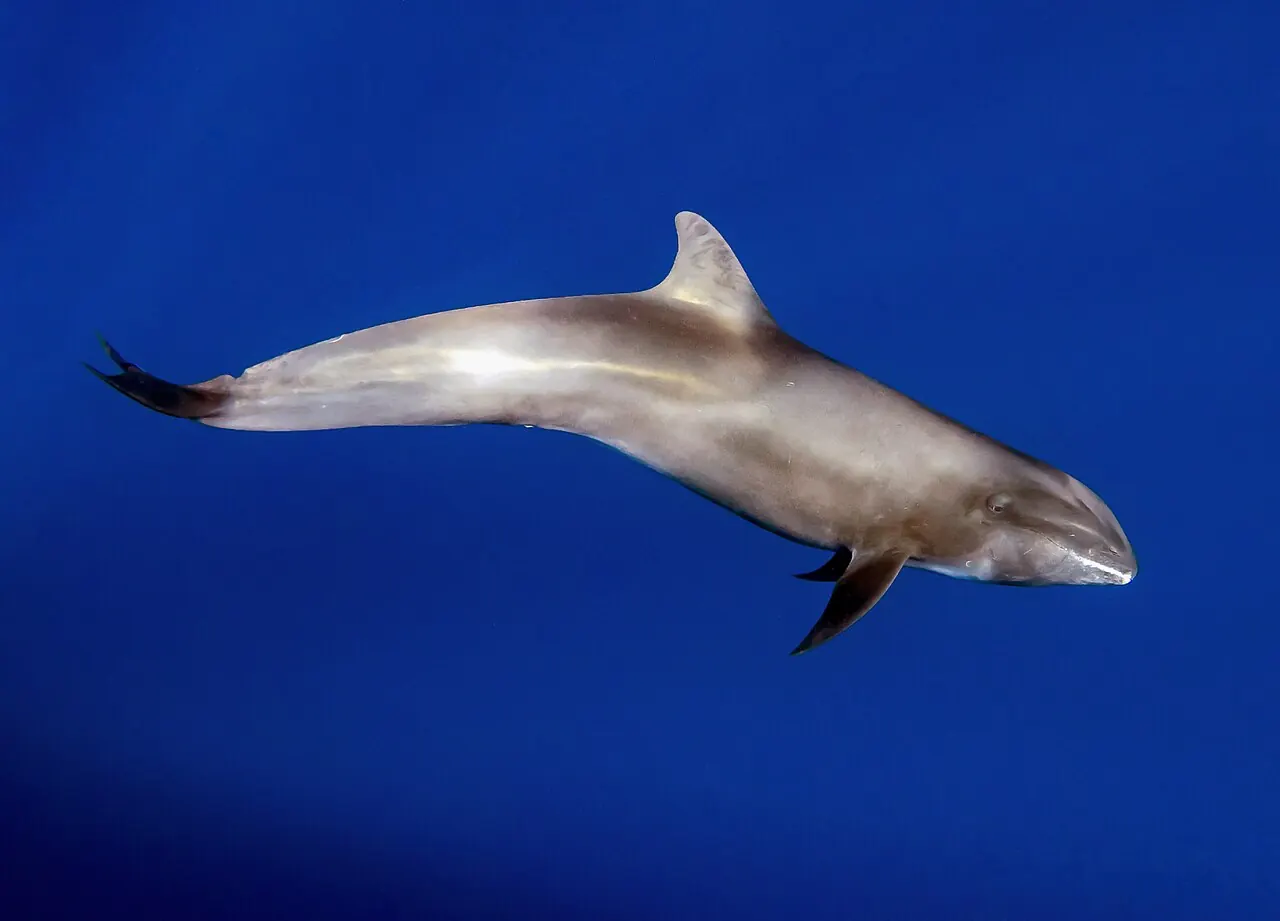
Melon-headed Whale
Peponocephala electra
A beakless oceanic dolphin that travels in herds of hundreds and dives after squid at night; two mass strandings have been linked to sonar.
Photo: Cyril di Bisceglie / CC BY-SA 4.0
3 things to know
- Despite the name, it is a member of the oceanic dolphin family.
- Herds of hundreds to more than 1,000 have been seen.
- Tagged whales off Hawaii stayed near the surface by day and typically dove to about 220–250 m at night.
- Scientific name
- Peponocephala electra
- Depth
- 0 m – 250 m
0 – 820 ft - Size
- Up to about 2.7 m (9 ft) long; males larger than females
- Weight
- About 210 kg (460 lb)
- Lifespan
- Up to about 45 years
- Diet
- Mainly squid, plus small fish such as lanternfishes, cuttlefish and shrimp
- Where
- Deep tropical waters worldwide
- IUCN status
- Least Concern
- Depth zones
- Sunlight · Twilight
Despite the name, the melon-headed whale is an oceanic dolphin, closely related to the pygmy killer whale and false killer whale and easily confused with both. The head is small and rounded with no beak, the dorsal fin is fairly large and the flippers are pointed. The body is dark, with a broad cape along the back and darker patches on the face. NOAA Fisheries gives adults a length of about 2.7 meters (9 feet), a weight of about 210 kilograms (460 pounds) and a lifespan of up to 45 years.
It lives in deep tropical water worldwide, in herds of hundreds to more than 1,000. Herds tend to rest in the morning, socialize in the afternoon and feed at night. In 2018 Kristi West of the University of Hawaii and Robin Baird of Cascadia Research Collective reported stomach contents from 11 stranded whales: at least 51 prey species, mostly squid, plus small lanternfishes. Three satellite tags showed few dives below 30 meters (100 feet) by day, while night dives typically reached 220 to 250 meters (720 to 820 feet), and the deepest went to 471.5 meters (1,547 feet).
Hawaii has two populations, one of about 5,000 that ranges among the islands and a resident group of about 450 off the island of Hawaii, known as the Kohala residents. Other US populations live in the Gulf of Mexico and off the southeastern states, all protected under the Marine Mammal Protection Act.
On July 3 and 4, 2004, 150 to 200 melon-headed whales milled in shallow Hanalei Bay on Kauai for more than 28 hours until residents, agency staff and volunteers herded them out; one calf died. A NOAA review led by Brandon Southall called active sonar from Navy ships heading to an exercise "a plausible, if not likely, contributing factor." In May 2008, about 100 swam into the Loza Lagoon in northwest Madagascar, and at least 75 died over the following weeks. An independent panel concluded in 2013 that a high-power mapping sonar used by a survey vessel the day before was the most plausible trigger, the first known mass stranding closely tied to that kind of sonar.
The IUCN's 2019 assessment lists the species as Least Concern. Some are taken in hunts in the Philippines and Japan, and PCB levels in whales from Hawaii and Japan are high enough to be thought toxic.
Sources
- fisheries.noaa.gov/species/melon-headed-whale
- Study: doi:10.1111/mms.12507
- cascadiaresearch.org/wp-content/uploads/2018/01/Westetal2018_MMS.pdf
- cascadiaresearch.org/publications/southall_etal_2006pe
- repository.library.noaa.gov/view/noaa/14912
- cascadiaresearch.org/files/Madagascar_ISRP_Final_report.pdf
- iucnredlist.org/species/16564/50369125
- sealifebase.se/summary/Peponocephala-electra.html



