Macaroni Penguin
Eudyptes chrysolophus
A krill-eating crested penguin of the sub-Antarctic that lays two very unequal eggs and raises only one chick.
Photo: Jerzy Strzelecki / CC BY-SA 3.0
3 things to know
- BirdLife International estimates 6.3 million breeding pairs, down from an earlier estimate of 9 million.
- Its first egg is only 55 to 75 percent the size of the second and is usually lost.
- At Heard Island, tagged birds dived mainly to 10–60 m (33–200 ft), and one reached 163 m (535 ft).
- Scientific name
- Eudyptes chrysolophus
- Depth
- 0 m – 60 m
0 – 197 ft - Size
- Stands about 71 cm (28 in) tall
- Weight
- About 5–6 kg (11–13 lb)
- Lifespan
- Not well known
- Diet
- Mainly krill; also amphipods, small fish and a little squid
- Where
- Sub-Antarctic islands of the South Atlantic and southern Indian Ocean, southern Chile, and very locally the Antarctic Peninsula
- IUCN status
- Vulnerable
- Depth zones
- Sunlight
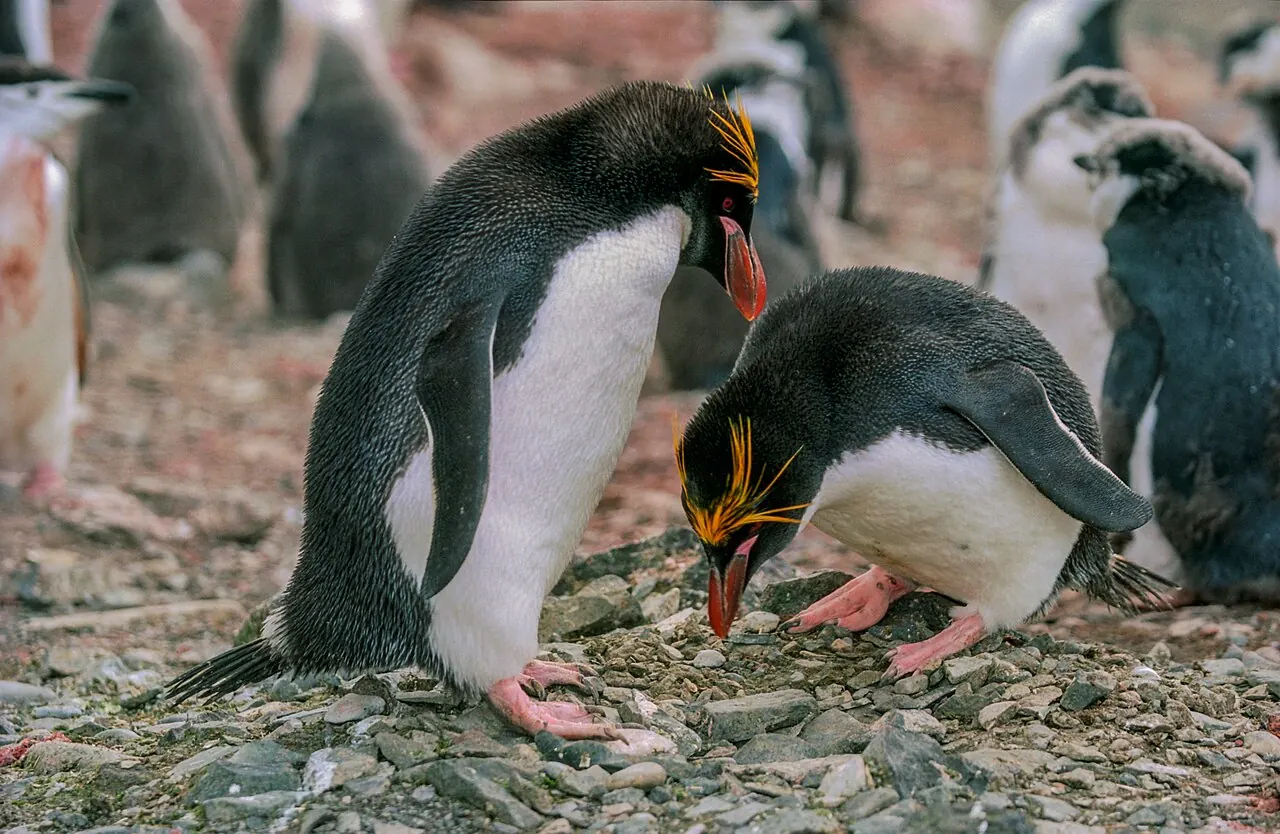
Orange, yellow and black crest feathers that meet on top of the head set the macaroni penguin apart. The face, chin and throat are solid black and the bill is red. Adults stand about 71 centimeters (28 inches) tall and weigh 5 to 6 kilograms (11 to 13 pounds), and females are usually smaller than males.
Macaroni penguins breed in at least 258 colonies on sub-Antarctic islands and in southern Chile, and very locally on the Antarctic Peninsula. BirdLife International lists the biggest populations on the Crozet Islands (2.2 million pairs), Kerguelen (1.8 million), Heard Island and South Georgia (about 1 million each). They live mostly on krill. Around South Georgia that means Antarctic krill, while birds from Crozet and Kerguelen also take small amphipods and lanternfish. Time-depth recorders that Ken Green and colleagues fitted to birds at Heard Island logged more than 53,000 dives, mostly made in daylight to 10 to 60 meters (33 to 200 feet). The deepest went to 163 meters (535 feet).
Each female lays two eggs and raises one chick. The first egg is only 55 to 75 percent the size of the second, a gap that Glenn Crossin and colleagues called unparalleled in birds. Working in a colony of about 40,000 pairs on Bird Island, South Georgia, in 2008, they found every first egg in their study lost to predators or pushed out of the nest around the time the second was laid. The first eggs averaged 95.8 grams against 147.5 grams for the second. Yolk formation starts while females are still at sea, migrating back to the colony. It takes about 16 days, but females lay only 7 to 14 days after landing, and birds that laid soonest after arriving produced the most lopsided pairs of eggs.
The species is listed as Vulnerable. BirdLife's figure of 6.3 million pairs is 47 percent below an earlier estimate of 9 million, and South Georgia fell from roughly 5 million pairs in the 1980s to under 1 million by 2002. The causes are uncertain. Changing ocean climate and competition for krill with Antarctic fur seals are suspects; at South Georgia the fur seals have grown from about 30,000 to roughly 3 million.



