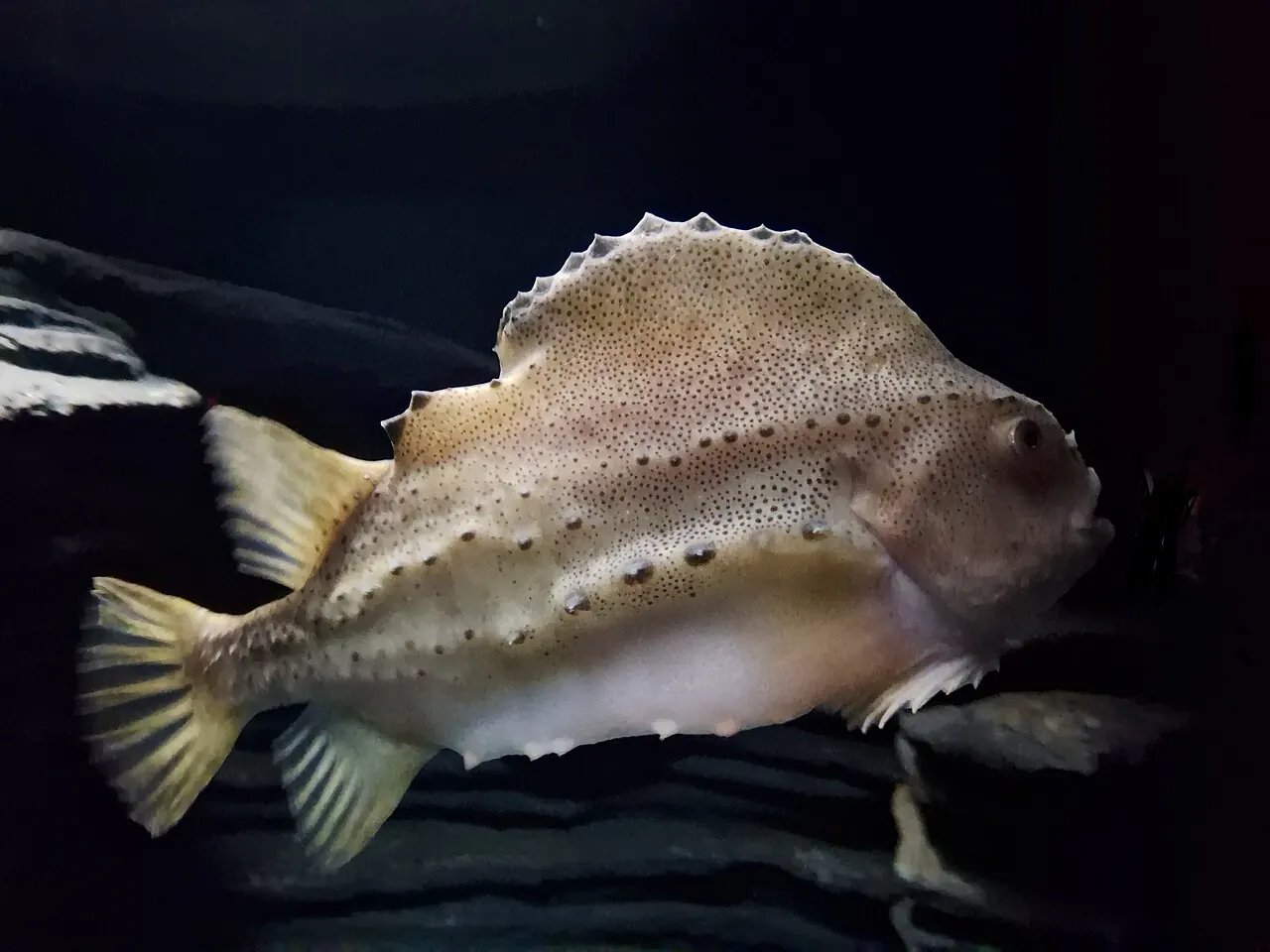
Lumpfish
Cyclopterus lumpus
A lumpy, round North Atlantic fish that clings to rocks with a sucker, eats jellies, and was put to work by the millions eating lice on farmed salmon.
Photo: Deadlymeap / CC BY-SA 4.0
3 things to know
- A lumpfish's pelvic fins form a sucker disc that holds it to rocks, seaweed and even lobster pots.
- Male lumpfish guard and aerate the eggs, which can take one to two months to hatch.
- In 2019 Norway put about 61 million cleaner fish into salmon cages, about 43 million of them lumpfish.
- Scientific name
- Cyclopterus lumpus
- Depth
- 50 m – 150 m
164 – 492 ft - Size
- Up to about 61 cm (2 ft) long
- Weight
- Up to about 9.5 kg (21 lb)
- Lifespan
- Up to about 12 to 13 years
- Diet
- Comb jellies, jellyfish, small crustaceans, worms and small fish
- Where
- North Atlantic: in the west from Hudson Bay and Labrador to the Gulf of Maine, rarely farther south; in the east from the Barents Sea, Iceland and Greenland to Spain
- IUCN status
- Not Evaluated
- Depth zones
- Sunlight
Three rows of big, flattened bony bumps run along each side of a lumpfish, and a high crest of thick skin hides its first dorsal fin. Underneath, the pelvic fins are modified into a sucker disc. Canada's wildlife assessment committee, COSEWIC, says the fish uses it to cling to rocks, seaweed and even lobster pots rather than be swept along by currents. FishBase, the IUCN and COSEWIC call it the lumpfish; it is also known as the lumpsucker. FishBase gives a maximum of 61 centimeters (2 feet) and 9.5 kilograms (21 pounds).
Lumpfish live from Hudson Bay and Labrador to the Gulf of Maine and Georges Bank in the west, and from the Barents Sea, Iceland and Greenland south to Spain in the east. FishBase gives a usual depth of 50 to 150 meters (165 to 490 feet), with a record from 868 meters (2,850 feet), and adults move between deeper water in winter and shallower water in summer. Young fish live among clumps of seaweed in bays and fjords, and adults sometimes drift with floating weed. Adults eat comb jellies, jellyfish, small crustaceans, worms and small fish.
Spawning turns them colorful: males go reddish underneath and females blue-green. Eggs are laid in large numbers on stony bottoms, with nests seen in water less than 10 meters (33 feet) deep, and the male guards the nest and aerates the eggs. Depending on water temperature, the eggs take one to two months to hatch. They live to about 12 or 13 years. The roe is sold as cheap caviar.
From 2012, Norway's salmon farmers brought in lumpfish as cleaner fish, releasing farmed fish into sea cages to eat salmon lice. In the peak year, 2019, Norway's Directorate of Fisheries counted about 61 million cleaner fish of all kinds put into cages, about 43 million of them lumpfish; by 2024, the Norwegian Veterinary Institute reports, the total had fallen to 22.5 million. A review described in April 2026 by researchers from Deakin University, Norway's Institute of Marine Research and the Norwegian Veterinary Institute found that few cleaner fish eat lice and that many die in the cages, and concluded that lumpfish should be phased out by 2029.
COSEWIC rated the lumpfish Threatened in Canada in 2017 after steep declines in survey catches off southern Newfoundland. The IUCN has no global assessment; its European assessment lists the species as Near Threatened.
Sources
- fishbase.se/summary/Cyclopterus-lumpus.html
- canada.ca/en/environment-climate-change/services/species-risk-public-registry/cosewic-a…
- fiskeridir.no/Akvakultur/Tall-og-analyse/Statistiske-publikasjoner/Noekkeltall-for-nors…
- vetinst.no/en/news/cleaner-fish-should-be-phased-out-if-adequate-animal-welfare-cannot-…
- iucnredlist.org/species/18237406/45078284
- api.gbif.org/v1/species/5962255/iucnRedListCategory
- commons.wikimedia.org/wiki/File:Lumpfish-Cyclopterus_lumpus.jpg



