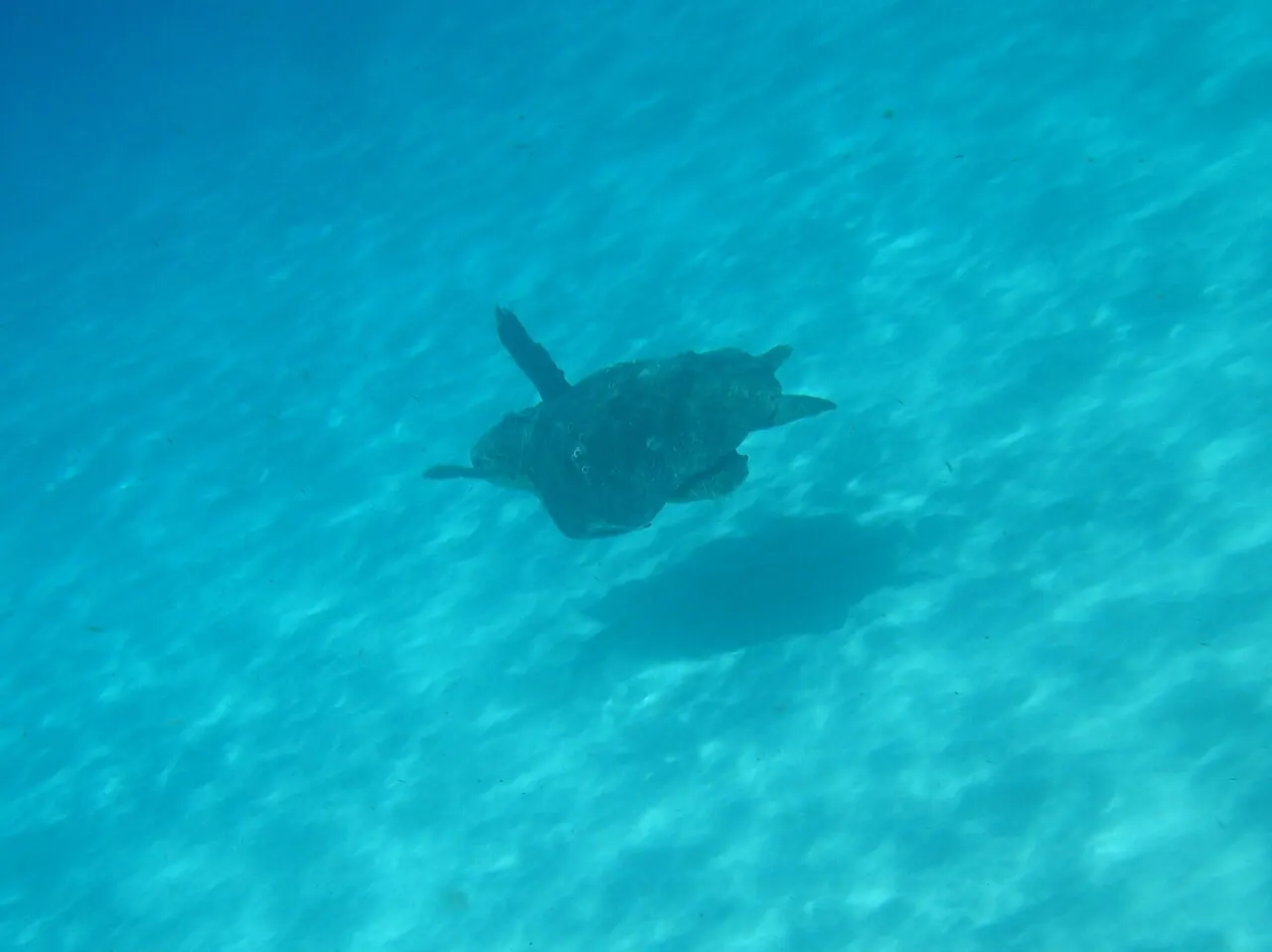
Loggerhead Sea Turtle
Caretta caretta
A big-headed, shell-crushing sea turtle that crosses oceans as a youngster and finds its way back to nest by reading Earth's magnetic field.
Photo: Thomas Brown / CC BY 2.0
3 things to know
- Its large head holds powerful jaws built to crush shellfish.
- Females are about 35 years old when they reach maturity.
- Peninsular Florida and Oman are the only places where more than 10,000 loggerhead females nest each year.
- Scientific name
- Caretta caretta
- Depth
- 0 m – 40 m
0 – 131 ft - Size
- Adults about 75–105 cm (2.5–3.5 ft) long
- Weight
- Adults about 90–160 kg (200–350 lb)
- Lifespan
- Unknown; estimated at 70 years or more
- Diet
- Mostly bottom-dwelling invertebrates such as mollusks, crustaceans and horseshoe crabs
- Where
- Subtropical and temperate waters of the Atlantic, Pacific and Indian oceans and the Mediterranean
- IUCN status
- Vulnerable
- Depth zones
- Sunlight
Loggerheads are named for their heads, which are large and packed with powerful jaws. The top shell is reddish brown and slightly heart-shaped, and the underside is pale yellow. Adults usually measure about 75 to 105 centimeters (2.5 to 3.5 feet) and weigh 90 to 160 kilograms (200 to 350 pounds).
They live mainly in subtropical and temperate parts of the Atlantic, Pacific and Indian oceans and in the Mediterranean, and in the Atlantic they range from Newfoundland to Argentina. Hatchlings and juveniles spend their first 7 to 15 years in the open ocean, eating whatever floats, including bits of plastic they mistake for food. For a turtle that crosses oceans, a loggerhead keeps fairly close to the surface: in the central North Pacific, Jeffrey Polovina and colleagues found that satellite-tagged loggerheads spent 90 percent of their time shallower than 40 meters (130 feet).
Grown loggerheads move to coastal waters and eat mostly bottom-dwelling animals, including mollusks, crustaceans and horseshoe crabs, crushing the shells. Females mature at about 35 years. Every two to three years they migrate back to the region where they hatched, laying three to five nests a season with about 100 eggs in each. The temperature of the sand sets each hatchling's sex, with cooler nests producing males and warmer ones females.
The IUCN lists the loggerhead as Vulnerable. Accidental capture in fishing gear, beachfront lights that lead hatchlings inland, loss of nesting beaches, ocean debris and boat strikes are the main threats NOAA names. Peninsular Florida is one of only two places in the world, with Oman, where more than 10,000 females nest each year.
Getting home is the loggerhead's best-studied skill. In 2001 the Lohmann lab at the University of North Carolina at Chapel Hill showed that hatchlings from eastern Florida, placed in magnetic fields copied from distant parts of the North Atlantic, swam in directions that would keep them inside the ocean's great loop of currents. A 19-year record of Florida nests later linked shifts in where females nest to slow drift in Earth's magnetic field, as if each turtle had imprinted on the magnetic signature of its home coast.



