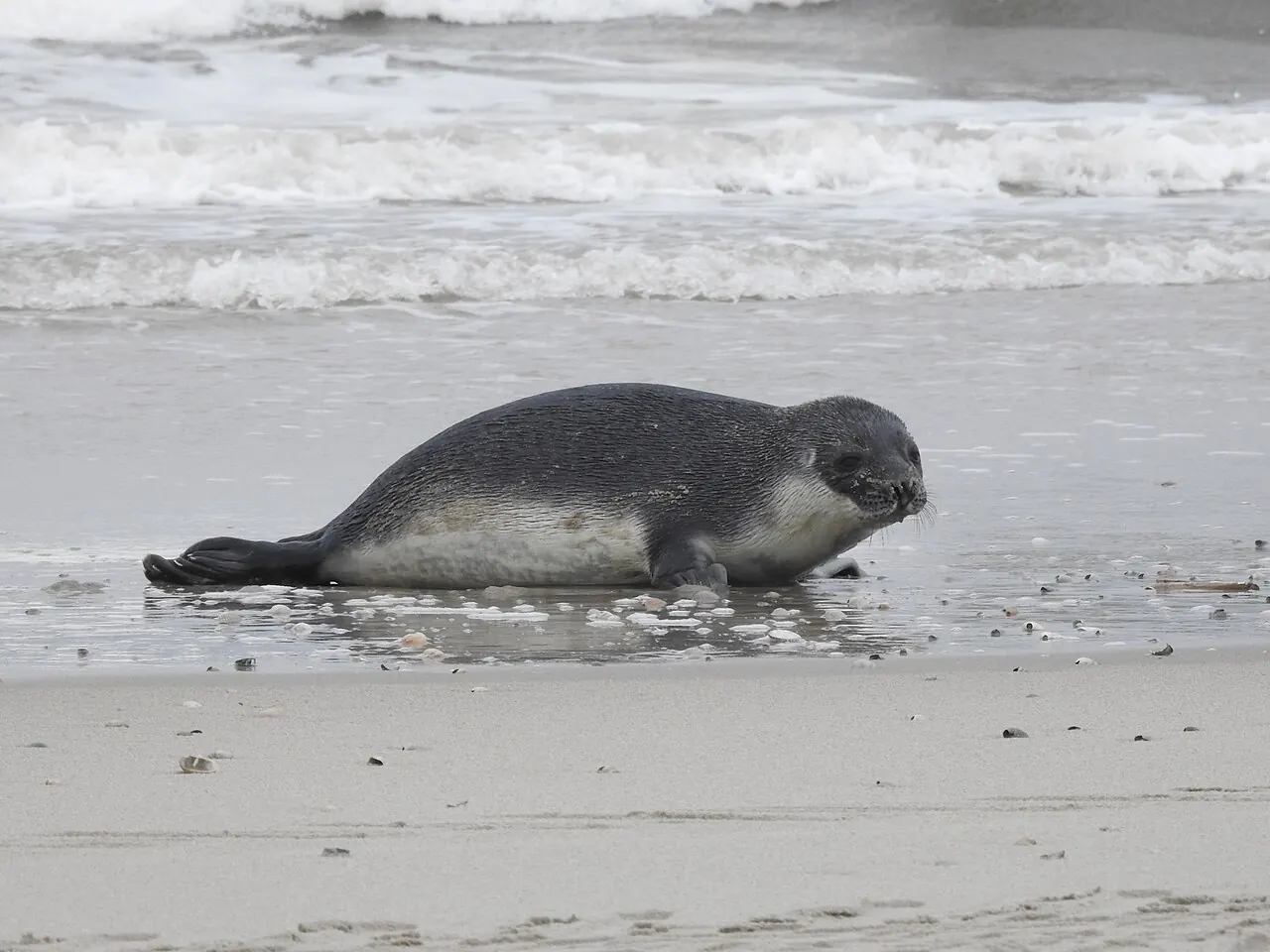
Hooded Seal
Cystophora cristata
A North Atlantic ice seal whose males inflate a red nasal balloon and whose pups are weaned in three to five days; listed Endangered since 2025.
Photo: Michael Bakker Paiva (iNaturalist) / CC BY 4.0
3 things to know
- Pups nurse for only three to five days, the shortest weaning period of any mammal.
- Adult males can inflate part of the nose into a pinkish-red balloon to court females and warn rivals.
- Hooded seals can dive below 1,000 m (3,280 ft) and stay down for up to an hour.
- Scientific name
- Cystophora cristata
- Depth
- 0 m – 600 m
0 – 1,969 ft - Size
- Males about 2.6 m (8.5 ft); females about 2 m (6.5 ft)
- Weight
- Males about 190–350 kg (423–776 lb); females about 145–300 kg (320–660 lb)
- Lifespan
- About 25–35 years
- Diet
- Greenland halibut, redfish, cod, capelin, herring, squid, sea stars and mussels
- Where
- North Atlantic and Arctic Ocean; breeds on drifting ice off Newfoundland, in the Gulf of St. Lawrence, in Davis Strait and near Jan Mayen
- IUCN status
- Endangered
- Depth zones
- Sunlight · Twilight
A hooded seal pup gets three to five days of milk, and then its mother leaves. NOAA Fisheries calls it the shortest weaning period of any mammal. The pups, born on drifting ice in spring, have blue-gray backs and whitish bellies, a pelt that earned them the name "blue-backs" and made them a target for sealers. They keep that coat until they are about 14 months old.
Adult males are known for their noses. Each has a stretchy, two-lobed hood on top of the head that he can inflate until it stretches across his face, and a partition inside the nose that inflates into what looks like a pinkish-red balloon. Males use the balloon to attract females and to threaten other males. Adults of both sexes are silver-gray with dark blotches. Males reach about 2.6 meters (8.5 feet) and 190 to 350 kilograms (423 to 776 pounds); females are about 2 meters (6.5 feet) and 145 to 300 kilograms (320 to 660 pounds).
Hooded seals live in the cold North Atlantic and Arctic and spend most of the year alone. They gather for two to three weeks in spring to breed on the ice off Newfoundland, in the Gulf of St. Lawrence, in Davis Strait and in the Greenland Sea near Jan Mayen, then molt and scatter. They are deep divers: feeding dives usually reach 100 to 600 meters (325 to 1,950 feet) and last 13 to 15 minutes, and some go past 1,000 meters (3,280 feet) for up to an hour. Prey includes Greenland halibut, redfish, Atlantic and Arctic cod, capelin, herring and squid. They can live 25 to 35 years.
In 2025 the IUCN moved the species from Vulnerable to Endangered. The assessment, by Kit Kovacs, says the Greenland Sea stock fell from more than 1.2 million animals to fewer than 80,000, much of it through overhunting between the 1940s and 1980s, and has not recovered, despite full protection from commercial sealing since 2007. Off Newfoundland, home to about 90 percent of Northwest Atlantic breeders, pup counts from 2012 to 2017 were about 35 percent of the 2005 level. A 2024 search of Davis Strait found no breeding seals, and in 2025 only a small patch of about 600 pups. In US waters, where NOAA manages a western North Atlantic stock, strays have turned up as far south as Puerto Rico.



