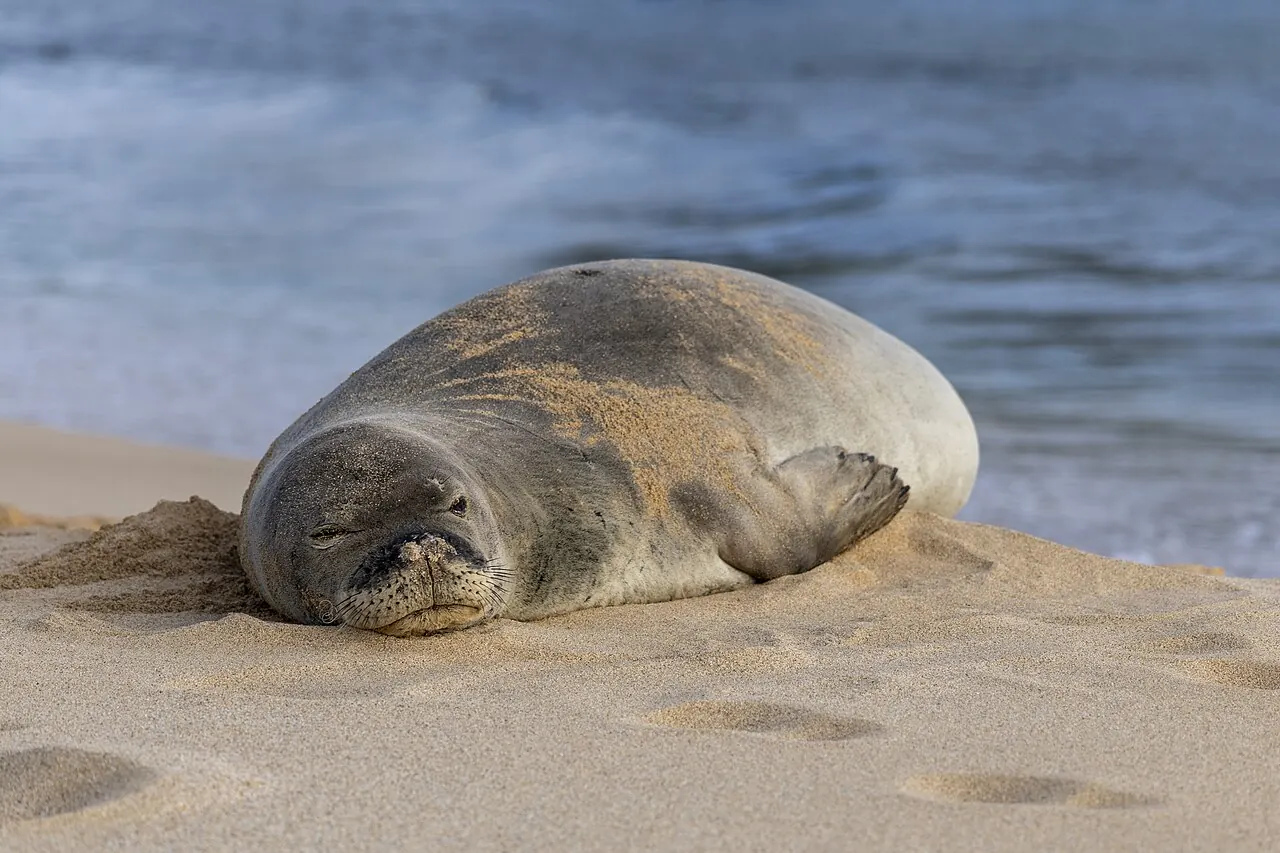
Hawaiian Monk Seal
Neomonachus schauinslandi
A rare seal found only in Hawaii, about 1,600 strong, that sheds its skin each year and is routinely vaccinated by NOAA.
Photo: E bailey / CC BY-SA 4.0
3 things to know
- About 1,600 live in the wild, almost all of them in the Hawaiian Islands.
- Once a year it sheds the top layer of its skin and fur in a 'catastrophic molt.'
- It can dive more than 550 m (1,800 ft), though most dives are under 60 m (200 ft).
- Scientific name
- Neomonachus schauinslandi
- Depth
- 0 m – 60 m
0 – 197 ft - Size
- About 1.8–2.1 m (6–7 ft) long
- Weight
- About 180–270 kg (400–600 lb)
- Lifespan
- Over 30 years at most; few live that long
- Diet
- Reef and seafloor fish, squid, octopus, eels and crustaceans
- Where
- Hawaiian Islands only, from Kure Atoll to Hawaii Island
- IUCN status
- Vulnerable
- Depth zones
- Sunlight
Hawaiian monk seals live only in the Hawaiian archipelago, along a 2,400-kilometer (1,500-mile) chain from Kure Atoll to Hawaii Island. NOAA estimates about 1,600 seals: nearly 1,200 in Papahānaumokuākea, the remote Northwestern Hawaiian Islands, and about 400 around the main islands. A few have turned up at Johnston Atoll, where one pup was born.
Newborn pups are black. Older seals are dark gray to brown on the back and lighter below, and the sexes are about the same size, 1.8 to 2.1 meters (6 to 7 feet) and 180 to 270 kilograms (400 to 600 pounds). About once a year they go through a "catastrophic molt," shedding the top layer of skin and fur at once. Seals that have spent a long time at sea can grow algae on their fur and look green.
Monk seals eat whatever is around: fish, squid, octopus, eels, crabs, shrimp and lobsters, mostly hidden in sand or under rocks on the seafloor. A typical dive lasts about 6 minutes and stays above 60 meters (200 feet), but they can hold their breath for 20 minutes and dive deeper than 550 meters (1,800 feet). They are mostly solitary and may sleep on a beach for days. Mothers stay ashore nursing for up to 7 weeks, and a seal can live past 30, though few do.
Sealing in the mid-1800s brought the species near extinction. Numbers recovered by the late 1950s, then fell for decades. The population began rising in 2013 and passed 1,500 in 2021, but it is still only about a third of its historic size. NOAA documented 437 entanglements in Papahānaumokuākea from 1974 to 2022, and crews removed 945 metric tons of marine debris there. Toxoplasmosis, a parasite infection first found in a monk seal in 2004, is a leading cause of death in the main islands. Morbillivirus has never been detected in a wild Hawaiian monk seal, but it has killed other seals in mass die-offs, so since 2016 NOAA has routinely vaccinated them against it.
The seal has been listed as endangered under the US Endangered Species Act since 1976 and is protected by the Marine Mammal Protection Act and Hawaii state law. On the separate IUCN Red List, an assessment made in 2024 and published in 2025 moved the species from Endangered to Vulnerable, noting growth of about 2 percent a year since 2013 and an estimated 922 mature adults.



