Sunlight Zone · 0–200 m
Sharks Have Been Around Longer Than Trees
The earliest signs of sharks date back around 450 million years. The first trees appeared tens of millions of years later.
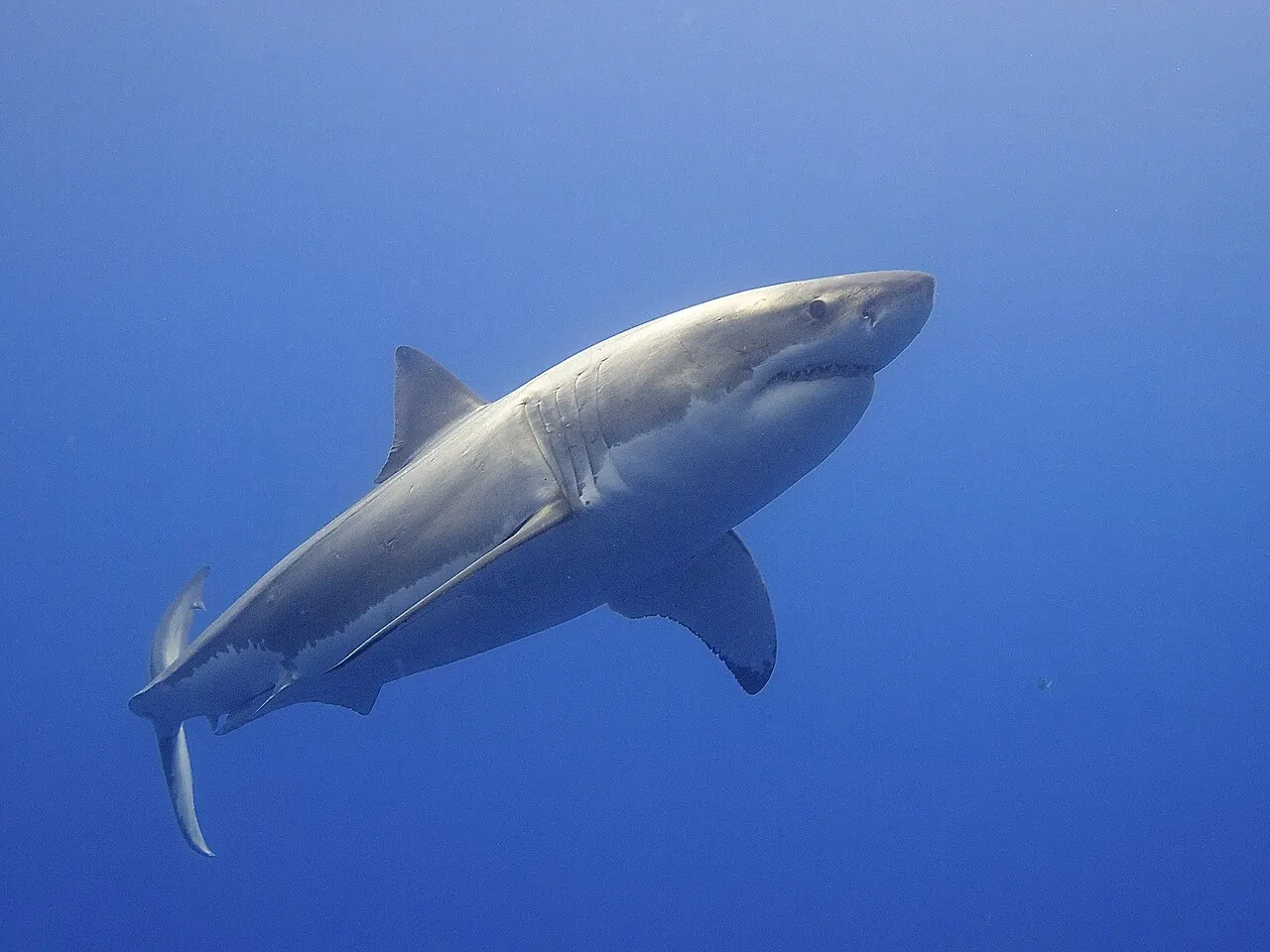
Carcharodon carcharias
The ocean's most famous predator is partly warm-blooded, slow to mature and able to cross whole oceans and come back.
Photo: Elias Levy / CC BY 2.0
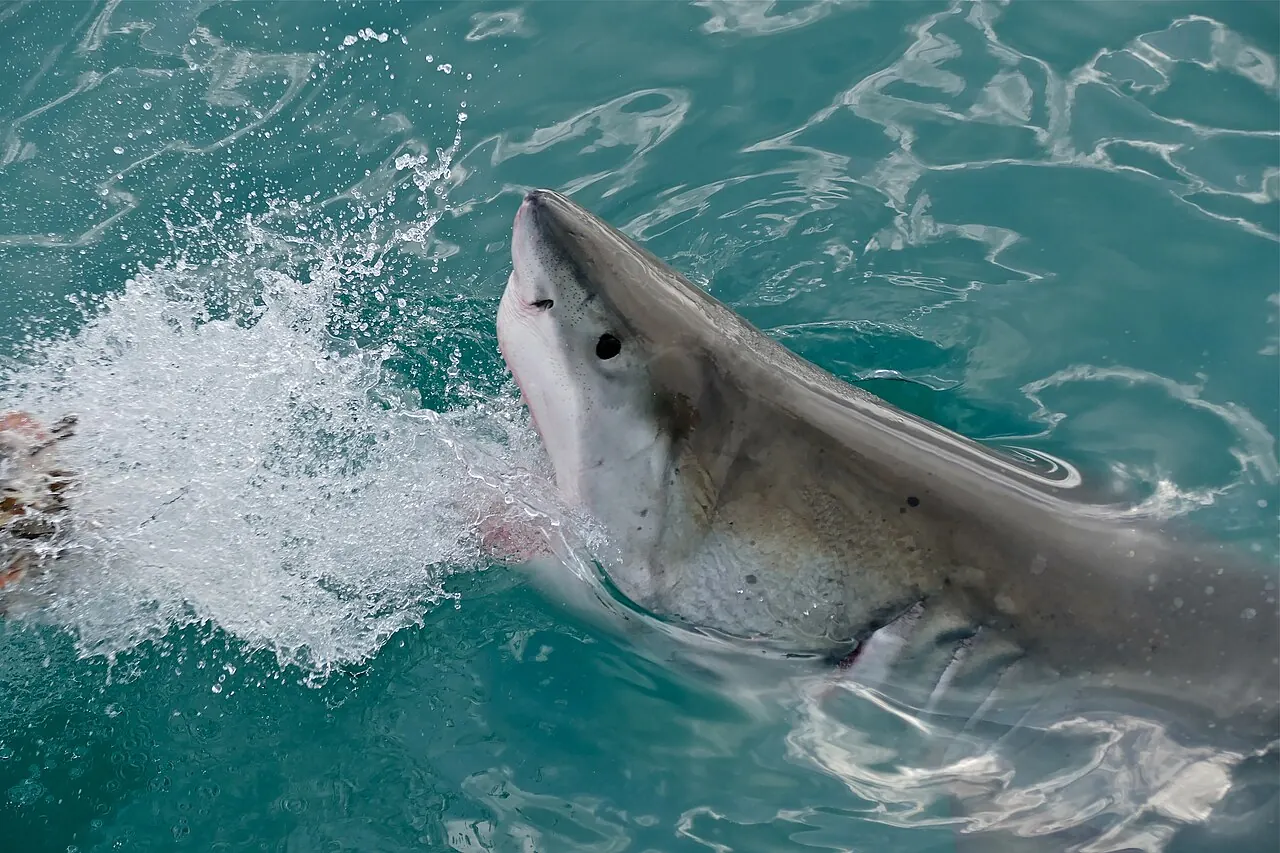
A great white shark is dark gray to brown on top and white underneath, which is where the name comes from. It has a torpedo-shaped body, a conical snout, a tall first dorsal fin, a crescent-shaped tail and broad, triangular, serrated teeth. Pups are born about 1.2 meters (4 feet) long, and adults reach about 6 meters (20 feet) and more than 1,800 kilograms (4,000 pounds).
White sharks live in temperate and subtropical seas worldwide, in water of roughly 10 to 27°C (50 to 80°F), usually within 250 meters (820 feet) of the surface. In US waters, NOAA Fisheries lists nursery areas off southern California and Long Island, New York. Young sharks eat bottom fish, smaller sharks, rays and squid. Bigger ones gather at seal and sea lion colonies and sometimes scavenge dead whales. The species is partly warm-blooded, which makes it a more active hunter in cool seas.
They travel far. In 2005, Ramón Bonfil of the Wildlife Conservation Society and colleagues described a white shark that crossed between South Africa and Australia and returned to where it had been caught, the fastest known ocean-crossing round trip of any swimming animal, diving as deep as 980 meters (3,215 feet) along the way. Salvador Jorgensen of Stanford and colleagues used tags and genetics to show that eastern Pacific white sharks return again and again to the same coastal hotspots after long trips offshore, and form a genetically distinct population.
They grow slowly. NOAA puts maturity at about 26 years for males and 33 for females. Embryos feed on yolk and then on unfertilized eggs inside the mother, and a litter holds up to about 10 pups, possibly 14. Li Ling Hamady and colleagues dated bomb-test radiocarbon in the vertebrae of eight white sharks from the northwestern Atlantic and estimated the largest male at 73 years and the largest female at 40, far older than earlier studies had found.
Large size and slow breeding make white sharks vulnerable to human impacts, NOAA notes, and the IUCN lists the species as Vulnerable. They may not be kept by fishermen in most US waters, and NOAA reports that numbers in the northwest Atlantic have been rising since protections began in the 1990s, while a NOAA status review found the northeastern Pacific population was not at risk of becoming endangered in US waters.



