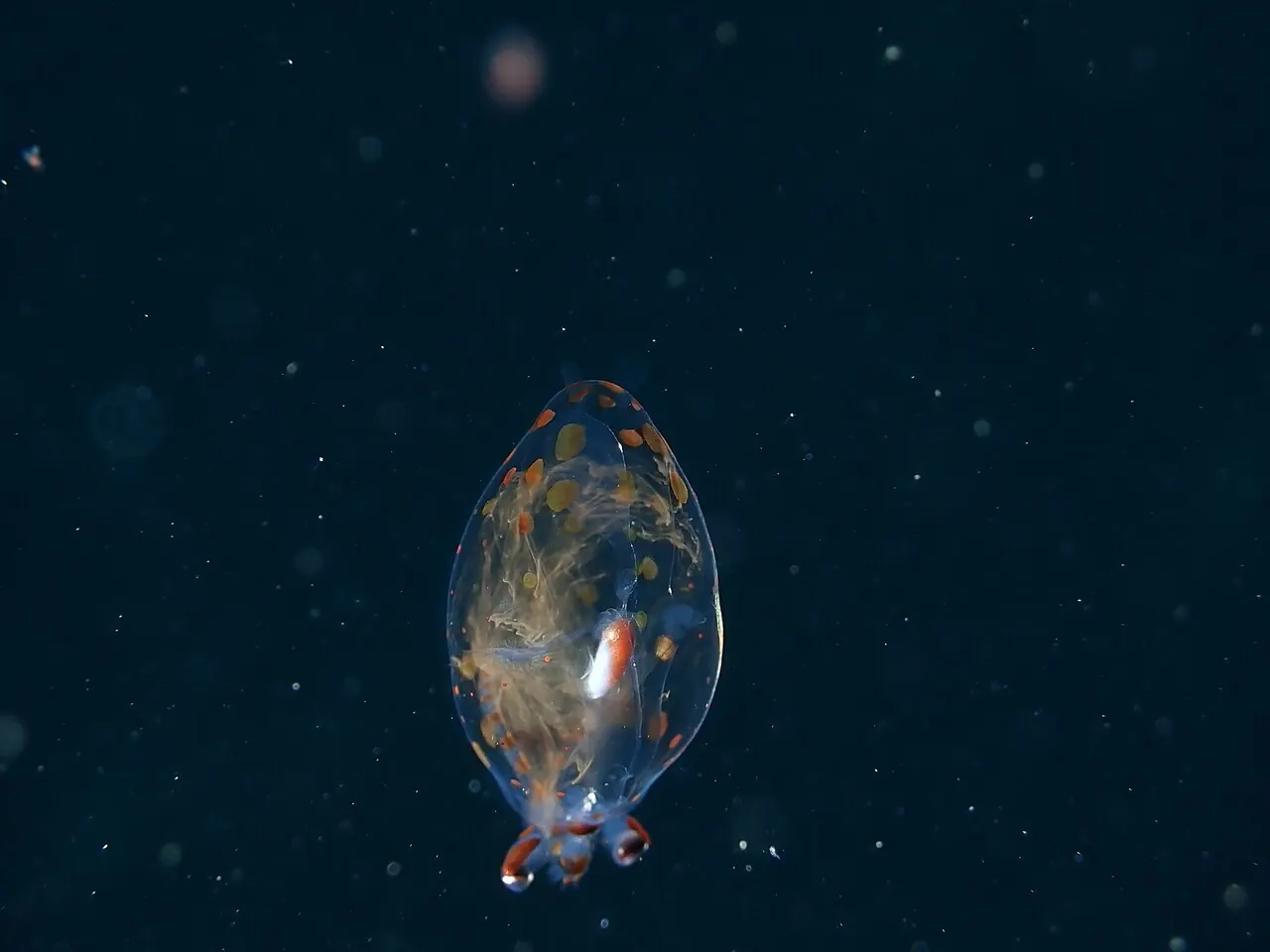
Glass Squid
Family Cranchiidae (about 60 species in 13 genera)
See-through squids that float on a body-length chamber of ammonium. The family includes the colossal squid.
Photo: luca_dt (iNaturalist) / CC BY-SA 4.0
3 things to know
- A chamber of ammonium, lighter than seawater, runs the length of the body and keeps them afloat.
- Many hold their spindle-shaped mass of inner organs upright so it casts as small a shadow as possible.
- The colossal squid, the heaviest known invertebrate, is a glass squid.
- Scientific name
- Family Cranchiidae (about 60 species in 13 genera)
- Depth
- 0 m – 2,000 m
0 – 6,562 ft - Size
- Varies by species, from about 10 cm (4 in) long to the colossal squid
- Weight
- Varies widely by species
- Lifespan
- Not well known
- Diet
- Crustaceans, fishes and other cephalopods
- Where
- Oceans worldwide
- IUCN status
- Varies by species (Least Concern where checked)
- Depth zones
- Sunlight · Twilight · Midnight
Most of a glass squid is a bag of fluid. A buoyancy chamber runs the full length of the mantle, filled with ammonium, a chemical lighter than seawater, MBARI explains. Many look bloated, with short arms and a head fused to the mantle. The family, Cranchiidae, is one of the more species-rich groups of squid: the Tree of Life Web Project counts about 60 species in 13 genera, many not yet described, and MBARI puts the total at more than 60.
Many glass squids spend much of their lives in partly sunlit water, where hiding means not casting a shadow. They are often transparent except for the eyes and a spindle-shaped mass of inner organs, the visceral nucleus, which the squid holds vertical to shrink its shadow. The eyes often carry light organs underneath. MBARI notes that they keep their pigment cells closed, leaving the skin nearly see-through. Some species, seen from submersibles, fold their arms and tentacles back over the head in a pose called the cockatoo posture.
Young glass squids drift near the surface, most with eyes on stalks, and some reach 5 to 10 centimeters (2 to 4 inches) before they move into deep water. Most species live deeper as they grow, and many change shape so much that young and adult stages were once named as different species or genera. Females seem to spawn once, though the evidence is slim. As a family they range from the surface to about 2,000 meters (6,600 feet), eat crustaceans, fishes and other cephalopods, and escape behind a shroud of ink.
Sizes run from about 10 centimeters (4 inches) to the heaviest invertebrate known, because the colossal squid is a glass squid too. Its young are transparent, like those of the glacial glass squid, Galiteuthis glacialis, and the two look much alike. On January 25, 2025, Schmidt Ocean Institute's robot SuBastian recorded the first confirmed footage of a glacial glass squid, 687 meters (2,254 feet) down in the Bellingshausen Sea near Antarctica.
How long glass squids live is not well known. The IUCN assesses each species separately; those checked for this profile, Cranchia scabra and Teuthowenia pellucida, are listed as Least Concern.



